


It’s OK to Say Suicide
Talking openly about suicide can save lives. Whether you’re having suicidal thoughts, worried about someone you care about, or looking for ways to make a difference, you’ll get trusted resources to find hope and support, help someone, or take action so more people know “It’s OK to Say Suicide.”
Jump to section
Suicidal Thoughts AMA: Your Questions Answered
Real questions about suicidal thoughts, answered: what the warning signs are, what happens if you tell someone, and whether talking about suicide can make it worse. Psychiatrist Dr. Saumya Dave and licensed clinical social worker Kel Maisenbacher break it down, including:
- What are some signs that someone might be having suicidal thoughts?
- If I’m having suicidal thoughts, does that mean I’ll always have them?
- What actually happens if I tell someone I’m having suicidal thoughts?
They also offer advice on how to ask for help and how to talk to a friend who you think may be struggling.
Find Hope and Support
If you’re having suicidal thoughts or you’re struggling, you don’t have to face it alone. Whether you’re ready to reach out, looking for ways to cope, or waiting to connect with care, these resources can help you take the next step.
What To Do When You’re Feeling Hopeless or Thinking About Suicide
If you’re feeling hopeless or having suicidal thoughts, there are steps you can take to feel safer and get support. Learn what to do now, when to reach out for immediate help, and how connecting with someone you trust can help you start feeling better.
What to Know About Therapy
Starting therapy can feel like a big step, especially if you don’t know what to expect. Learn how therapy works, how to find a therapist, and ways to pay for care, then hear how finding the right therapist helped Hannah learn practices like affirmations and skills to communicate how she feels.
How to Manage Suicidal Thoughts
Recovery is possible, and support is available. Learn practical strategies for managing suicidal thoughts, building your support network, understanding what may be contributing to how you’re feeling, and finding healthy ways to cope while you’re waiting to connect with professional help.
When Everything Changed
Feeling better looks different for everyone, and it rarely happens all at once. Hear stories of hope, healing, and the different paths people have taken to get there.
We looked at each other and [said] I might need some help. We started looking for Black therapists so I have someone that I could relate to on lots and lots of bases. I love therapy. I’m in therapy religiously. It’s helped me be OK with myself and love myself.
Creating a Suicide Safety Plan: A Step-By-Step Guide
Learn how to create a suicide safety plan, a personalized plan you create ahead of time that you can use to stay safe if you’re having suicidal thoughts or feeling overwhelmed. Licensed clinical social worker Kel Maisenbacher walks you through each step.
Support Someone You Care About
You don’t have to be a mental health professional to make a difference. Recognizing the warning signs, starting a conversation, and helping someone connect with support can save lives.
Storytelling
Parent POV: Why Parents Shouldn’t Wait to Talk about Mental Health
A father shares why his daughter’s joyful spirit masked deep pain, and how he now urges parents to keep talking with kids, even when it’s hard.
Get Involved
Talking openly about suicide helps more people know they’re not alone and encourages them to seek support sooner. Whether you share the campaign, tell your story, learn more, or support JED’s work, you can help more people know “It’s OK to Say Suicide.”
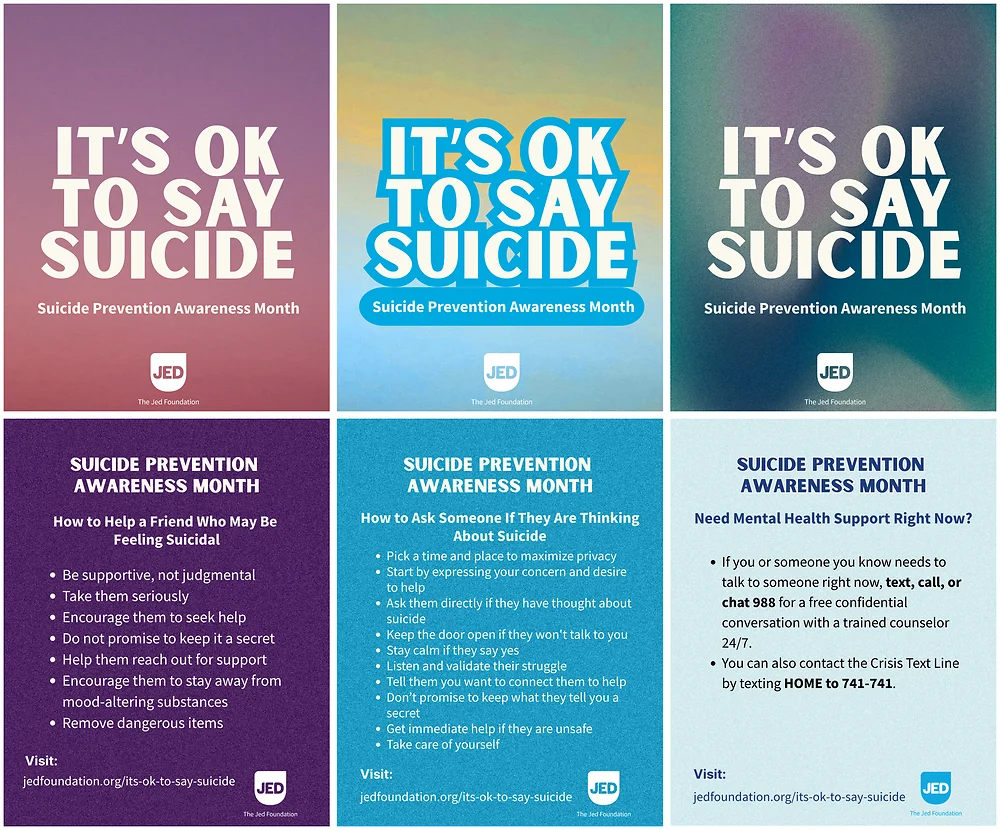
Start Talking
Share these on your social channels and let your friends, family, and followers know “It’s OK to Say Suicide.” You might help save a life.
Follow us on social media or sign up for our newsletter for the latest updates, exclusive resources, and inspiring stories from The Jed Foundation (JED).


Sample social text:
- Bringing up suicide won’t put the idea into someone’s head. But it could make them feel comfortable enough to talk about it. Knowing how to start the conversation can make all the difference. Join @jedfoundation and learn how to ask hard questions that save lives. 👉 jedfoundation.org/its-ok-to-say-suicide #SuicidePreventionAwarenessMonth #ItsOkToSaySuicide
- When we say “suicide,” we take the first step toward asking for and getting help. Follow @jedfoundation to learn how to talk about suicide. For more resources, visit: jedfoundation.org/its-ok-to-say-suicide. #SuicidePreventionAwarenessMonth #ItsOkToSaySuicide
- Learn the signs, and start the conversation. Whether you’re looking out for a friend or looking for guidance yourself, @jedfoundation is here to help. Check out jedfoundation.org/its-ok-to-say-suicide for resources. #SuicidePreventionAwarenessMonth #ItsOkToSaySuicide
Payments accepted
Support Suicide Prevention
Take action to prevent suicide for teens and young adults by making a gift today. Your gift will ensure more young people know how and when to reach out for help.