
How to Build a Culture Where It’s Safe to Not Be Okay: Jed Foundation CEO John MacPhee
Capitol Hill briefing spotlights AI’s concerning, growing role in teen mental health
The Jed Foundation (JED) Releases Preliminary Research on How Teens Are Using Artificial Intelligence (AI) and What It Means for Their Mental Health
[WASHINGTON, D.C., July 23, 2026] — Artificial intelligence (AI) is rapidly changing how young people learn, communicate, seek support, and navigate everyday challenges. AI chatbots and tools are becoming an increasingly common part of daily life for young people, offering everything from academic assistance and creative collaboration, to social interaction and emotional support. While many young people report positive experiences with these technologies, there is growing concern about their impact on mental health, development, and well-being.
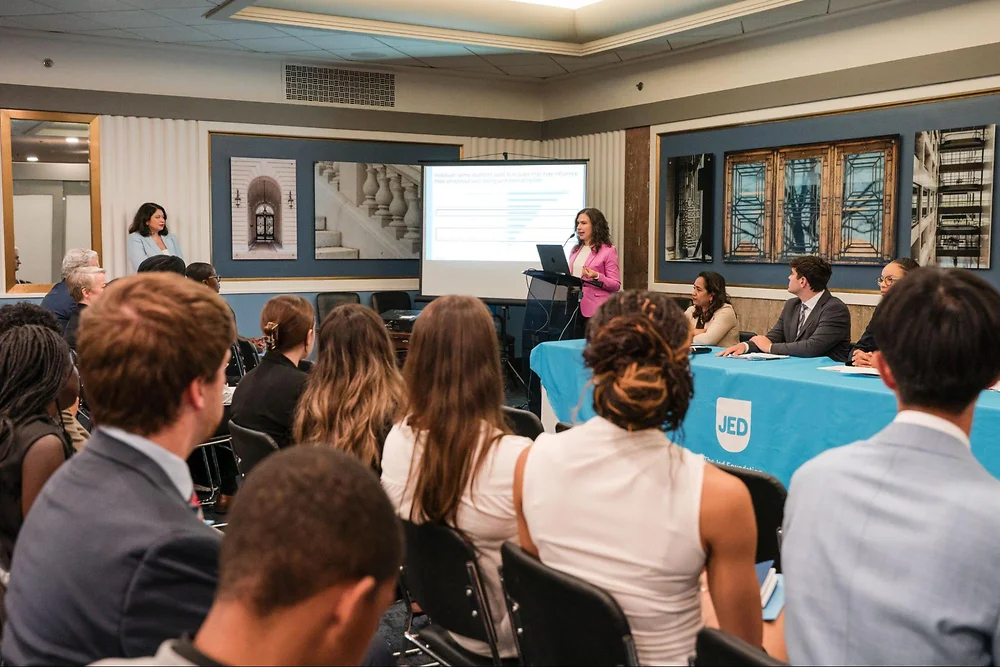
On July 21, The Jed Foundation (JED), a leading nonprofit that protects emotional health and prevents suicide for teens and young adults nationwide, gathered over 200 congressional staff, policymakers, youth advocates, researchers, and mental health leaders for a bipartisan briefing on Capitol Hill, “Navigating AI: Youth Perspectives, Mental Health, and Public Policy.” The briefing provided a preview of findings from original JED research – expected to be released this fall – led by Dr. Kayla Anderson, JED’s vice president of research and evaluation.
Between October 2025 – April 2026, JED collected data from more than 5,500 middle and high school students across 21 U.S. schools and school districts enrolled in JED’s programs about how they use artificial intelligence (AI). Key findings include:
- AI use is very common: 4 in 5 students used some type of AI.
- Some students use AI in ways that replace human interaction or support: While more than half of students use AI for academics, nearly one third of students use AI for relationship or problem-solving advice and more than one in ten talk to AI for companionship.
-
- Many students turn to AI when experiencing difficult emotions: Nearly 3 in 5 students used AI when they felt sad, stressed, or lonely.
- AI use differs by age and geography: High school students and rural students were more likely to use AI overall. Middle school students and urban students were more likely to use AI specifically when they were sad, stressed, or lonely.
- AI use has potentially profound implications for mental health, loneliness, and suicidal thoughts and behaviors: Students who used AI for emotional or mental health support, for problem-solving advice, when experiencing difficult emotions, or for companionship were more likely to have poorer mental health, were more lonely, and had a greater history of suicidal thoughts and behaviors.
“AI is already deeply embedded in how young people learn, build relationships, solve problems, and seek support, and JED’s preliminary findings underscore the urgency of understanding what that means for their mental health,” said Dr. Zainab Okolo, JED’s senior vice president of policy, advocacy, and government relations. “Unlike many adults who remember life before constant digital connection, today’s young people are growing up with AI as an increasingly intimate part of their social, academic, and emotional lives. Their experiences and perspectives must therefore be central to the policies governing these technologies.”
The briefing was led by Dr. Okolo with keynote addresses from JED CEO John MacPhee and Dr. Stephanie Haridopolos, principal deputy assistant secretary for health policy and director of national health communications in the office of the Surgeon General. Dr. Haridopolos shared her office’s most recent Warning on the Harms of Screen Use, which addresses emerging concerns about how children are interacting with chatbots.
“We are calling for urgent action to protect children at home, in schools, and across platforms,” said Dr. Haridopolos. “Kids are growing up in digital spaces that were never designed for their safety, and these online experiences are shaping how they think, feel, and interact in real life. We want children to live real life, not be pulled into harmful environments online. The recently released Surgeon General’s Warning on the Harms of Screen Use gives families and communities the guidance they need. History will judge us not only by the steps we took, but by the inaction we allowed.”
Panelist Hanae Noirbent, a member of JED’s Youth Advisory Council (YAC), shared her perspective on how youth can be protected from potential harms posed by AI. “Youth are already interacting with AI on a day-to-day basis,” she said. “We want guardrails implemented that will protect us from the clear risks presented by AI-powered algorithms and generative AI platforms such as chatbots. We also know that there’s a real opportunity for AI to serve as an educational support tool, and even as a tool that directs us to lifesaving resources such as the 988 Suicide and Crisis Lifeline.”
Other panelists included Allie Maloney, policy analyst at Americans for Responsible Innovation, Blake Hurst, JED YAC member and student at University of Notre Dame, and Bhavani Kola, department chair at Tarrant County College and founder and CEO of Eclatech Solutions. They discussed how states are responding to these technologies, opportunities and risks for youth mental health and well-being, and considerations for future federal policymaking.
This is the second AI-focused briefing hosted by The Jed Foundation since they published recommendations for policymakers and tech companies.
View photos of the event. To learn more about JED’s policy, advocacy, and government relations work, visit JED’s website.
###
About The Jed Foundation
JED is committed to protecting emotional health and preventing suicide for our nation’s teens and young adults. JED partners with high schools, colleges, school districts, and youth-serving community-based organizations to strengthen their mental health, substance misuse, and suicide prevention programs and systems. JED equips teens and young adults with the skills and knowledge to help themselves and each other, and encourages community awareness, understanding, and action for young adult mental health.
Connect with JED: Email | LinkedIn | Instagram | Facebook | TikTok | Snapchat | YouTube
Media Contact
Justin Barbo
PR Director
The Jed Foundation
justin@jedfoundation.org
How AI Chatbots Can Affect Teen Mental Health
The importance of stemming campus suicides
Seeking Help Is a Sign of Strength: A Call to Action for Minority Mental Health Awareness Month
By Kyra Wagner
July is Bebe Moore Campbell Minority Mental Health Awareness Month. This observance is named after Moore Campbell for her relentless advocacy for communities of color.
Almost two decades after the inception of Bebe Moore Campbell Minority Mental Health Awareness Month, there is still work to do to improve systems of care for communities of color, who may carry a heavy burden, often borne from generational trauma, histories of enslavement, and systemic oppression and discrimination. Black young adults ages 18-25 have the lowest prevalence of having been diagnosed with a mental health condition in the past year compared to other races and ethnicities. However, Black adolescents ages 12-17 are also less likely than their white peers to receive mental health care. This is thought to be due to access and trust issues, as well as stigma, rooted in historical and present-day discrimination.
As a Black woman, I recognize that when a people are enslaved for 246 years and then forced straight into centuries of fighting for basic civil rights and human decency, the fallout doesn’t just disappear. The same reality applies to Indigenous communities, who faced genocide and were not recognized as citizens on their own land until the early twentieth century, and to the many immigrants and refugees who arrived seeking a better life but instead faced systemic discrimination. Our identities are not something we should apologize for; this month is a reminder that our identities are beautiful in their diversity and that we deserve to live freely and peacefully in our bodies.
Observing Bebe Moore Campbell Minority Mental Health Month is important because it encourages us to challenge the systems that aren’t serving us. It also allows us to move beyond the trauma and highlight the immense resilience, strength, and courage inherent within communities of color.
As Ralph Waldo Emerson said, “To be yourself in a world that is constantly trying to make you something else is the greatest accomplishment.”
Given all of this history, there are some clear calls to action. Culturally competent resources should prioritize cultural humility over rigid checklists. This means actively recognizing and unlearning implicit biases, acknowledging historical and ongoing systems of oppression, and centering the lived experiences of people. Truly effective mental health resources must be inclusive, safe, and designed as culturally relevant healing spaces where communities of color feel seen, understood, and supported.
To other young people of color: I see you, I celebrate you, and I hope you know that seeking help is a sign of strength. You deserve support, healing, and care.
And to the adults and leaders out there, I call on you to support the mental health of young people of color by improving access to culturally sensitive resources and care that centers our needs, identities, and experiences. This month, and all year long.
The Jed Foundation (JED), a leading national nonprofit that protects the emotional health and prevents suicide for teens and young adults, is one of the many organizations that are amplifying resources curated for diverse communities on getting help, finding the right provider, and prioritizing mental health this month and beyond. Visit JED’s Mental Health Resource Center for more personalized content, and make sure to prioritize your well-being both this July and throughout the year.
Plaid Announces Collaboration with The Jed Foundation (JED) to Advance Mental Health Education
Louisville, Kentucky & New York City (July 1, 2026) – Plaid, a leading provider of educational programming and learning solutions for student leaders and campus communities, is proud to announce that The Jed Foundation (JED) will provide expert consultation services to update the Plaid Tightrope Online Safety and Risk Management Course. JED is a leading nonprofit that protects emotional health and prevents suicide for our nation’s teens and young adults.
Through this expert consultation service, JED will provide expertise to help develop and enhance mental health educational content in Plaid’s learning ecosystem. JED’s evidence-informed resources will also be integrated into Plaid’s Learning Management System (LMS), expanding access to high-quality mental health education for students, educators, advisors, and organizational members nationwide.
This collaboration comes at a critical time as colleges, universities, and student organizations navigate the growing need for effective mental health education, suicide prevention strategies, and research-informed support systems.
“At Plaid, we are committed to delivering best-in-class educational experiences that empower individuals and strengthen communities,” said Chris Woods, Partner at Plaid. “Working with JED allows us to further invest in evidence-informed learning opportunities that address one of the most pressing issues facing today’s students: mental health and well-being.”
“JED is proud to help Plaid equip higher education institutions with strategies and resources to protect, prioritize, and be on the frontline for youth and young adult mental health promotion and suicide prevention,” said Dr. ShirDonna Lawrence, Senior Manager for JED’s Greek-Letter Organizations. “This collaboration deepens the impact of emotional health supports for student well-being across campuses nationwide. Together, we look forward to building a future where young people have access to resources that help them thrive.”
Plaid is an organizational development firm with a mission of being better. We assist individuals and organizations in their pursuit of being better by creating stimulating and thought-provoking learning experiences through education & training, research & assessment, and tailored organizational consulting experiences. To learn more about Plaid, LLC. and our offerings, please visit www.beingplaid.com.
###
For More Information:
Chris Woods, Partner
502.641.0976
Chris.Woods@beingplaid.com
Congressman Tom Kean’s hospital treatment for depression may encourage men’s mental health
Congressman Tom Kean’s hospital treatment for depression may encourage men’s mental health
National & Local Media Coverage of JED’s Utah Policy Roundtable on Postsecondary Well-Being
Find news coverage of the first-of-its-kind gathering that united U.S. regional education compacts to focus on behavioral health for students nationwide.
Yahoo! Finance: The Jed Foundation (JED) Unites U.S. Regional Education Compacts To Chart A New Course For Postsecondary Student Well-Being
Associated Press: The Jed Foundation (JED) Unites U.S. Regional Education Compacts To Chart A New Course For Postsecondary Student Well-Being
KTLA: The Jed Foundation (JED) Unites U.S. Regional Education Compacts To Chart A New Course For Postsecondary Student Well-Being
PR Newswire: The Jed Foundation (JED) Unites U.S. Regional Education Compacts To Chart A New Course For Postsecondary Student Well-Being
Benzinga: The Jed Foundation (JED) Unites U.S. Regional Education Compacts To Chart A New Course For Postsecondary Student Well-Being
The Jed Foundation (JED) Unites U.S. Regional Education Compacts To Chart A New Course For Postsecondary Student Well-Being
First-of-its-kind gathering of MHEC, NEBHE, SREB, and WICHE focused on postsecondary behavioral health marks a pivotal moment for national student well-being policy.
SALT LAKE CITY, Utah, June 23, 2026 — Postsecondary education represents a pivotal period of intellectual and personal growth, yet many students across universities, community colleges, and graduate and professional schools experience depression, anxiety, thoughts of suicide, and other behavioral health challenges.
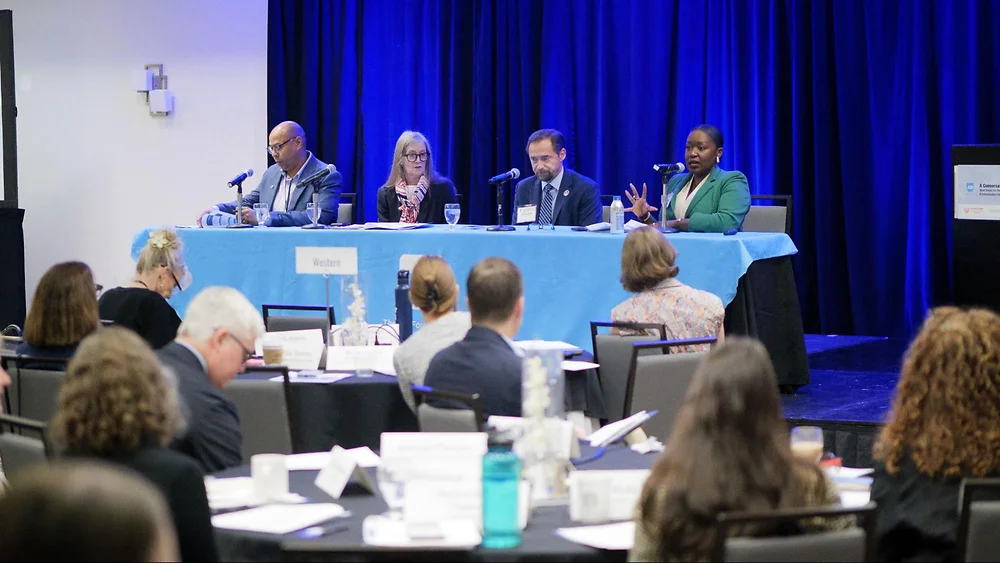
To confront these barriers and reshape the national conversation around campus mental health policy, The Jed Foundation (JED), in partnership with Lumina Foundation and Trellis Foundation, convened nearly 100 leaders from across higher education, public health, philanthropy, and student advocacy for a two-day policy convening.
Held June 16–17 in Salt Lake City, “A Conversation with the Compacts: Next Steps for States to Advance Behavioral Health in Postsecondary Education” marked a first-of-its-kind behavioral health nonprofit lead meeting, bringing together all four of the nation’s regional education compacts: the Midwestern Higher Education Compact (MHEC), New England Board of Higher Education (NEBHE), Southern Regional Education Board (SREB), and Western Interstate Commission for Higher Education (WICHE). These nonpartisan consortiums represent 47 states and territories and six affiliate partners.
Stephanie Marken, Gallup’s Higher Education Practice Lead, presented findings from the 2026 Lumina Foundation-Gallup State of Higher Education study. The data underscore the stakes of the moment: one in three students has considered stopping out or leaving school in the past six months, with emotional stress and mental health challenges cited as the leading reasons. These findings make clear that student mental health is a central driver of whether students stay, succeed, and complete their degrees.
“This is a defining moment for higher education. Student mental health is no longer an elective resource on campus; it is foundational to student success, workforce readiness, institutional resilience, and our nation’s future,” said Dr. Zainab Okolo, JED’s Senior Vice President of Policy, Advocacy, and Government Relations. “That is precisely why it is so important for the regional education compacts to come together now. No single institution or state can solve these challenges alone. By aligning across regions, sharing best practices, and advancing a common policy agenda, we have an unprecedented opportunity to accelerate meaningful systems change. The choices we make today will determine whether millions of students merely survive or truly thrive. We have the responsibility to build systems that recognize mental health as essential infrastructure for learning, opportunity, and long-term success.”
JED CEO John MacPhee joined compact leaders for a high-level policy conversation on what sustained, coordinated, national leadership on student behavioral health must look like going forward.
“At a time when students, educators, and institutions are navigating a higher education landscape with profound uncertainty, collaboration across sectors has never been more important,” said MacPhee. “We are proud of the success we’ve seen through the implementation of JED’s comprehensive approach across campuses, and are eager to continue to expand that approach across broader systems.”
Participants left Salt Lake City aligned around three main priorities to advance student behavioral health at the state and institutional levels:
- Suicide prevention demands a comprehensive, upstream approach with sustained investment in evidence-based programs and cross-sector collaboration that strengthens partnerships among K-12 schools, higher education institutions, health care systems, community organizations, philanthropy, and state agencies.
- Student voices are essential at every stage and must be included in both policy design and the implementation of programs that affect them. This means creating formal advisory councils, compensating students for their participation, and soliciting continuous feedback.
- Workforce development is a prerequisite for progress. The shortage of behavioral health professionals on and off campus remains one of the most pressing barriers to student care. States and institutions must work together to improve reimbursement and retention, strengthen training pipelines, expand supervision opportunities, and increase campus clinical capacity so that students can access support when and where they need it.
Utah State Senator Ann Millner (R-05) and Utah State Representative Steve Eliason (R-43), Senior Director of Behavioral Health at the Huntsman Mental Health Institute, participated in a policymakers fireside chat examining innovative strategies, such as Utah’s short-term Behavioral Health Tech certificates as an entry to clinical social work and psychology pathways.
“We passed legislation in 2024, established a code, and got the funding, with the result being five schools offering this program and producing 80 graduates, with 79 placed. It is a beginning, but we have a chance to make a difference. In order to meet workforce needs, it takes a partnership and innovation to ensure it will work in your state.” — Utah State Senator Ann Millner
“I was proud to help champion 988 at the federal level and support innovative youth mental health solutions in the Utah Legislature. These efforts are helping students in crisis, and are making a difference as evidenced by our lower rates of youth suicide. However, there is still much work to do to help young people thrive and prevent suicide. I was honored to join The Jed Foundation and higher education leaders to discuss how we can move further upstream in suicide prevention and build campuses and communities where every student has the support they need to succeed.” — Utah State Representative Steve Eliason, Senior Director of Behavioral Health, Huntsman Mental Health Institute.
During his closing keynote panel, Dr. Tom Harnisch, Vice President for Government Relations at the State Higher Education Executive Officers Association (SHEEO), examined the shifting federal policy landscape, including implications for the Substance Abuse and Mental Health Services Association, Higher Education Emergency Relief Fund successor programs, Medicaid, and Title IV, and how states can build resilient strategies in a volatile environment. Other sessions addressed the surge of artificial intelligence in higher education, changes in federal oversight, and pressures on state budgets.
The convening remained committed to centering student voices including, Saanvi Arora, Executive Director of the Youth Power Project, highlighted the roundtable as a catalyst for broader youth engagement in mental health policy.
“It was a really perfect opportunity for us to platform the ways young people can get more involved and should be incorporated into a lot of these conversations,” said Arora. “[The convening] got me thinking about ways that our advocacy can incorporate an understanding of how state and federal lawmakers address mental health issues and the urgency of also talking to school administrators.”
Several key remarks were offered by compact leadership, including Dr. Michael Thomas, President and CEO of NEBHE, who reflected on the significance of bringing this breadth of leadership together.
“Participants at this event have been vastly benefited by the opportunity to share insights and perspectives across institutions, organizations, and states,” said Dr. Thomas. “Our students, institutions, and communities deserve the best that we can offer to support them in achieving their potential. And the takeaways from this event will be prime fuel for our further efforts.”
The days concluded with collaborative conversations from across the compacts along with the creation of a shared policy agenda. Participating leaders from across state and national organizations included; The American Council on Education, The Association for University and College Counseling Center Directors, Coalition for Student Wellbeing, Complete College America, Eclatech Solutions, Futuro Health, The Healthy Minds Network, The Hope Center for Student Basic Needs, The Huntsman Mental Health Institute, inseparable, Mental Health America, Mental Health Literacy Collaborative, National Association of Student Personnel Administrators, New America, New York City Department of Health and Human Services, Ortus Foundation, The Philanthropic Collaborative for Education, State Higher Education Executive Officers Association, Trellis Strategies, Wellness Together, and Yale School of Medicine.
To view photos of the event, visit JED’s Facebook photo album. To learn more about JED’s policy, advocacy, and government relations work, visit JED’s website.
###
JED is committed to protecting emotional health and preventing suicide for our nation’s teens and young adults. JED partners with high schools, colleges, school districts, and youth-serving community-based organizations to strengthen their mental health, substance misuse, and suicide prevention programs and systems. JED equips teens and young adults with the skills and knowledge to help themselves and each other, and encourages community awareness, understanding, and action for young adult mental health.
Connect with JED: Email | LinkedIn | Instagram | Facebook | TikTok | Snapchat | YouTube
Media Contact
Justin Barbo
PR Director
The Jed Foundation (JED)
justin@jedfoundation.org