

Youth POV: What Kunling Wants Adults to Know about Teen Mental Health
Before high school, Kunling loved bird-watching. She would go outside with a journal and draw what she saw. She began nature journaling in middle school. ...
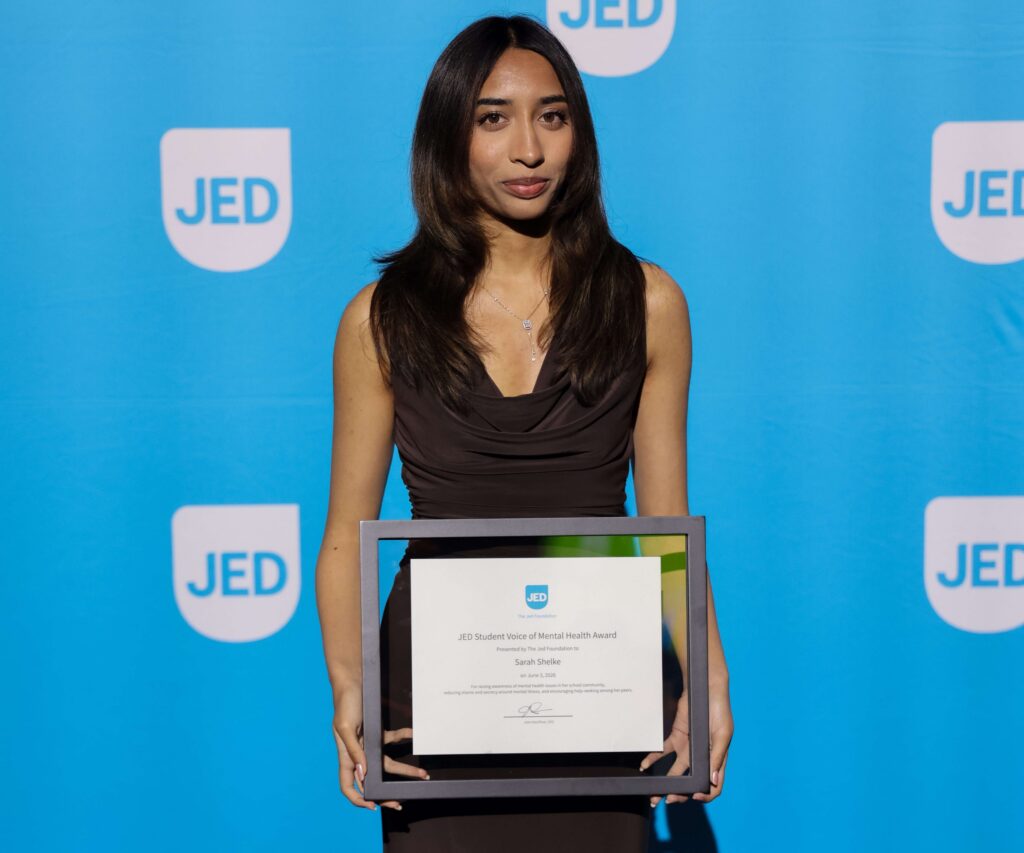
Sarah Shelke was drawn to mental health advocacy after seeing a family member struggle. Recognizing a mental health care gap in her community, particularly for low-income youth of color, she decided to do something about it. The 17-year-old recent graduate of Monta Vista High School in Cupertino, California, who will attend the University of California, Berkeley, founded Mind4Youth, a nonprofit working to close the emotional health resource accessibility gap for youth of color by delivering self-care products and providing free therapy to students in homeless shelters and foster-care centers. Since Sarah started the organization in her ninth-grade year, Mind4Youth has become one of the world’s largest youth-led nonprofits, with 155 chapters across 72 countries. They’ve provided 68,000 self-care products, 5,200 mental health care kits, and 1,800 free therapy vouchers for students in communities that need them most.
This work has allowed Sarah to make her voice heard by policymakers. She has spoken to the United Nations Committee on the Rights of the Child, advocated on Capitol Hill, and supported a bill that was introduced in the Virginia State Legislature.
A published author and co-developer of an international online teen mental health curriculum, Sarah has been named a finalist for the International Children’s Peace Prize, is a Princeton Prize in Race Relations recipient, and has been featured on Lady Gaga’s Born This Way Foundation website.
The Jed Foundation (JED) created the Student Voice of Mental Health Award to recognize students for their outstanding efforts to raise awareness for mental health issues and encourage help-seeking behaviors in their school communities. The award includes a $3,000 scholarship. Sarah and JED’s college honoree, Kyra Wagner, received their awards at JED’s annual gala in New York City on June 3.
We talked to Sarah about her experience as a youth changemaker.
What does it mean to you to have been selected as the Student Voice of Mental Health Award high school recipient?
It truly feels surreal to have been selected as a high school recipient. Recognition doesn’t feel important to me. I would say the most important part [of this award] is to really shine a light on mental health awareness, and also show other young changemakers around the world that there’s no certain age you need to be to start making a change.
You’ve founded one of the world’s largest youth-led nonprofits, Mind4Youth, helping to reach students in 72 countries. Mind4Youth has a focus on serving youth who may not have access to adequate mental health care, including those in homeless and foster-care shelters. What inspired you to center the organization’s work on this demographic?
Growing up, one of the biggest barriers that I personally faced in accessing mental health care was financial limitations. And it wasn’t just a personal problem that I saw. As I kept doing more research into other youth who faced this same kind of challenge, I found that it was such a widespread issue, where financial instability and coming from a lower socioeconomic background prevented a lot of youth from seeking the help that they needed. I found youth from homeless shelters faced the biggest barriers to care because it wasn’t just mental health care that was a barrier for them; it was also so many other basic necessities. So I started to question there: How would youth from those kinds of backgrounds be able to prioritize mental health care when they have so many other necessities that aren’t being met? That’s why I chose to center my work for youth on that demographic.
You’ve advocated for youth mental health, speaking in front of the UN Committee on the Rights of the Child and on Capitol Hill, and you’ve supported a bill that was passed in the Virginia State Legislature. How have these experiences shaped how you approach your advocacy?
They shaped my advocacy by showing me that change on a larger scale was not impossible. To be the youngest woman in the room, especially one of the few people of color there, it was already feeling like a limitation at the start. But I think getting over that fear and that hurdle showed me that my background is not my disadvantage; it’s actually an advantage for how I advocate for mental health and for other health-care issues around our country. It showed me that change was possible on any scale, because the legislation we were advocating for would not just change the lives of people in my local community, but all around the United States.
What are your goals for the initiatives you’ve started, as well as your personal advocacy work?
My goal is to continue all of the work I’m doing in college and beyond. I’m really grateful to have started Mind4Youth and to have built it to this scale because, along the way, we’ve created such an amazing community of other young people who also want to create change in their own communities. I want to keep that sort of community and organization going to continue impacting more youth around the world.
Policy is a very big field that I’m trying to go into, so [one of my goals is] continuing to advocate and pass legislation at the state and federal levels to make mental health care accessible.
Given your demanding schedule, how do you prioritize and practice self-care and take care of your mental health?
It’s about taking breaks so you’re completely able to push back from anything that’s stressing you out and trying to focus on other things that maybe help you relax or just not think about it, whether that’s something as simple as taking a walk in the park or hanging out with friends. I just allow myself to take a break and not feel guilty about not being productive every single second.
If you could offer one piece of advice to a young person struggling with their mental health, what would it be?
Do not feel like you’re alone in your struggles. I know it’s so easy to feel isolated. I’ve been through a similar challenge as well, but, truly, there are more people around you who may be struggling, even if they look completely fine on the outside.
Feel free to talk to someone you trust, whether that’s an adult, someone at your school, or a family member. There are more people who are ready and open to help you in any capacity that they can, so don’t feel afraid to reach out.
If you or someone you know is in crisis or needs support right now, text, call, or chat 988 Lifeline, or text HOME (or HOLA) to 741-741 to reach the Crisis Text Line.