Tony’s Story: Finding Comfort in a Community’s Support
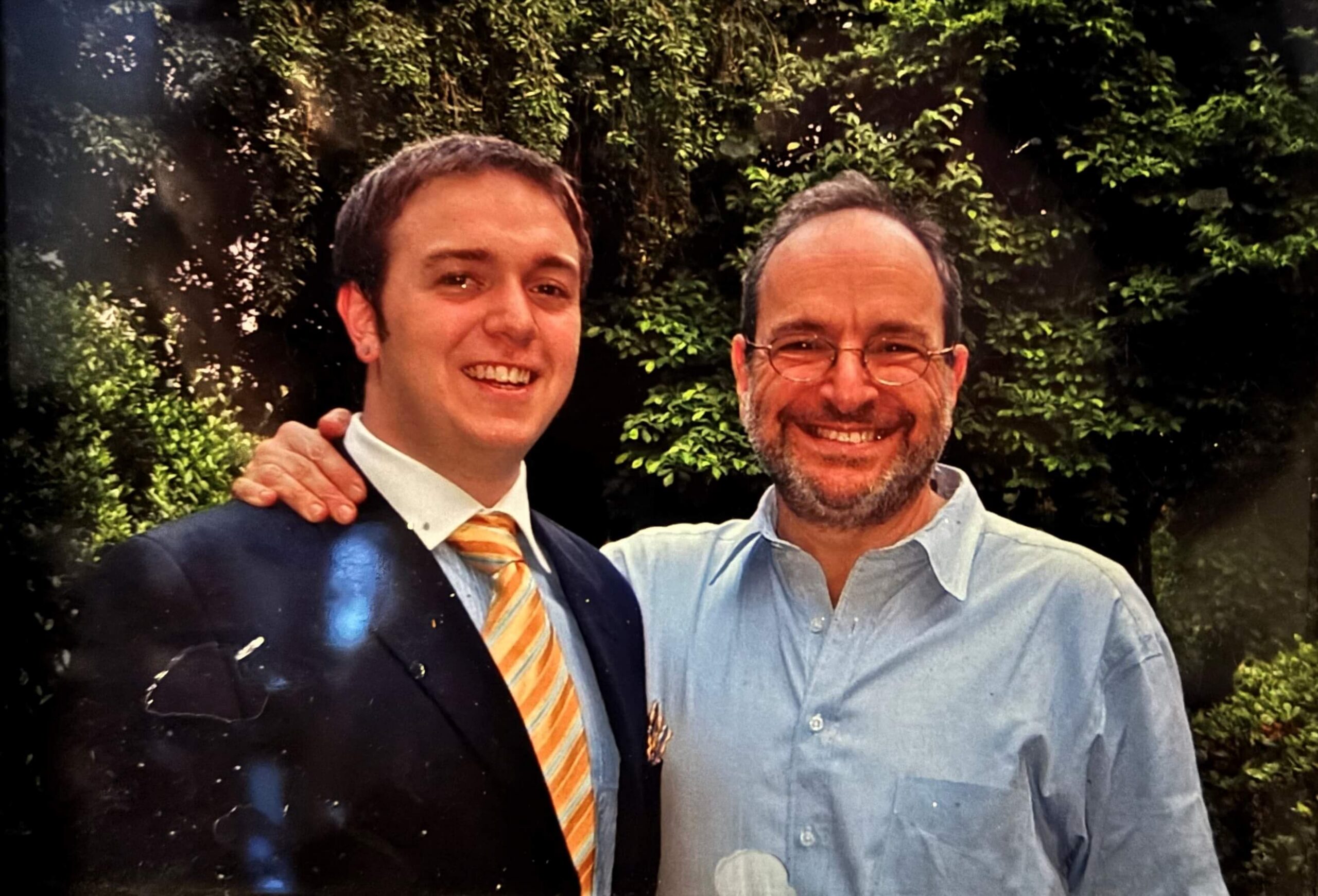
Tony, with Julian, on the day of his senior prom
In 2021, when Julian died at age 32, his family chose to speak openly about the fact that Julian died by suicide.
His father, Dr. Tony Rostain, said that speaking openly would have been far less common just a few years earlier. Something in the culture had shifted. Families were speaking more plainly, and the silence that once surrounded suicide had begun, slowly, to loosen.
That shift didn’t make grief easier, but it changed the way he grieved.
Tony has spent his career as a psychiatrist, working with children, adolescents, and families in crisis. He has treated patients who struggled with thoughts of suicide and suicide attempts. He had even lost patients to suicide. None of that prepared him for losing his own child.
“When Julian died,” he says, “it was a profound shock to everyone who knew him.” Even though Julian had struggled with depression, it was hard to reconcile his death with the way others experienced him. Friends kept saying the same thing: “Not Julian. He was the one we turned to.”
In the days after his death, Tony and his family gathered in a backyard with about 30 relatives. There was one rule: They wouldn’t talk about why Julian died. They would talk about who he was and how he lived.
For more than an hour, people shared stories. And Tony remembers feeling, for the first time since the loss, something other than devastation.
Soon after, Tony held shiva — four nights of open gathering. More than 400 people came. Julian’s friends came from different chapters of his life. The volume of love didn’t erase the pain, but it changed how Tony carried it.
“The sense of being in a community rather than suffering this alone made a world of difference,” he says.
Shame and self-blame still surfaced. Tony describes the familiar spiral many parents experience after a suicide loss: What did I miss? What should I have done differently? Those thoughts didn’t disappear overnight. But over time, compassion from others softened their grip.
About a year after Julian’s death, Tony said he realized that self-blame had become an obstacle to grieving. As long as he stayed locked in what he should have done differently, he couldn’t fully accept Julian as a whole person, as someone who lived a complete life.
He wrote a mantra:
Mourn his death Honor his memory Cherish his heart Live with his spirit Love him always
In the months that followed, love showed up in unexpected ways. Tony began dreaming about Julian. At first the dreams were terrifying. Then one night, they changed.
Tony was sitting by the sea. Julian emerged from the water, young again, 7 or 8 years old. Tony wrapped him in a towel and held him. The hug felt real and when Tony woke up, he cried.
“That was a turning point,” he says. “It helped me understand that Julian was still alive in me.”
The dreams continued to evolve. Sometimes Julian appeared older. Sometimes they talked. Sometimes Tony knew, even in the dream, that Julian would leave again. Painful as they were, the dreams became another way of staying connected.
Near Tony’s home, in a park by the Schuylkill River, there’s a meadow where he and Julian used to walk their dogs. Tony dedicated a bench there in Julian’s memory — a place for friends to sit, to gather, to remember.
The point has never been to memorialize how Julian died, Tony says, but to honor how he lived.
That distinction matters to him, especially when conversations turn to suicide prevention. Tony still believes deeply in prevention; he built his career around it. But he’s careful with language that suggests every suicide is preventable, because he knows where that idea can deepen shame and self-blame for families. What remains, for him, is how we respond afterward. Whether families are left alone with shame, or surrounded by people who allow grief to exist without explanation.
“The meaning of someone’s life,” Tony says, “has nothing to do with how they died.”
If you or someone you know is experiencing a mental health crisis, call the national suicide and crisis number — 988 — or text HOME to 741-741 for a free, confidential conversation with a trained counselor at any time. If the mental health crisis results in a medical emergency or if there is immediate danger of harm, call 911 and explain that you need support for a mental health crisis.
If you or someone you know needs to talk to someone right now, text, call, or chat 988 for a free confidential conversation with a trained counselor 24/7.
You can also contact the Crisis Text Line by texting HOME to 741-741.
If this is a medical emergency or if there is immediate danger of harm, call 911 and explain that you need support for a mental health crisis.