


Social Media Companies Finally Being Held to Account on Youth Mental Health
On Wednesday, a Los Angeles jury found Meta and YouTube negligent in the design and operation of their platforms. They determined that both companies knew ...
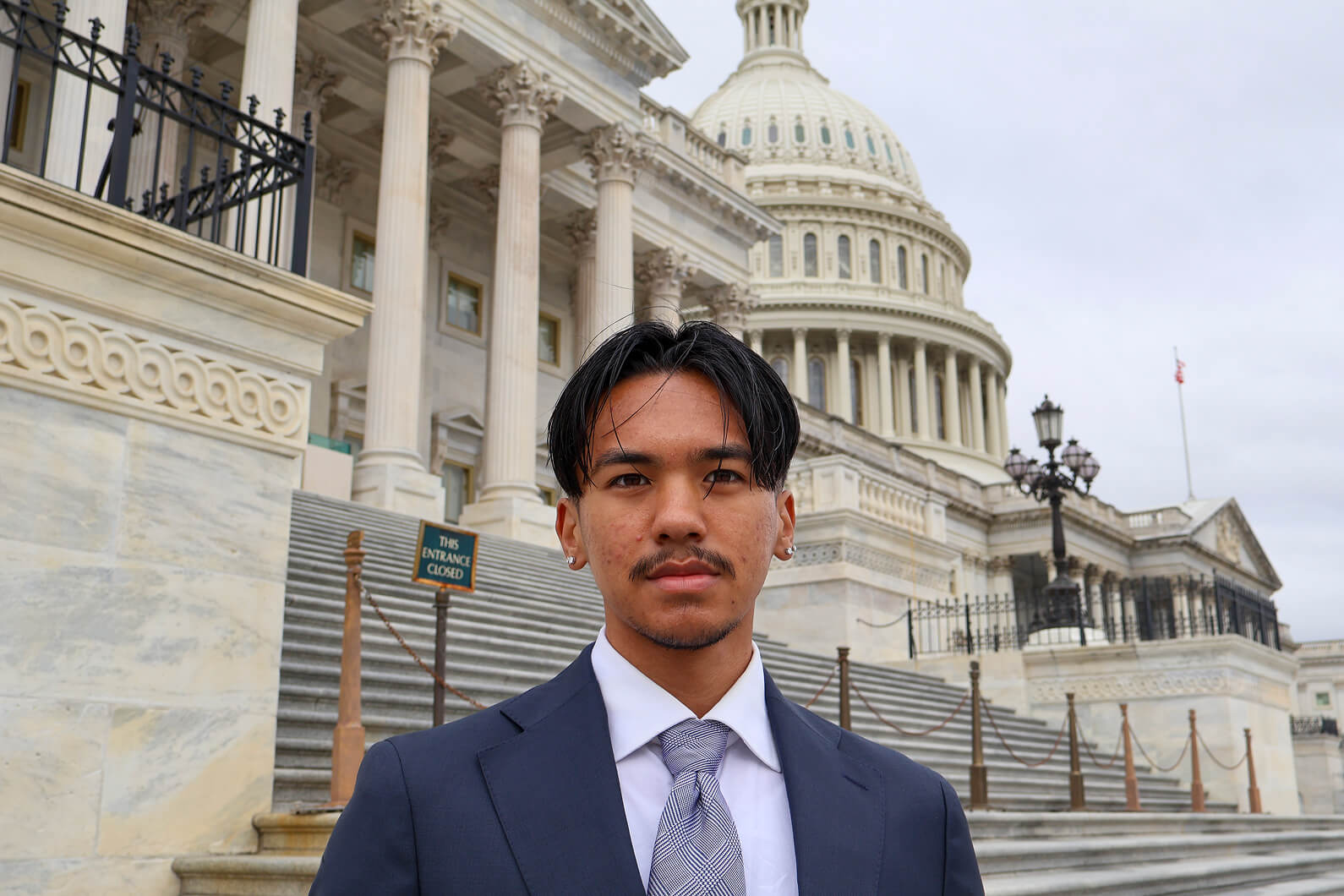
By Juan Garcia, The Jed Foundation Youth Advocacy Coalition Texas Fellow ’25
For years, I felt that I was trapped by my mental health challenges and there was no escaping them. As a teenager, I was bullied for how I looked and for simply being myself. I began to hate what I saw in the mirror, and self-loathing followed me into nearly every relationship I had. I tried to pretend everything was fine, but inside I was breaking apart. The conversation around mental health in my community only made things worse. I grew up hearing that mental health struggles were “a weakness” or “not real.” I was told that men don’t cry, that we’re supposed to be strong. I engaged in self harm as a way to release what I couldn’t express. It wasn’t that I wanted to die. I simply wanted to escape the pain that consumed me and the life I was living. At the time, I wasn’t aware of safer methods to release this pain. I did not know that things would eventually get better.
I wrote this poem during that most difficult time. It’s really hard to look back at it today because I’m in such a different place.
Through his blues
He entails the darkest hues
Disgraced and confused
His story written on his sleeves
Trying to disguise the pain
Bearing sorrow in his eyes
Too heavy to hide
Drowning in rising tides of sentiment
Behind comforting lies
He feels forever bound to his suffering
Clinging onto what little faith remains
Can’t seem to tend to his emotions
He tends to crumble up
Left with no devotions
Another moon, another plight
Falling victim to his fears
His vague hope eclipses
But at the turn of the night
He notices the colors changing in the sky
As a way forward dawns upon him
With a warmth that slowly dries his tears
Starting college brought new challenges. Transitioning to a different lifestyle, combined with my ongoing struggles and lack of healthy coping mechanisms, led me back into self-harm and suicidal thoughts. I sought help at my university wellness center, only to be disappointed. The counselor told me they didn’t have much to say since I already seemed “aware” of my emotions and their root causes, and therefore any follow-up was up to me. The lack of interest in supporting me with a treatment plan or regular appointments felt like my pain had been acknowledged but dismissed at the same time. Unfortunately, the experience led me to avoid seeking any further help on my campus.
However, a major part of my healing journey was realizing I wasn’t alone. A close friend from high school was going through almost the same thing — the same silence, the same lack of institutional support, the same cultural stigma. We both realized how widespread mental health struggles are and how they are often treated as personal failings rather than systemic issues.
Looking back, I am proud of myself for finding the strength to take care of myself and heal; however, I recognize that there should have been more resources and support for me to turn to. The limited resources in the nearby rural communities discouraged me further from seeking help. While the county I grew up in (Erath, Texas) has the highest rates of depression among adults in the region, challenges such as costs and insurance coverage persist as barriers to mental health care. My experience illustrates the significance of policies that make mental health care accessible to all. Often, someone’s life may be on the line.
By seeing other people going through the same thing I was, I learned to see myself for who I truly was. I learned that I wasn’t defined by my emotions or my past. I learned to love myself. I learned that change starts from within. I learned that life truly is beautiful and worth living. Slowly, I began developing healthier ways of coping. I adopted habits such as journaling, meditating, and practicing gratitude. Living in the moment became essential. I learned that it’s unrealistic to expect healing without putting in daily effort. Growth doesn’t happen all at once; it’s a gradual process that takes time and requires patience with oneself.
Healing taught me to be honest and compassionate with myself and others. I learned that strength doesn’t mean suppressing your emotions. It means confronting them honestly. I also learned that silence helps no one. When we share our stories, we give others the strength to speak up and to heal. My story, alongside the stories of others, reveals that addressing mental health challenges shouldn’t have to depend solely on the individual. We need support systems that care for people and equip them with coping tools before they reach their breaking point. It is increasingly important that our systems allow for people to be themselves and cater to a wide set of different needs and cultures. Addressing the shame and secrecy around mental health through education and media is of utmost importance in order to continue shifting the narrative surrounding mental health. In an ideal community, everyone would have access to mental health as preventive care rather than only as a crisis response.
While my poem represents the darkness I endured, I hope my story may serve others as a reminder of the light that follows. Although I may never erase my past, it doesn’t have to define me. The present is a gift, and so I choose to live in the moment; one day at a time.
If you see yourself in any part of my story, please reach out for help. You are not alone.
Having suicidal thoughts is not uncommon, but they should always be taken seriously. Use these resources to have open and important conversations, reach out for help, and begin feeling better.
You are not alone if you are struggling with suicidal thoughts or behaviors, or if you are worried someone in your life may be. There is hope and help available. Use these resources to have open and important conversations, reach out for help, and begin feeling better:
If this is a medical emergency or if there is immediate danger of harm, call 911 and explain that you need support for a mental health crisis.
You can find resources on self-injury, which includes what self-injury is, why someone might turn to it, and how to recognize the signs in yourself or someone else. You can also find resources for suicidal thoughts.
Visit JED’s Mental Health Resource Center to find easy-to-use tools and tips for managing feelings like anxiety and sadness, as well as guides to supporting the people you love, including how to get professional support if you—or they—need it
If you or someone you know needs to talk to someone right now, text, call, or chat 988 for a free confidential conversation with a trained counselor 24/7.
You can also contact the Crisis Text Line by texting HOME to 741-741.
If this is a medical emergency or if there is immediate danger of harm, call 911 and explain that you need support for a mental health crisis.