

Social Media Companies Finally Being Held to Account on Youth Mental Health
On Wednesday, a Los Angeles jury found Meta and YouTube negligent in the design and operation of their platforms. They determined that both companies knew ...
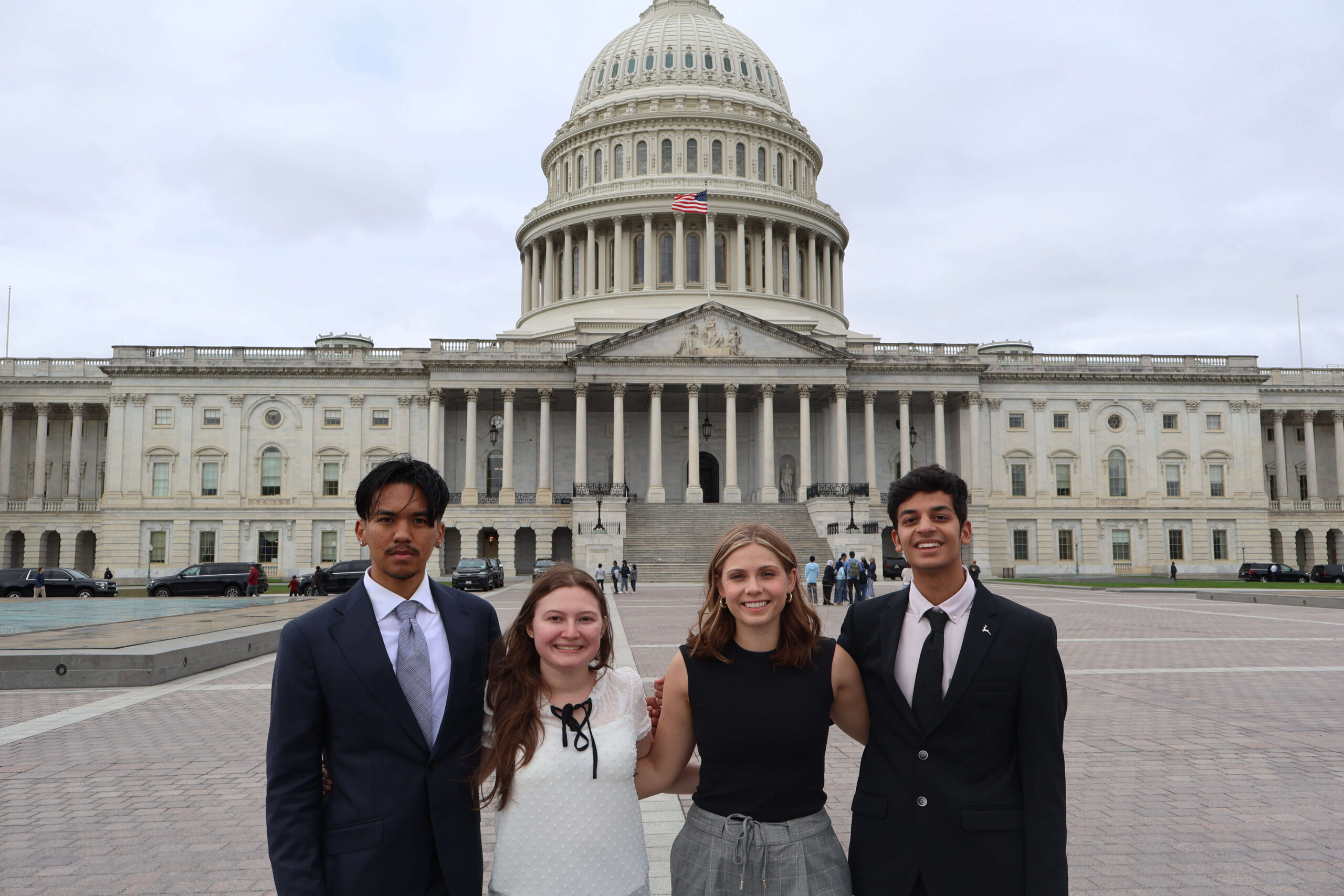
This fall, The Jed Foundation (JED) launched the Texas Mental Health Youth Advocacy Coalition (YAC) Fellowship Program, a paid six-week mental health advocacy training program for college students in and from Texas. Made possible by the generosity of the Trellis Foundation, the YAC fellowship was established to train young people in mental health policy and advocacy at the local, state, and federal levels.
The Texas YAC fellowship addresses a critical need: ensuring that the voices of those most affected by mental health challenges — young people themselves — are heard by policymakers and decision-makers. At a time when mental health funding faces uncertainty and youth mental health needs remain urgent, empowering the next generation of advocates has never been more important.
The inaugural class of fellows was chosen through a competitive statewide process and included four undergraduates from across Texas: Juan Garcia Jr., a fourth-year Public Health student at Tarleton State University; Ivanna Sintes-Klein, a third-year Health Promotion and Behavioral Science student at University of Texas, Austin; Rachel Davis, a fourth-year psychology student at Texas A&M University Central Texas; and Rohan Satija, a freshman psychology and pre-med student at UT Austin.
Each fellow brought with them personal experience navigating mental health challenges, whether in their own or their families’ lives, among friends, or within their communities. Most had never met with an elected official before joining the program and said they felt only somewhat confident in their ability as students to shape mental health policy. The YAC fellowship aimed to change that, transforming their lived experiences into powerful advocacy tools.
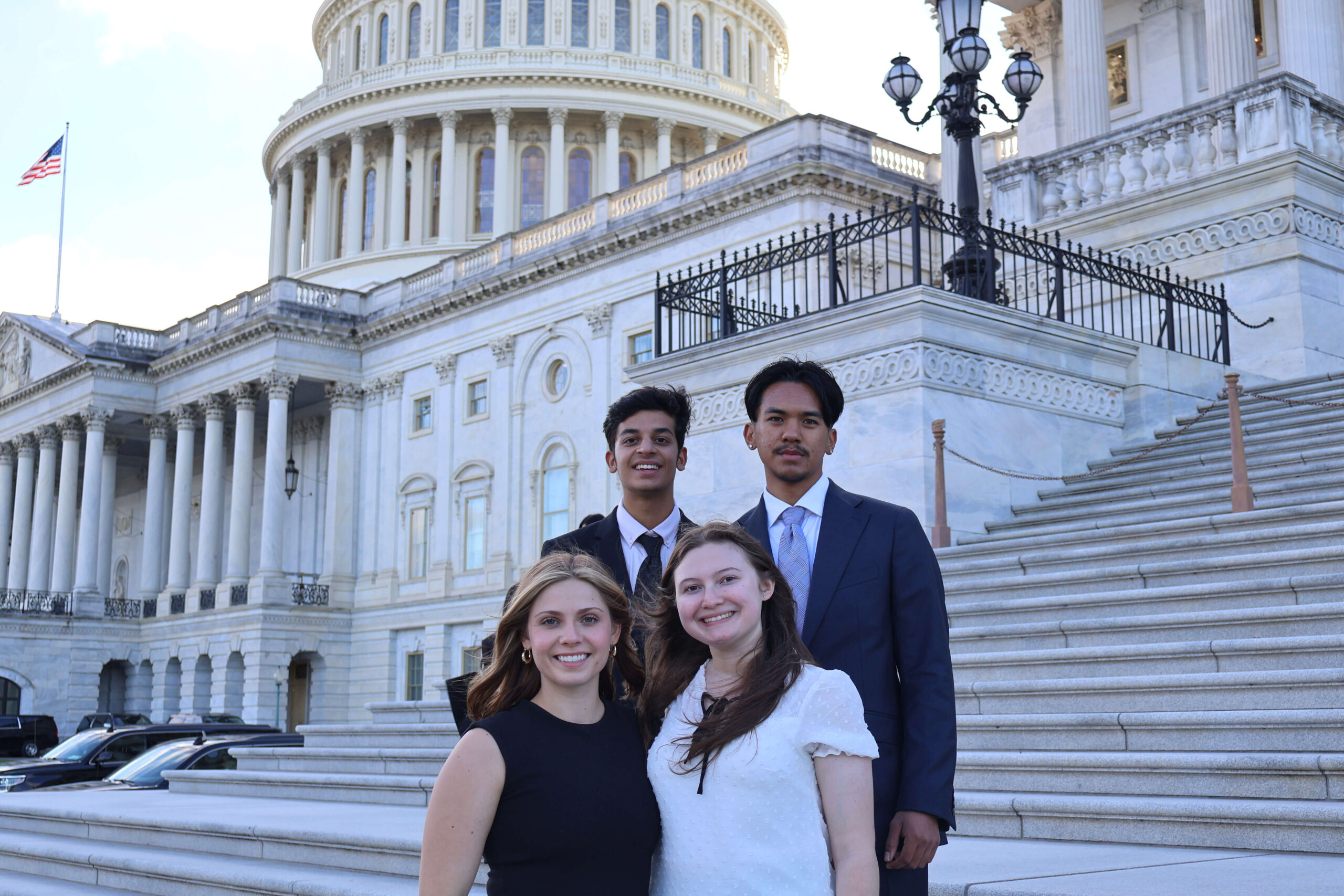
The fellows received in-depth training on the policy and appropriations process for mental health programs. They participated in mock legislative meetings and researched legislation they believed could make a difference in their communities.
On October 13th, in the midst of a government shutdown, the fellows travelled to Washington, D.C., for a “Hill Day” meeting with legislative staff members of their elected officials. They met with staff of five federal offices in person and with staff from four state- and council-level offices virtually. The experience helped them understand the power they held as constituents to focus their representatives’ attention on mental health issues.
Throughout their meetings, the fellows advocated for federal funding for programs including the Garrett Lee Smith (GLS) Suicide Prevention Campus grants, Project AWARE, and the 988 Suicide & Crisis Lifeline. These programs have supported the expansion of mental health services in K-12 schools, colleges, and universities, as well as providing support directly to youth who need it. Programs like GLS and Project AWARE remain a bipartisan priority in Congress and were both included in the President’s FY26 budget request. However, with the government stalled on funding negotiations and the severe staff cuts to the agency that manages these grants, funding is far from guaranteed. The fellows took the opportunity of their Capitol Hill meetings to remind Congressional staffers of the impact these funds make back in their home districts.
The fellows also highlighted specific legislative proposals to address the mental health access barriers in rural Texas as well as the newer challenges youth are facing given the increase in artificial intelligence (AI) and social media:
Five years post-pandemic, this is a critical time for organizations, colleges, and state agencies dedicated to mental health awareness and access. Some federal funds from the federal Bipartisan Safer Communities Act have expired, and as states and colleges manage tighter budgets, mental health programs are often the first to face cuts.
Yet, we are also seeing some hopeful trends in youth mental health. The Substance Abuse and Mental Health Services Administration’s 2024 National Survey on Drug Use and Health (NSDUH) shows that, among youth aged 12-17, the percentage who had serious thoughts of suicide declined from 12.9% in 2021 to 10.1% in 2024, while the percentage who had a major depressive episode in the past year declined from 20.8% in 2021 to 15.4% in 2024. At the same time, the percentage of people 12 or older with a drug use disorder in the past year increased from 8.7% in 2021 to 9.8% in 2024.
Despite these positive signs, too many young people are still struggling. In the fellows’ home state of Texas, according to the Youth Risk Behavior Survey (YRBS), 21.1% of high school students in 2023 had seriously considered attempting suicide while 42.4% had stopped doing some of their usual activities due feelings of sadness and hopelessness.
Not only are these rates concerning, they are representative of many of the experiences that the fellows carried into their college years, having lived or personally been affected by mental health issues in their homes, among their friends, in their communities. At the same time, the fellows shared experiences that highlight how challenging it can be to seek help, especially in Texas, where 246 of the state’s 254 counties are designated Mental Health Professional Shortage Areas.
The fellows channeled their experiences into a digital storytelling initiative that comprised a key component of the YAC program. In moving pieces to be published on JED’s website, each of the fellows shared part of their own struggles with mental health and how they addressed those challenges, touching on themes of depression, masking, social media harms, and social anxiety. Their hope is to harness the power of authentic storytelling to engage college students like themselves in normalizing conversations about mental health and inspiring help-seeking behavior.
Through all of these initiatives, the YAC program offered a space for the fellows to draw on their experiences to assert their agency in advocating for change and exercising their drive to serve their local communities and peers.
If you or someone you know needs to talk to someone right now, text, call, or chat 988 for a free confidential conversation with a trained counselor 24/7.
You can also contact the Crisis Text Line by texting HOME to 741-741.
If this is a medical emergency or if there is immediate danger of harm, call 911 and explain that you need support for a mental health crisis.