For Mental Health Awareness Month, youth, mental health and educational experts, and lawmakers convened to center student well-being in education and policy.
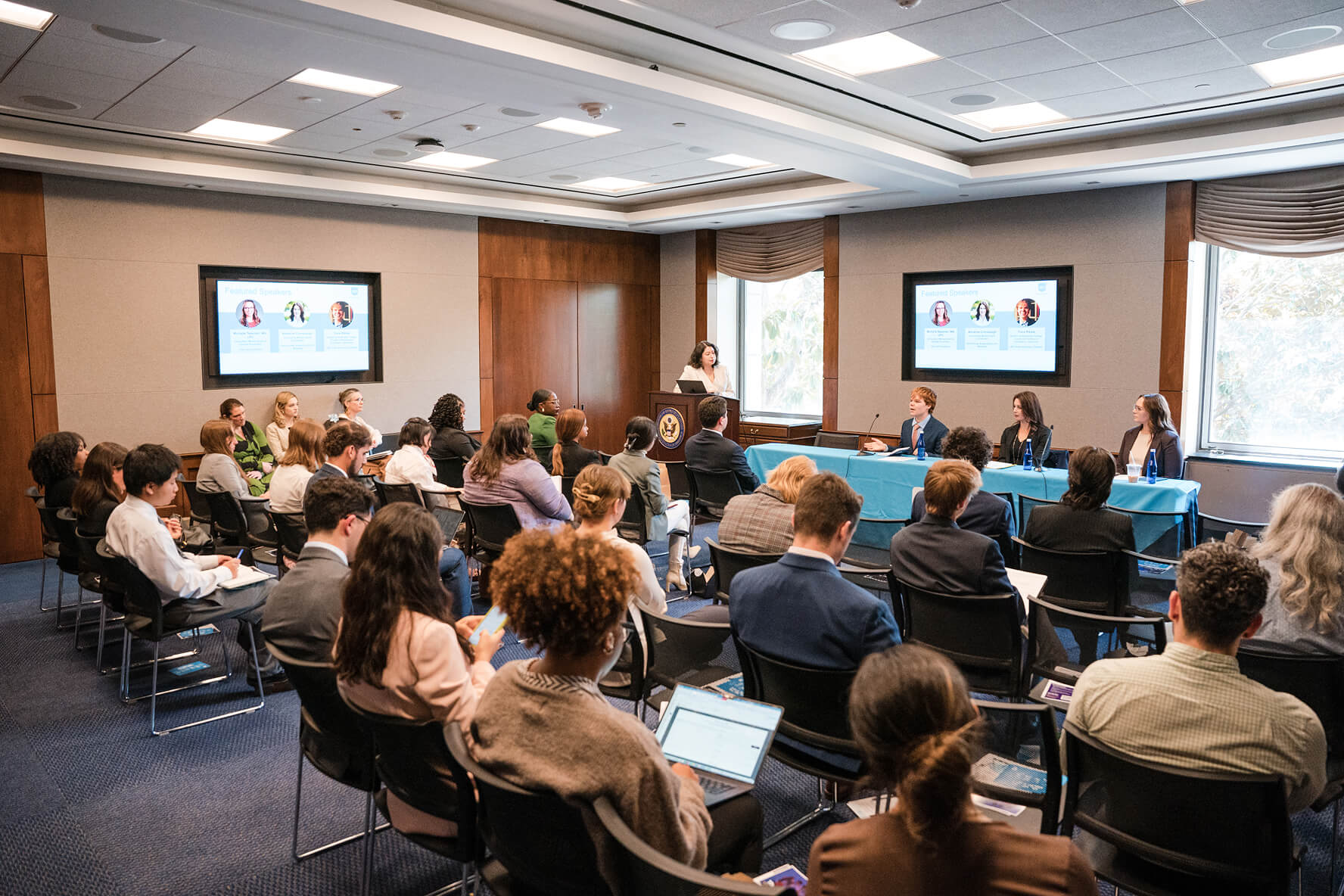
[May 18, 2026, Washington, D.C.] – As demand for mental health services continues to rise, schools and colleges are adopting comprehensive, evidence-based approaches to support student well-being nationwide. On May 14, The Jed Foundation (JED) held a Congressional briefing, “Scalable Mental Health Models for K-12 & Higher Education,” on Capitol Hill with youth advocates, education leaders, policymakers, and mental health experts to share deeper insights into expandable K-12 and higher education strategies and the role federal leadership can play in supporting the well-being and success of America’s students.
Moderated by Martha Sanchez, JED’s director of policy, the event began with opening remarks from Dr. Zainab Okolo, JED’s senior vice president of policy, advocacy, and government relations, who highlighted the organization’s policy priorities, programs with school communities and community-based organizations, and the newly announced intent to merge with the American Foundation for Suicide Prevention (AFSP).
“JED is committed to advancing comprehensive approaches in schools, organizations, and communities that help prevent youth suicide and support student well-being. Federal investments in youth mental health are critical to building sustainable systems of care that connect young people to prevention, early intervention, crisis response, and treatment services,” said Dr. Okolo. “Programs like the Garrett Lee Smith Suicide Prevention Program and Project AWARE (Advancing Wellness and Resiliency in Education) help schools and colleges implement evidence-informed strategies that strengthen support for youth nationwide. Through initiatives like JED Campus and the JED and AASA District Mental Health Initiative, we are seeing how strong federal, state, and local partnerships can create scalable models that help students thrive.”
Panelists and the sixty attendees explored how coordinated school, campus, and state level strategies, supported by federal funding, are shifting institutions toward proactive, prevention-focused models. The panels featured discussions around youth-focused initiatives supporting suicide prevention, early intervention, and crisis response. Key takeaways from the event included:
- Federal investments in mental health are critical to helping institutions build sustainable systems of care that extend beyond schools and campuses to include community-based and hospital services.
- Youth mental health requires a flexible, comprehensive approach. Programs such as the Garrett Lee Smith Suicide Prevention Program support institutions in implementing a continuum of services ranging from prevention and early intervention to crisis response and treatment for students.
- Rural schools depend on initiatives like Project AWARE to expand access to mental health services and strengthen support systems for children and families in underserved communities.
Recent data highlights the urgency of JED’s work in policy, advocacy, and government relations. A 2025 UNICEF study found that young people ages 14–25 often feel overwhelmed and disempowered, with 40% citing mental health shame and secrecy in schools and workplaces as a significant barrier to seeking support.
“Every young person deserves access to mental health support before they reach a point of crisis, and that starts with ensuring our schools and campuses have the resources to meet them where they are,” said Congresswoman Lori Trahan (D-MA-03). “The Garrett Lee Smith grants and Project AWARE are delivering real results for students and the educators who support them, and we can’t afford to walk that back. I’m proud to join JED and my colleagues in this bipartisan conversation, because when we invest in youth mental health, we invest in the future of our communities.”
Conversations also included what a scalable model in K-12 schools and higher education looks like, how federal support can close gaps and support student well-being, and an impactful perspective from Dartmouth College student Trace Ribble on youth mental health today and ways this demographic engages in policy discussions across all levels of government.
“I come from rural Oklahoma, where mental health resources are scarce, and the few that do exist are stretched thin. As a member of JED’s Youth Advocacy Coalition, I advocate for eradicating mental health disparities in my hometown and in communities nationwide,” said Dartmouth College student Trace Ribble. “Whether in big cities or rural communities, policymakers should prioritize and invest in student well-being. K-12 school districts and college campuses are where emotional health habits are learned, services can be more readily accessed, and meaningful opportunities for positive intervention exist.”
Higher education institutions and K-12 school districts are actively adopting data-informed strategies such as JED’s comprehensive approach to mental health promotion and suicide prevention to support student well-being in response to growing demand. JED Campus partners with 551 colleges and universities, reaching nearly seven million students. This type of programming saw statistically significant improvements in student mental health at the end of the program, relative to baseline. Students reported they were 10% less likely to experience suicidal ideation, 13% less likely to make a suicide plan, and 25% less likely to suicide attempt in the last year.
The JED and AASA District Mental Health Initiative actively works with 32 K-12 districts representing 785 schools and over 543,000 students to create a strategic action plan that serves as a road map for systemic change. Adrienne Cronebaugh, community mental health coordinator for Park County School District #1 in Wyoming, supports JED’s work protecting emotional health and preventing suicide in young people.
“Lasting progress in youth mental health happens through early intervention and strong community collaboration,” said Cronebaugh. “I am grateful for the opportunity from JED to share how Wyoming Project AWARE has helped our schools build those life-saving connections to better support students and families.”
To view photos of the event, visit JED’s Facebook photo album.
About The Jed Foundation
JED is committed to protecting emotional health and preventing suicide for our nation’s teens and young adults. JED partners with high schools, colleges, school districts, and youth-serving community-based organizations to strengthen their mental health, substance misuse, and suicide prevention programs and systems. JED equips teens and young adults with the skills and knowledge to help themselves and each other, and encourages community awareness, understanding, and action for young adult mental health.
Connect with JED: Email | LinkedIn | Instagram | Facebook | TikTok | Snapchat | YouTube
Media Contact
Justin Barbo
PR Director
The Jed Foundation (JED)
[email protected]