


Youth POV: What Kunling Wants Adults to Know about Teen Mental Health
Before high school, Kunling loved bird-watching. She would go outside with a journal and draw what she saw. She began nature journaling in middle school. ...
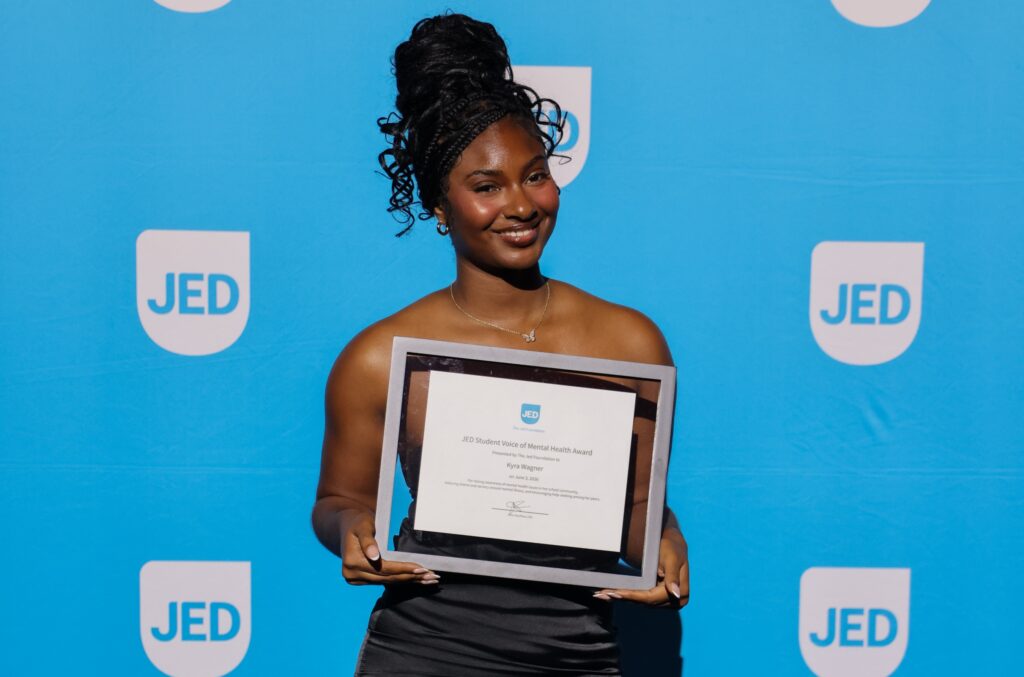
Kyra Wagner, a 21-year-old rising senior at Spelman College, was shaped by early experiences. She supported her sibling facing mental health struggles while also witnessing the quiet strength her mother brought to navigating family transitions and financial challenges. Rather than defining her, these experiences strengthened Kyra’s perspective and fueled her belief that mental wellness and financial stability are deeply connected.
As inaugural president of the Center for Black Entrepreneurship at Spelman and co-director of events at Sisters in Sync (SIS), Kyra builds community through connection and entrepreneurship. She has been recognized for her research on the intersection of financial stress, mental health, and maternal mortality among Black women, and she uses these findings to inform her advocacy.
Passionate about helping young girls develop confidence and emotional language, Kyra mentors them through the Destined for Greatness Outreach Youth Center. She hopes the tools she helps them develop will make them feel safe asking for help. She has also provided wellness tools to other young people through her venture TheBucketList, Co. The program has provided more than 1,200 journals to young people to help them reflect and make emotional check-ins routine.
Kyra was also selected as a Rare Impact Ambassador through Selena Gomez’s Rare Beauty brand.
The Jed Foundation (JED) created the Student Voice of Mental Health Awards to recognize students for their outstanding efforts to raise awareness for mental health issues and encourage help-seeking behaviors in their school communities. The award includes a $3,000 scholarship. Kyra and JED’s high school honoree, Sarah Shelke, received their awards at JED’s annual gala in New York City on June 3.
We talked to Kyra about why community is so important to her approach to mental health work.
What does it mean to you to have been selected as the Student Voice of Mental Health Award undergraduate recipient?
It feels like being seen and recognized for my passion and vision that I hope [have an] impact on the mental health field, so it feels really rewarding.
In your SVMHA application, you wrote that through your work, you’ve discovered “recovery is communal, not individual.” Can you tell us about how you’ve incorporated this idea into your advocacy and studies?
We can deal with day-to-day stressors, but I think it’s important to sit in that with someone else. That carries on to the professional and personal way I approach things, because it’s not always about [being] solution-based. It’s about having that community to be with you and just know that if you do want to get to that solution, I’m also here for that, but I’m here to be with you in your emotions. Recovery is not something that you should do alone; [it’s something] to have your community to work through it with you.
What has your experience mentoring with the Destined for Greatness Outreach Youth Center (DFG) informed about how you reach your community?
I pull DFG into everything I do. For example, DFG has a Youth Mentor Retreat this Saturday, and I’m the president of the Center for Black Entrepreneurship, so we’ll be hosting a workshop for the children at the DFG retreat to enhance entrepreneurship with the kids. As a whole, DFG helped me come down and sit with people in their experiences, and not to inflict my own thoughts or perceptions onto them.
What are your goals for your personal advocacy work?
I hope to not only be a child psychologist, but also own my own mental health agency one day for underserved populations and also continue to do research to help influence certain policies. For example, I really want to research what it would look like if mental health screenings were implemented in public schools. How would that help catch mental health illnesses earlier?
Given your demanding schedule, how do you prioritize and practice self-care and take care of your mental health?
I’ve been in situations that taught me to be able to say no and prioritize myself. [That may be] taking a day away or going to get some good food or turning on my show — just making sure I’m prioritizing myself.
In dealing with the stressors I have, leaning on my family is a big one. My mom FaceTimes me almost every day and wakes me up at 8 a.m. I don’t like it, but I like having and leaning on my support system.
If you could offer one piece of advice to a young person struggling with their mental health, what would it be?
I would probably tell them that their feelings are valid. I think when you’re younger, some of your credibility is taken from you because you’re younger and your problems aren’t as big as your parents’ or the world’s problems. Validation is important, especially in young minds, to just know you’re not alone. Everyone has these feelings. They’re not new to the world, and they’re definitely not going to be old, so I think that’s the first step to dealing with them.
If you or someone you know is in crisis or needs support right now, text, call, or chat 988 Lifeline, or text HOME (or HOLA) to 741-741 to reach the Crisis Text Line.