Investing the Meta Settlement Funds to Strengthen the Systems Around Youth Mental Health

Meta’s recent settlement with 47 states comes after years of young people and families speaking out about harms they experienced, and state attorneys general seeking greater accountability from social media companies. The settlement gives states substantial new resources that can be directed toward youth mental health, including crisis intervention, suicide prevention, afterschool and summer programming, digital well-being, outdoor activities, and more.

JED’s experience working with schools and communities across the country has shown that protecting youth mental health and preventing suicide requires a comprehensive approach. This includes strengthening the factors and skills that protect young people before they are struggling, making it easier to recognize and respond when they need help, making sure the environment is safe, ensuring access to effective care, and having strong systems in place when a crisis occurs. We believe states should apply that same approach to these settlement dollars.

States should invest in the capacity of schools, school districts, youth-serving community-based organizations (CBOs), and municipalities to develop comprehensive mental health and suicide prevention strategic plans grounded in best practices. A strategic planning process helps communities build coordinated systems, and align policies, programs, and practices across sectors. This planning also builds durability and strengthens the environments where young people live, learn, and grow, even as staff and leadership change over time.

Invest in connection and belonging as core mental health and suicide prevention strategies. Afterschool and summer programs, mentoring, sports, arts, outdoor activities, and other opportunities for young people to spend meaningful time with peers and trusted adults can strengthen connection, belonging, life skills, and purpose, which research shows helps prevent suicide. States should intentionally invest in these opportunities, particularly in communities where young people have the least access to them, helping these organizations build purposeful plans for protecting the mental health of the youth they serve and reducing their risk for suicide.

Expand the network of people equipped to support young people. Strengthen the capacity of schools and CBOs; equip parents, educators, coaches, mentors, and other trusted adults to recognize and respond to distress. This should also include expanding near-peer approaches that provide connection, early support, and a bridge to additional help when needed.

Improve access to help. Investments in early identification should be paired with clear pathways to support and effective care. States should strengthen services and coordination within and among schools, families, CBOs, mental health care providers, and crisis support, so that when a young person needs help, they actually receive it.

Strengthen crisis and suicide prevention systems, not only crisis services. States should invest in effective crisis response in schools and youth-serving CBOs while also strengthening the systems that can prevent young people from reaching a crisis. This includes suicide prevention planning, postvention, and efforts to reduce access to lethal means.

Use digital well-being investments to build skills and support around young people.  The settlement appropriately places responsibility on Meta to implement new safeguards on Facebook and Instagram, though there is still more to do. States should use the settlement’s digital well-being provisions to help young people navigate technology in ways that support their mental health, while equipping families, educators, and other trusted adults to help. That should include practical digital and AI literacy education and skill-building, like healthier technology habits, recognizing when digital experiences are affecting well-being, and knowing when and how to seek support.

Leverage these dollars to build lasting capacity. States and communities should form an interdisciplinary team to oversee the work, assess existing assets and gaps, and identify where settlement dollars can strengthen the systems around young people. These funds should expand, not replace, existing state and local investments in youth mental health and well-being, closing gaps, expanding capacity, and strengthening systems and supports that are already working. Young people should have a meaningful role in those decisions. States should set clear outcomes from the outset, collect data to evaluate outcomes, and use what they learn to strengthen their strategies over time.

The scale of this settlement gives states the chance to create a stronger, more strategic safety net around young people, helping to prevent suicide and protect the emotional well-being of young people across the nation.


There are many examples of this kind of system-strengthening work across the country. The examples below highlight several efforts JED has been involved in across states, education systems, municipalities, and youth-serving organizations:

State Higher Education Executive Officers Association (SHEEO)

 Education-focused examples

Municipality example 

  • City of Palo Alto: A Community Committed to Healing
  • New York City: All New York City Public School Nurses to Participate in Suicide Prevention Online Training Course From the JED Foundation

CBO examples 

  • YMCA: Integrating Mental Health and Suicide Prevention Across a Youth-Serving Network
  • Greek-Letter Organization: Integrating Mental Health and Suicide Prevention Into Alpha Phi Alpha Fraternity, Inc.


Youth POV: What Kunling Wants Adults to Know about Teen Mental Health

Kunling smiles on a sidewalk
Kunling

Before high school, Kunling loved bird-watching. She would go outside with a journal and draw what she saw. She began nature journaling in middle school. It gave her time to be herself, and it taught her patience.

Then high school started, and gradually, that time disappeared. Schoolwork became more challenging and college applications were looming. At home, she carried responsibilities that many of her classmates didn’t. Her family had moved to the United States several years earlier, and Kunling often helped her parents navigate life in a new country.

By sophomore year, she was exhausted. “I thought I was being high-achieving,” she recalls. “I thought I was working hard.” She stopped spending as much time with friends. She stopped going to parks on the weekends. She stopped doing something that for years she loved to do.

Something else changed that year. A student at her school died by suicide. Then, during winter break, Kunling learned that the son of a beloved former teacher had also died by suicide. The losses stayed with her. And as Kunling reflected on what she was experiencing in her own life — the exhaustion, the pressure, the feeling that she wasn’t doing enough — she began to see her own struggles differently.

She also began going back outside. Kunling returned to birdwatching. She brought her journal to parks again. She drew. She wrote. Eventually, she started inviting other young people to join her.

In an effort to support teen mental health, Kunling founded Project Wild Wellness, a nonprofit that encourages young people to “look outward to reflect inward.”

Nature journaling can sound more complicated than it is, Kunling says. But it can be as simple as drawing something you notice. Writing a poem. Jotting down a question. Sitting in a park with friends and making something together. Sometimes the important part is just having somewhere to put what you’re feeling.

“When I was struggling, I didn’t tell any of this to my counselor,” Kunling says. She talked with friends, but she knows firsthand how difficult it can be to put an experience into words, especially with an adult.

She thinks there are small things adults can do to make that easier. Teenagers may worry about being judged or disappointing parents, teachers, counselors, and other adults they look up to. Kunling says adults can show they’re a safe person to talk with. “Sometimes teenagers need help, but they won’t necessarily be comfortable enough to take the first step,” she says.

Kunling is still bringing nature journaling to other young people. She’s seen students draw, write poems, talk about their families, or simply sit together. For her, the practice has become a way of remembering that whatever feels overwhelming now is only one moment in a much longer life.

She sometimes thinks about a tree she is drawing. What will it look like in two months? In winter? Next spring? It gives her something to look toward. 

If you or someone you know is in crisis or needs support right now, text, call, or chat 988, or text HOME (or HOLA) to 741-741 to reach the Crisis Text Line.

Kunling’s story was shared as part of JED’s Suicide Prevention Awareness Month campaign. You can read more stories and access resources here.

Related links

Expert POV: How Everyday Connection Can Help

The first conversation about mental health doesn’t have to be the hard one. It can be about how classes went. It can be about a friend. Or something that made them laugh that day.

Jennifer Reed, senior director of School & District Programs and a licensed counselor, says those everyday conversations make the hard ones easier. “So when the moments do arise to go deeper with your child, it isn’t as difficult or as jarring,” she says.

Brynn Cooper, former director of counseling at Weymouth High School in Massachusetts, has seen that happen in an unlikely place. A member of the security staff there started bringing conversation cards throughout the school day. Instead of just making sure young people weren’t loitering too long in the halls or bathrooms, the staff member would ask them questions like:

  • What does it mean to be a good friend?
  • If you could have a superpower, what would it be?

Soon, students were waiting for the questions. And if the security staff member showed up without the cards, they wanted to know why. Over time, students became more comfortable talking with her. Some began coming to her when they were concerned about a friend or another student. “I think any opportunity to connect with youth in a way that’s authentic is just so important,” Brynn says.

That can be easy to overlook when we talk about youth suicide prevention. The subject can feel difficult or scary. It can leave parents, teachers, friends, and other adults wondering whether they know enough to help.

Renée Weiss, executive director of counseling services at Texas A&M University–Kingsville, hears that concern in her work with college students. Suicide prevention is “everybody’s responsibility,” she says. But “does that mean you have to be a mental health clinician? Absolutely not.” You’re not being asked to provide treatment. You’re being asked to stay connected. And when a young person needs more support, you can help connect them to a professional who’s more equipped to provide it.

For Renée, that raises another question: Will they know where to go?

Colleges can tell students about counseling services during orientation. They can hand out information and explain where to go. But Renée knows how much an 18-year-old is absorbing on a day when they’re being told a million other things. “It’s something that you have to keep in front of people all the time,” she says. “It’s never a one-and-done.” 

A conversation today makes another conversation easier tomorrow. A familiar adult becomes someone a young person knows they can talk to. A resource they’ve seen before is easier to find when they need it.

Setting young people up to thrive is about all of us offering that regular drumbeat of support. We all have a role to play.

If you or someone you know is in crisis or needs support right now, text, call, or chat 988, or text HOME (or HOLA) to 741-741 to reach the Crisis Text Line.

This story was shared as part of JED’s Suicide Prevention Awareness Month campaign. You can read more stories and access resources here.

Related links

Youth POV: Why Consistency Matters to Teen Mental Health

Edwin smiles
Edwin

Edwin’s entire high school has about 90 students. His graduating class will have 18. In a school that small, people tend to know one another. Edwin, 17, describes the culture in his rural South Dakota community as one built around family and looking out for your neighbors.

So when a recent graduate of his school died by suicide at the beginning of Edwin’s sophomore year, the loss was felt everywhere. “You know suicide can happen,” Edwin says. “But you would never expect it in your community.”

In the days that followed, counselors came to the school and students were given space to grieve, Edwin recalls. Homecoming happened around the same time, but Edwin remembers it feeling different that year; less lighthearted, more solemn.

Then, slowly, life began moving again. That was the part Edwin kept thinking about. Months later, after the immediate crisis passed, he felt as if the attention given to students’ mental health had faded. But the challenges young people were facing hadn’t. Edwin had begun to notice a pattern: People struggle to keep responding when the urgency has passed.

“Fix it. Move on,” is how he describes the instinct. “Mental health is always an ongoing issue,” he says. “It’s not something we should ignore or give up on. It’s just something that we need to keep up on and keep consistent with.” 

For Edwin and so many young people, mental health support matters even when a student isn’t ready to ask for help. That’s one thing he wishes more adults understood.

Young people hear plenty of advice: Talk to someone. Take a breath. Reach out when you’re struggling. But Edwin thinks trust comes from knowing the support will still be there tomorrow — and next month — whether a young person uses it immediately or not. “Always be there,” he says. “Always be an available resource for them.”

That matters especially in communities where asking for help can feel difficult.

Edwin says young people around him sometimes feel disconnected or worry about standing out. In a small community, being different can feel especially vulnerable. Changing that doesn’t happen with one school assembly or one conversation. It happens by continuing to make room for those conversations. 

Because to Edwin, consistency isn’t just about keeping a program going. It’s how you build and keep trust.

If you or someone you know is in crisis or needs support right now, text, call, or chat 988, or text HOME (or HOLA) to 741-741 to reach the Crisis Text Line.

Edwin’s story was shared as part of JED’s Suicide Prevention Awareness Month campaign. You can read more stories and access resources here.

Related links

Parent POV: Why Parents Shouldn’t Wait to Talk about Mental Health

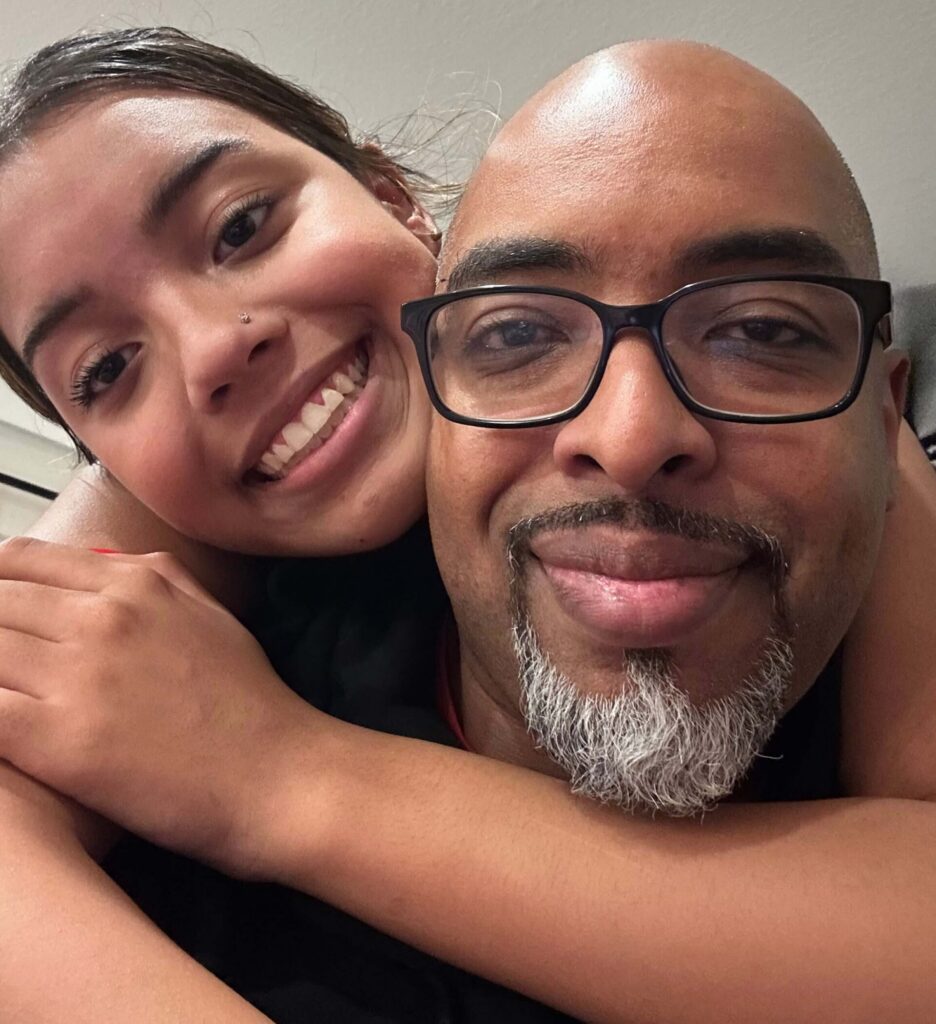
Savannah and Derek
Savannah and Derek

Savannah was usually the one making everybody else feel better. She was a jokester. And if any of her friends were having a hard time, Savannah was often the person who stepped in. “She was always the light of the room,” her father, Derek, said.

She painted, too. Derek recalls one painting in particular: a road beneath a darkening sky, clouds blended together above the silhouettes of trees. Another showed two figures embracing, with one seeming to fade away. He remembers being astonished by what his daughter was creating, and when it came to painting or coloring butterflies, what beautiful pieces she did.

Derek also knew that Savannah struggled with her mental health. What he didn’t understand, he says today, is just how much pain she was carrying. “I didn’t really know how deep it went — the suicidal thoughts she was having.”

Afterwards, her friends told family members stories about how she had helped them through their own difficult moments. She was the one who cheered them up. 

“How was she struggling like this, but still not showing that?” he recalls thinking.

Derek knows now that there may not have been anything easy to see.

A young person can be the friend in their group who always seems cheerful. She can spend time with her family, make art, show up for her friends, and still be struggling in ways the people who love her may not fully recognize.

For Derek, that changed the way he thinks about what it means to look out for a child.

“We make sure they have a home. We show them love. We make sure they have whatever they need materially,” Derek says. “But at the end of the day, there’s a lot more than just that. Spend time with them. Talk to them. Let them know they can be open with you, and they matter, that they have purpose here on earth. Try to understand how they’re feeling. ”

Today, Derek tries to encourage parents to spend time with their kids and keep talking — even when it’s hard to know what to ask, or what to say. Check in with how they’re doing. Listen to what they have to say. And make sure they know you’re not the only person they can turn to.

Derek has also found support for himself. He has learned how common the “what if” questions are for parents grieving a child. He can’t answer those questions. So he talks about what he can do now.

He can tell other parents not to wait for the perfect moment to start a difficult conversation. He can tell young people that there are grown-ups willing to listen.

And he can keep talking about Savannah. “She just had an amazing spirit with her,” he says. “Quick to show love, quick to help.”

“And I try to do the same to continue her legacy and have her still live through the stories we can share about my beautiful angel.”

If you or someone you know is in crisis or needs support right now, text, call, or chat 988, or text HOME (or HOLA) to 741-741 to reach the Crisis Text Line.

Derek’s story was shared as part of JED’s Suicide Prevention Awareness Month campaign. You can read more stories and access resources here.

Related links

Advising the Field: JED’s Partnership with Mantra Health

Mantra Health and The Jed Foundation logos

For more than 25 years, The Jed Foundation (JED) has worked on evidence-informed youth suicide prevention, partnering with colleges, universities, high schools, school districts, and community-based organizations to strengthen mental health and suicide prevention efforts and systems nationwide.

Effective student support depends on understanding campuswide needs. Identifying students at risk is a critical part of suicide prevention, and population-level screening is one way institutions can do it at scale. By mapping general health and well-being trends and revealing gaps in existing care, screening helps administrators adjust services and deploy resources to better protect student well-being.

JED’s Advisory Role with Mantra Health

As part of JED’s ongoing effort to advance screening and identification practices in higher education, the organization began consulting with Mantra following their initial development of Beacon. In this role, JED served as a subject-matter expert on implementation recommended practices.

Beacon is a platform that provides a real-time view of students’ physical health, mental health, academic stress, basic needs, and sense of belonging. It helps higher education institutions shift from reactive crisis response to proactive care and support. Instead of waiting for a student to reach a breaking point, the platform identifies emerging needs early. Beacon aims to help institutions proactively identify students who may be at risk of not finishing their college degree, allowing them to make more strategic, data-informed investments in long-term retention initiatives. It achieves this in three distinct ways:

  • Connects students directly with relevant campus, regional, and national resources tailored to their needs.
  • Gives counseling centers and other key departments on campus actionable, student-level data to triage and address pressing cases. The data helps campuses leverage the resources available to students across campus before they meet a crisis point.
  • Provides population-level analytics that help administrators make smarter decisions about campuswide resources.

To learn more about Beacon’s early outcomes, read Mantra Health’s New Jersey Institute of Technology case study.

JED’s consultation focused on assisting Mantra in thinking through how to best support campuses with the implementation of their screening and analytics platform. To support that work, JED provided guidance across several key areas:

  • Gathered insights from partner schools on how they’re currently using screening tools in practice, and what’s working in real-world settings to inform how Beacon should continue to evolve.
  • Reviewed and provided feedback on an implementation guide, with attention focused on recommended practices for integrating screening tools into existing campus infrastructure and increasing student engagement with the tools.
  • Participated in focus groups to share perspectives from the field, including how higher education institutions approach and adapt screening tools to fit their campus context and student population needs.
  • Offered feedback on pilot school data and how findings can be translated into actionable stories for campus administrators.
  • Provided feedback on recommended interventions designed to strengthen the connection between screening referrals and access to support.
  • Co-hosted two webinars to support broader field-wide dialogue on screening practices in higher education.

Key Findings in the Field

Through a survey, roundtables, and interviews with campus partners, JED gathered feedback on what institutions are experiencing in the field, surfacing a few key themes.

Campuses are expanding proactive student support. Among the 24 surveyed campuses, 42% reported that they currently use universal screening tools to proactively identify students who may be at risk across multiple domains, including basic needs, mental health, and academic success. Of those campuses, 17% screen students campuswide, while the rest screen targeted populations (e.g., student athletes or first-year students).

“In terms of identifying students who are at risk, we really have nothing like this. If I had a magic wand, I would want to know who in this freshman class needs to be on our radar so we can try to help,” says a vice president at a JED partner campus.

Faculty, staff, and students often lack awareness of available resources. During conversations with campus partners, JED observed that the gap can be compounded by decentralization, particularly at large universities. Among the campuses surveyed, 45% reported that they aren’t confident in their institution’s ability to identify students with unmet needs related to belonging and connection to the campus community, highlighting the need for approaches that identify unmet needs before students reach a crisis point. Comprehensive toolkit guides and student navigation apps have helped close the gap, and additional tools, such as Beacon, can extend that effort by pairing resource connection with real-time insights.

Faculty, staff, and students tend to define well-being differently. Conversations with JED Campus partners also found that faculty and staff tend to approach student well-being through the lens of risk, focusing on campus safety, alcohol and substance use, mental health, and harm to self or others. Students are more likely to define their well-being as a sense of belonging — reflecting on whether they have a space on campus, feel welcomed, and feel safe in a sociopolitical sense.

Mantra’s Beacon platform aims to address some of the challenges highlighted by equipping institutions with the insights and data they need to be proactive with student support, establishing a common language around well-being, and connecting students to accurate, up-to-date resources both on- and off-campus.

“To make a significant impact on college student mental health, we encourage institutions to transition from a reactive safety net to a comprehensive system of preventive support. Early connection to resources like screening tools helps give a complete picture of student well-being, which is critical to protecting mental health and preventing suicide. We believe screening and early identification should be a priority at the state and system level, not just campus by campus, so that every student benefits from proactive support regardless of where they enroll,” says Dr. Tony Walker, Senior Vice President of School Programs and Consulting at JED.

Looking Ahead

As outlined in JED’s Comprehensive Approach, universal screening is a critical strategy for identifying students at risk before they reach crisis. JED’s consultation with Mantra Health on Beacon reflects a broader effort to strengthen the field and technology supporting youth mental health. That includes helping partners think through how tools can be integrated responsibly into existing campus infrastructure, and what institutions should consider when selecting and adapting screening approaches for their context. As the field continues to build out its capacity for proactive identification and early intervention, JED remains committed to advancing that work through consultation, thought leadership in the field, and responsible sharing of evidence-informed practice.

Disclaimer: JED is not a co-developer of Beacon. JED’s role is consultative in nature; recommendations provided by JED may or may not be reflected in the final implementation decisions made by Mantra Health or participating institutions.

Columbia’s Technology & Democracy Initiative (TDI) and The Jed Foundation Launch Partnership on Teen Mental Health and AI

Sixty-four percent of American teenagers use artificial intelligence (AI) chatbots, with 12 percent of those teens specifically seeking emotional support or advice. But when a teen experiencing emotional distress or suicidal thoughts reaches out to one of these tools, the response is often inadequate. AI systems have advised young people on how to hide their symptoms from caregivers, claimed to be therapists, and provided instructions on lethal means of suicide.

Columbia University’s Technology & Democracy Initiative, part of Columbia SIPA’s Institute of Global Politics, and The Jed Foundation (JED), a leading nonprofit dedicated to protecting emotional health and preventing suicide among teens and young adults, are launching a new partnership to bridge mental health expertise and AI safety practice.

The partners believe the challenge is not simply that these technologies are imperfect. Mental health experts, AI developers, and safety workers are beginning to work more closely together than they once did, but collaboration remains uneven: the two fields use different vocabularies and often lack a shared framework for translating what a young person in crisis needs into the technical choices that shape how AI systems behave. The partners see a timely opportunity to build on emerging momentum and establish a shared language and roadmap to guide this emerging area of practice.

The TDI/JED partnership will begin with an expert roundtable, followed by a jointly authored working paper. The paper will establish a shared conceptual and practical foundation that AI developers, mental health and suicide prevention experts, policymakers, and platform safety teams can all work from. It will map where expert judgment needs to be built into technical systems – not just at the moment a chatbot responds, but across every layer, from the policies that govern a system, to how it recognizes a young person is struggling, to how it connects people to support.

What comes next
The roundtable and working paper are the first phase of a longer-term effort. They lay the groundwork for a more comprehensive reference document, Anatomy of a Mental Health Technical Response, planned for a subsequent phase as a practical guide that the field currently lacks. The partners also intend for the roundtable to seed a durable cross-sector network, bringing clinicians and technologists into ongoing collaboration.

Further details about the roundtable and additional partners will be announced in the coming months. To read more about the Columbia Global Innovation Awards program supporting this work, see here.

About Columbia SIPA’s Institute for Global Politics (IGP)

IGP drives real-world impact by convening leading scholars and practitioners, developing policy solutions, and training the next generation of leaders. IGP’s Technology & Democracy Initiative advances impactful research and resources for policymakers, the tech community, and civil society. The initiative addresses the most urgent technology challenges of the day, from the impact of artificial intelligence on democracy to mitigating online harms and strengthening collective digital governance.

About The Jed Foundation
JED is committed to protecting emotional health and preventing suicide for our nation’s teens and young adults. JED partners with high schools, colleges, school districts, and youth-serving community-based organizations to strengthen their mental health, substance misuse, and suicide prevention programs and systems. JED equips teens and young adults with the skills and knowledge to help themselves and each other, and encourages community awareness, understanding, and action for young adult mental health.

Connect with JED: Email | LinkedIn | Instagram  | Facebook | TikTok | Snapchat | YouTube  

Media Contacts

Jacob Freid
Assistant Director of Communications
Institute of Global Politics, Columbia SIPA
[email protected]

Justin Barbo
PR Director
The Jed Foundation (JED)
[email protected]


A community committed to healing: JED’s work with the city of Palo Alto

In September 2025, the city of Palo Alto, California, partnered with The Jed Foundation (JED) to conduct a communitywide assessment of youth mental health and suicide prevention efforts in Palo Alto and to identify opportunities for the community to strengthen its approach. That work is part of a broader, ongoing commitment to healing and to helping every young person in Palo Alto feel supported, connected, and hopeful about the future. Today, the city is releasing the findings from that assessment, and JED is sharing an overview of what the process found and what it means for the work ahead.

The assessment drew on conversations with 53 teens and young adults across seven focus groups, and with 74 community members from 22 stakeholder groups, including city staff, school leaders, clinicians, first responders, nonprofit partners, and parents. The findings were paired with a review of national, state, and county data, along with local school survey results. Together they point to a community with genuine strengths to build on: engaged young people, committed city and school leadership, an active nonprofit sector, and strong community collaboration. 

Building on what’s already working

Focus group participants, including many Palo Alto teens and young adults, described building their own solutions, from peer-designed mental health apps to student-led advocacy campaigns. The city has already invested in meaningful infrastructure, including a psychological emergency response team; a teen center; programming across all five library branches; an existing suicide prevention policy; and Project Safety Net, a nonprofit dedicated to coordinating youth mental health efforts citywide. The assessment also found that the community mobilizes quickly to offer support in moments of crisis, a reflection of how deeply the community cares for its young people.

JED’s recommendations focus on helping the city connect its existing strengths in a more coordinated, sustained system — one built to prevent crises before they happen, rather than respond after the fact. It is a natural next step for a community that has already demonstrated its commitment to this work.

Setting realistic expectations

A findings report of this kind is intended as a starting point for planning and prioritization, not a checklist to complete all at once. Some recommendations reflect efforts already underway; others represent longer-term investments that will require time, funding, and coordination across multiple agencies. JED will continue to work alongside city and school leaders to review the recommendations, identify near-term priorities, and build a realistic timeline for implementation.

“The city of Palo Alto is working collaboratively with the school district, local community-based organizations, youth, and their families to build a stronger mental health safety net,” said Dr. Katie Hurley, Vice President of Community Initiatives at JED. “Though they have faced great loss, Palo Alto is determined to work together as a community to help youth and young adults thrive.” 

What’s ahead

The next phase of the partnership will include the development of a postvention guide focused on how the Palo Alto community responds in the aftermath of a loss to suicide. In the coming weeks, the city will also host several public conversations tied to this work, including a Community Postvention Conversation on Aug. 11 and an It’s OK to Say Suicide workshop on Aug. 12, alongside continued discussion through the City Schools Liaison Committee. Community members are encouraged to take part as the next phase of the partnership moves forward.

JED thanks everyone in Palo Alto who contributed their time and experience to the assessment, and looks forward to continuing the work alongside the city, its schools, and its community partners in the months ahead.

Learn more about Palo Alto’s work with JED at PaloAlto.gov/JED.

National & Local Media Coverage of New National Partnership of JED and Jake Collective

Find news coverage on the collaboration between Jake Collective and The Jed Foundation (JED) to develop a research-based framework to support the mental health of neurodivergent students, including those with autism, attention-deficit/hyperactivity disorder (ADHD), other learning disabilities, and neurodevelopmental differences.

PRNewswire: Jake Collective Partners with The Jed Foundation (JED) to Safeguard the Wellbeing of Students Who Perceive Themselves and their World Differently 

Associated Press: Jake Collective Partners with The Jed Foundation (JED) to Safeguard the Wellbeing of Students Who Perceive Themselves and their World Differently 

Yahoo!Finance: Jake Collective Partners with The Jed Foundation (JED) to Safeguard the Wellbeing of Students Who Perceive Themselves and their World Differently 

AOL: Jake Collective Partners with The Jed Foundation (JED) to Safeguard the Wellbeing of Students Who Perceive Themselves and their World Differently

AI Can Be A Bridge To Care, But It Shouldn’t Be The Answer To Young People’s Mental Health Struggles

By John MacPhee, JED CEO, and Dr. Sema Sgaier, Surgo Health CEO

Teens and young adults are turning to generative artificial intelligence (GenAI) for mental health support. Many of the conversations about AI center on its risks, which are real. But because youth are already using these tools, we should also ask: When is AI an endpoint, and when could it be a bridge to care? 

GenAI has been documented giving instructions on lethal means of suicide, providing false or dangerous guidance, inventing fake therapy degrees, advising youth on how to hide symptoms from adults, and engaging in intimate conversations with minors. If these systems connected youth with real human support instead, they could help more young people find mental health care, instead of replacing it. . 

To better understand how AI enters youth mental health pathways, Surgo Health and The Jed Foundation (JED) surveyed a nationally representative sample of over 1,300 youth ages 13-24, asking them about their use of AI tools for mental health support.  

Twelve percent of the young people reported using GenAI for their mental health and most of those (69%) used tools not designed for that purpose. 

Youth turn to AI not because it works well, but because other options feel unattainable .

Youth whose caregivers didn’t support them when they asked for help or who didn’t know it was possible to get professional help were between 2 to 3 times more likely to have used GenAI for mental health support.

Sixty-five percent reported turning to GenAI because they had no one they trusted to confide in. Those using GenAI were also more likely to report financial barriers and difficulties finding transportation. These barriers fell hardest on younger youth, boys, and Black and Hispanic youth. GenAI may become a fallback because it’s low-friction: anonymous, always available, free, and easier than sharing with people. 

Despite its increasing adoption, youth are not finding GenAI helpful for mental health. 

Many young people who used AI for mental health indicated that they knew AI was telling them what they wanted to hear. One survey participant said, “It’s free and easy to use; I don’t have to pay a penny for something to give me comforting words, even if they don’t really exist.” After talking to GenAI, the participant said he felt “A little better, but it felt like putting a band-aid on a giant gash.” 

This experience is not unique. Half of the young people surveyed felt neutral or negative about the support they got from GenAI. One in three reported wishing they had not used it for this reason. The immediate appeal of short-term relief is too often quickly replaced by regret. 

Approximately one-third of the youth who used GenAI relied on it as their only source of support. This group was more likely to report neutral or negative experiences than the group who used it before, after, or alongside professional support.

This pattern suggests GenAI’s limitations become more apparent, and potentially more harmful, when it’s the only support a young person receives.

A path forward —  integrating offline and online worlds

Concerningly, in the research from Surgo Health and JED, approximately one in three youth who used GenAI for mental health concerns reported it did not prompt them to seek professional care. Ideally, AI would act as a bridge, pointing young people to the right care at the right time. To achieve this, we have to expand how these models recognize and intervene in moments of distress. AI systems are incentivized tokeep users engaged instead of connecting them to humans who can help, yet we need to ensure that online and offline worlds are set up to effectively relay the baton from one to the other. We also need to ensure that there are robust school-based services, affordable community care, and parents, caregivers, and other caring adults equipped to respond when youth are struggling.

While AI didn’t create the gaps in our mental health system, if left unchecked, it may deepen them. Online and offline worlds must be set up to work together, or the bridge leads to nowhere.

Jake Collective Partners with The Jed Foundation (JED) to Safeguard the Wellbeing of Students Who Perceive Themselves and their World Differently

Collaboration will develop a comprehensive blueprint to provide neurodivergent students with mental health support and effective interventions for the entirety of their education.

[August 11, 2026, New York, NY] Jake Collective, a nonprofit foundation and LLC impact investment engine dedicated to improving the lives of neurodivergent young people, has launched a multiyear partnership with The Jed Foundation (JED) to develop a research-based framework to support the mental health of neurodivergent students, including those with autism, attention-deficit/hyperactivity disorder (ADHD), other learning disabilities, and neurodevelopmental differences. 

According to a 2024 YouGov poll of more than 1,000 people, 30% of Americans under 30 self-identify as neurodivergent. Neurodivergent young people are significantly more likely to experience anxiety, depression, social isolation, and suicidal ideation than their neurotypical peers, and are at greater risk of suicide. Although neurodivergent young people represent an ever-growing number of K-12 and college-age students, schools have faced challenges implementing relevant support systems and interventions to promote mental health and prevent suicide among this population. 

“Too often, one-size-fits-all interventions at K-12 schools, colleges and universities fail to provide specialized support to neurodivergent students,” says Melissa Floren Filippone, CEO of Jake Collective. “Moreover, the lack of comprehensive approaches to mental health promotion and suicide prevention designed for neurodivergent students can prevent teachers, guidance counselors, and in-school mental health professionals from recognizing a serious emerging threat to the student’s wellbeing. With JED, we will equip educators and support teams with recommended best practices to better serve the wellbeing of neurodivergent students.”

JED, a leading nonprofit that protects emotional health and prevents suicide for teens and young adults nationwide, brings deep expertise in youth mental health, systems change, and institutional partnerships. Reaching over 10 million youth through its programs, JED works directly with high schools, colleges, school districts, and youth-serving community-based organizations to implement the JED Comprehensive Approach to Mental Health Promotion and Suicide Prevention.

Jake Collective and JED will partner to identify schools interested in making a commitment to support neurodivergent students, and pilot-test recommendations within their programs. Researchers will gather input from neurodivergent students, caregivers, and educators about the efficacy of the support students are currently receiving. They will explore what works, what can be improved, and recommend additional interventions to help neurodivergent students thrive socially and emotionally.
Through this original research, and a rigorous assessment of the best available resources, the joint initiative will build on JED’s Comprehensive Approach to create a support model for neurodivergent students . The model will incorporate a deep understanding of their unique challenges and the most effective means of engaging this group of young people. The resulting framework will be shared widely with school system administrators, colleges, universities, and mental health professionals.

“The Jed Foundation has a history of demonstrated impact, built on our Comprehensive Approach to Mental Health Promotion and Suicide Prevention, and robust frameworks that integrate a deep understanding of existing knowledge, new research, expert, youth, and lived-experience insights,”said John MacPhee, CEO of JED. “Our partnership with Jake Collective will help K-12 school systems and higher education bring tailored support and approaches for neurodivergent students, ultimately helping all students flourish.”

If you or someone you know is in crisis or needs support right now, text, call, or chat 988, or text HOME (or HOLA) to 741-741 to reach the Crisis Text Line


###


About Jake Collective
Jake Collective is a nonprofit foundation and impact investment engine dedicated to improving the lives of neurodivergent young people. By building a flywheel of scaled data, capital, clinical care, and human understanding, the organization works to transform how neurodivergence is seen and supported. Jake Collective is privately funded and is not soliciting or accepting donations at this time. For more information, visit jakecollective.org

Connect with Jake Collective: LinkedIn 


About The Jed Foundation
JED is a nonprofit that protects emotional health and prevents suicide for our nation’s teens and young adults. We’re partnering with high schools, colleges, school districts, and youth-serving community-based organizations to strengthen their mental health, substance misuse, and suicide prevention programs and systems. We’re equipping teens and young adults with the skills and knowledge to help themselves and each other. We’re encouraging community awareness, understanding, and action for young adult mental health.

Connect with JED: Email | LinkedIn | Instagram | Facebook | TikTok | Snapchat | YouTube


Media Contacts
Michele Schimmel
Head of Marketing and Communications
[email protected]

Justin Barbo
Director of Public Relations
The Jed Foundation
[email protected]

New Data on Teen and Young Adult Mental Health: What’s Improving, and What Still Needs Attention

New national survey data from SAMHSA shows recent trends in youth mental health and suicide worth paying attention to. The 2025 National Survey on Drug Use and Health (NSDUH) offers one of the clearest national snapshots available.

While data show improvement in youth suicidal thoughts and behaviors from 2021 to 2025, concerning trends remain.

The recently released NSDUH data showed that overall, suicidal thoughts and behaviors  among youth are trending down. In 2025, fewer young people ages 12-25 were having suicidal thoughts, making a suicide plan, or attempting suicide than in 2021. That said, there was a slight uptick in rates of thoughts, plans, and attempts from 2024 to 2025 among teens (12-17). This is similar to trends observed in suspected suicide attempts among young people ages 12-17 that were seen in emergency departments, per a study co-authored by JED’s Vice President of Research and Evaluation, Dr. Kayla Anderson, in which rates declined from 2021-2025 but increased between 2024 and 2025. So while the data shows overall improvement in the past several years, we need to keep paying attention to how things shift in the future.

Data from the 2025 NSDUH also indicate that suicide rates are still too high:

  • Among 12-17 year olds, about 10% had serious thoughts of suicide in the past year, 5% made a plan, and 3% made an attempt. 
  • Among 18-25 year olds, about 11% had serious thoughts of suicide, 4% made a plan, and 2% made an attempt.

Despite overall decreases in suicidal thoughts and behaviors from 2021 to 2025, young people still struggle with their mental health.

Anxiety, depression, and other mental health conditions are too high among young people: 

  • Among adolescents aged 12-17, 
    • 18% had moderate or severe anxiety symptoms in the past 2 weeks (down from 19% in 2024, the first year asking these questions) 
    • 15% had a past-year major depressive episode (down from 21% in 2021). 
  • Young adults show the highest rates of mental health conditions of any adult age group. In 2025, about 29% of 18-to-25-year-olds were categorized as having had “any mental illness” in the past year (down from 33% in 2021), and about 12% as having had a “serious mental illness” (down from 17% in 2021).

Non-suicidal self-injury is prevalent among teens: 

  • This year was the first time data was collected on non-suicidal self injury in adolescents, and showed that 11% of young people aged 12-17 engaged in non-suicidal self-injury in the past year.

There are some key barriers to mental health treatment.

More than 42% of adolescents 12-17 with a major depressive episode over the past year did not receive mental health treatment. Many had a perceived unmet need, meaning they wanted treatment but didn’t get it. The top four reasons they listed for not getting treatment were:

  • Thought they should be able to handle mental health, emotions, or behavior on their own (87%)
  • Worried about what people would think or say if they got treatment (63%)
  • Worried that information would not be kept private (57%)
  • Did not think treatment would help them (54%)

This makes clear that we have work to do to address systemic issues that create barriers to care for young people. Things like stigma, privacy concerns, and distrust of treatment efficacy are getting in the way, and it’s our job to break down these barriers and help young people better access the care they need and deserve. 

What we can do:

There are several actions we can collectively take to better support young people, including:

  • Work towards normalizing mental health issues and viewing help-seeking, including treatment, as a strength.
  • Train adults to identify young people at risk and respond effectively. 
  • Encourage connectedness with helpful peers and trusted adults.
  • Reassure young people about systems and policies in place to protect their privacy.
  • Show young people how mental health treatment can help, through storytelling from patients, families, and providers.
  • Work toward making mental health treatment easily accessible to young people, and more attuned to their needs.

All young people deserve access to evidence-based mental health treatment, as well as supportive environments that help them to not just avoid crises but to live purpose-driven and connected lives. JED is committed to continuing to build that world with youth in schools and communities every day.