Page 14 | The Jed Foundation

Collaborative Solutions for a Brighter Future: A New Report Explores State-Level Student Mental Health Initiatives

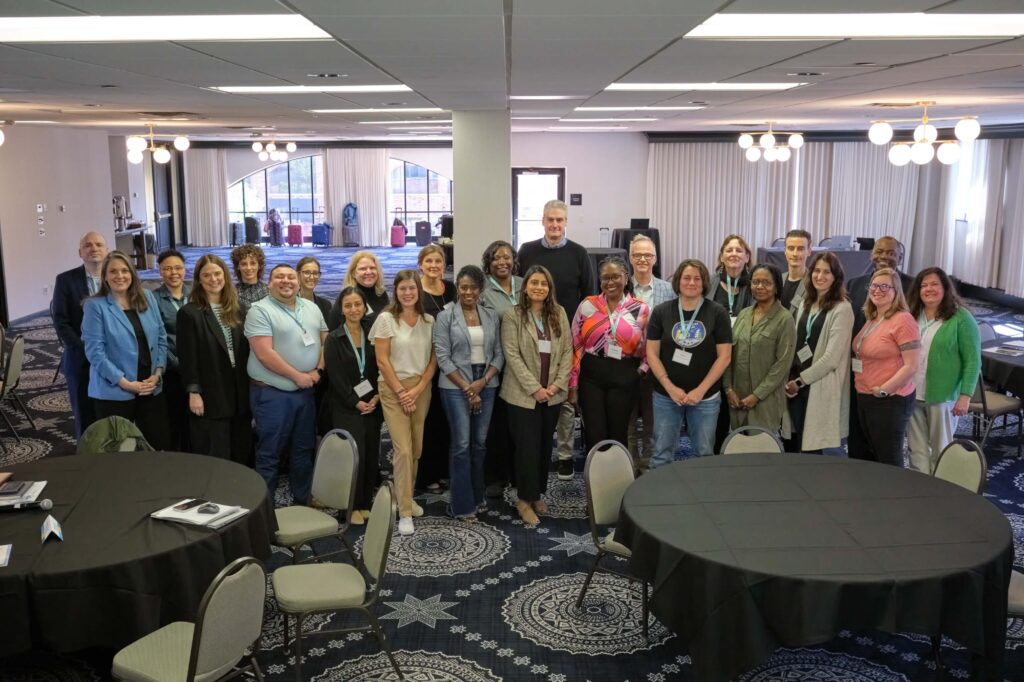
Participants in the SHEEO-JED Mental Health and Wellness Learning Community gather to discuss findings from a report exploring state-level student mental health initiatives.

The Jed Foundation (JED) teamed up with the State Higher Education Executive Officers Association (SHEEO) in 2023 to launch the SHEEO-JED Mental Health and Wellness Learning Community. Recognizing that students’ deep mental health needs require coordinated action at all levels, this innovative initiative brought together state-level higher education leaders, practitioners, and other stakeholders to focus on state-level policy interventions aimed at improving college student well-being. A report published earlier this month, Building Momentum: Collaborative Solutions for State-Level Student Mental Health, highlights initiatives and insights from states participating in the learning community, including Arizona, Louisiana, Oregon, Pennsylvania, and Texas. 

The report, published by SHEEO, was authored by SHEEO experts Sakshee Chawla, Dr. John Lane, and Dr. Tom Harnisch, along with Dr. Zainab Okolo, JED’s Senior Vice President of Policy, Advocacy, and Government Relations. 

Among the topics the report explores are:

  • Collaborating across sectors, including with philanthropy and public health
  • Data-driven advocacy, including demonstrating return on investment
  • Addressing workforce shortages and building mental health capacity
  • Expanding telehealth and technology-enabled solutions, including AI
  • Reducing shame and secrecy around mental health, such as by using social media and influencers for awareness campaigns

“States participating in the SHEEO-JED Mental Health and Wellness Learning Community have laid the groundwork for transformative mental health initiatives, integrating student well-being into broader educational and workforce strategies,” the authors write in the report’s conclusion. “However, sustaining and expanding these efforts requires a long-term vision and actionable next steps to address emerging challenges and solidify systemic improvements.”

Key lessons from participating states include:

  • Arizona: The state is building on its Student Well-Being Workgroup to make mental health a priority within the Arizona Board of Regents. By aligning mental health initiatives with economic and workforce development goals, Arizona is working to bring continuity across educational stages and highlighting the role of mental health in preparing students to be resilient and prepared members of the workforce.
  • Louisiana: In partnership with the Louisiana Department of Health and local health offices, Louisiana focuses on training campus staff in mental health interventions and ensuring sustainable funding, emphasizing the importance of continuity and collaboration.
  • Participants in the SHEEO-JED Mental Health and Wellness Learning Community present in a panel discussion.Oregon: Prioritizing data-driven policy development, Oregon uses insights from statewide surveys to implement regular mental health assessments and strengthen culturally responsive services, reflecting the diverse needs of its student population.
  • Pennsylvania: Pennsylvania focuses on strengthening transitions between K-12 and higher education. This approach aims to create a seamless care network, ensuring mental health support is accessible and consistent as students progress academically. These efforts draw on insights from the Higher Education Suicide Prevention Coalition and the PA MASLOW: A Hierarchy of Collegiate Basic Needs initiative.
  • Texas: The Building a Talent Strong Texas strategy integrates mental health into broader educational and workforce goals, with a goal of providing seamless support across educational pathways to comprehensively address workforce needs.

The SHEEO-JED Mental Health and Wellness Learning Community is part of an ongoing national conversation about post-pandemic student mental health. It emphasizes the integration of mental health support into all aspects of the educational experience, focusing on both system-level and state-level policy interventions. The aim is to create a sustainable framework for student well-being that addresses both acute needs and long-term challenges.

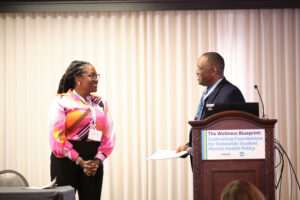
Dr. Zainab Okolo, JED’s Senior Vice President of Policy, Advocacy, and Government Relations, presents at a gathering of the SHEEO-JED Mental Health and Wellness Learning Community.

Building on this groundwork, the next phase of the initiative, a second cohort of the SHEEO-JED Mental Health and Wellness Learning Community, will concentrate on sustainable funding models and inclusive care systems. This focus addresses the critical challenge of securing long-term funding for mental health initiatives. The group will dive into state-level appropriations, sustainable funding strategies, and access to care.

Participants will explore successful models for obtaining state support, including data-driven advocacy and legislative engagement strategies. By developing comprehensive funding approaches, states can adapt these strategies to their specific needs, ensuring long-term sustainability.

The long-term vision for the SHEEO-JED learning community is to create lasting change in how states approach student mental health. By building a network of informed and connected leaders, the program aims to transform mental health  services in higher education into a coordinated, sustainable system of care. Through these efforts, the learning community will continue to advance the national dialogue on student mental health, fostering more comprehensive, accessible, and sustainable care systems.

Read the full report: Building Momentum: Collaborative Solutions for State-Level Student Mental Health

What We Expect in 2025: New Year’s Trends in Youth Mental Health

A group of young people stand outside on their college campus, using their phones and smiling.

By John MacPhee

The new year arrives amid a challenging time for many young people. Deep divisions in our country, conflicts around the globe, financial insecurities, lingering impacts of the pandemic, economic anxieties, and climate change all remain with us and can negatively impact the emotional well-being of teens and young adults. Far too many teens and young adults are struggling with their mental health: In 2024, a quarter of young people ages 10 to 24 said they did not feel supported by family, 45% reported struggling with their mental health within the past two years, and 29% had engaged in or considered self-harm, according to the Youth Mental Health Tracker (YMHT), a study released last month by Surgo Health.

And yet, rays of hope shine through: young people making their voices heard, schools and community organizations prioritizing youth mental health, policymakers expanding what’s possible in addressing the needs of young people, cultural icons breaking down barriers around seeking support for mental health, and caring adults focused on helping the young people in their lives in any way they can.

We at The Jed Foundation (JED) are deeply engaged in all of these efforts to improve mental health and prevent suicide for teens and young adults. During 2024, we expanded our programming and continued to deepen our understanding of young people’s needs and effective strategies to meet those needs. As we begin 2025, here are some trends we anticipate will shape youth mental health and guide our work.

Continued Reasons for Optimism 

We see many promising signs for the future of youth mental health, and we have every reason to expect those to extend into this new year and beyond. The YMHT found that 95% of youth ages 10 to 24 believe there are people in their lives who really care about them, 76% feel a sense of belonging with a group such as their friends or school, and 83% express that they are optimistic about their future.

The Centers for Disease Control and Prevention’s Youth Risk Behavior Survey shows the percentage of high school students who felt persistently sad or hopeless within the past 12 months dropped slightly from 2021 to 2023 (42% to 40%) after years of growth. For girls, who have had some of the highest rates in this category, the decrease was even greater, from 57% to 53%. And rates of high schoolers drinking and using drugs continue to decrease, according to the YRBS.

JED’s programs are having a positive impact. Research we released last year examining 10 years of data from our JED Campus program showed that, compared to baseline, students at schools that completed the program were 10% less likely to have had suicidal thoughts, 13% less likely to have made a suicide plan, and 25% less likely to have attempted suicide over the past year.

Each of these data points represents lives improved or saved, pointing to true advances in the effort to boost youth mental health and prevent suicide. In 2025, JED will be focused on building upon these positive trendlines, working to deepen these successes alongside all those who care about young people’s well-being. 

Big Challenges Remain

Despite those hopeful signs, far too many young people continue to struggle with mental health challenges.

Although the numbers have improved, four in 10 high schoolers in 2023 still experienced persistent feelings of sadness or hopelessness over the past year and two in 10 seriously considered suicide, according to the YRBS. And, the YMHT found, a majority of young people ages 10 to 24 who struggled with mental health within the previous two years did not receive the full care they needed and a third didn’t seek care at all. 

The problems are even more pronounced among populations with limited access to resources. 

Young people from households experiencing financial difficulties consistently report poorer mental health statuses than their peers without such challenges, according to the YMHT and other sources

Additionally, in 2023, nearly a third of LGBTQIA+ high school students and more than a quarter of American Indian/Alaska Native students said they made a suicide plan over the past year, according to the YRBS, compared to 16% of the total student population. 

The same trends hold true for other markers of emotional well-being. In 2024, LGBTQIA+ youth were three times more likely than non-LGBTQIA+ youth to say their mental health was not good over the past 30 days, according to the YMHT, and the YRBS found, LGBTQIA+ high schoolers were more likely than peers to misuse substances within the past 30 days and experience violence over the past year. American Indian/Alaska Native youth are more likely than other racial and ethnic groups to report feeling persistently sad or hopeless over the past year or experiencing poor mental health within the past 30 days, according to the YRBS. 

These are only a few of the concerning statistics that remind us of the immense need that remains. Bringing down these numbers will remain a top priority for everyone who cares about youth well-being. JED is committed to working with all schools and other youth-serving organizations and collaborating with like-minded policymakers, educators, advocates, and others to protect youth mental health and ensure all young people have the support and access to care that they deserve.  

Mental Health of Boys and Young Men

The mental health needs of boys and young men is increasingly an area of concern that requires focused attention. Many of the statistics around boys’ and young men’s emotional well-being and help-seeking habits are alarming. Men are four times more likely to die by suicide than women and two to three times more likely to die from alcohol-related causes. And yet, men are significantly less likely to seek support from a mental health professional or even a friend.

Hoping to help change ingrained attitudes holding back boys and men from discussing their feelings and seeking help, JED recently teamed up with the athlete storytelling brand UNINTERRUPTED to produce INVISIBLE GAME, a powerful new unscripted YouTube series featuring intergenerational conversations with top athletes including two-time NBA all star Trae Young and NBA veterans Iman Shumpert and Jason Richardson about life, mental health, and staying on top of their game. 

Continuing to address issues such as social isolation and harmful perceptions about what it means to be a man can help men feel more connected, more comfortable showing and talking about their emotions, and more equipped to deal with strong emotions and seek help when needed. Improving the emotional lives of boys and men can also positively impact their relationships and communities. 

Centering Youth 

Too often, efforts to support young people’s mental health, however well intentioned, have not involved young people themselves. Fortunately, we have worked hard to build a nuanced understanding of what prevents young people from seeking help, which can suggest pathways to addressing those impediments. In our 2024 report Unraveling the Stigma: Exploring Barriers to Mental Health Support Among U.S. Teens, JED found that fears of not being understood or having their privacy respected are among the top barriers to help-seeking among youth. Stigma-related causes play less of a role, although they are more present among Asian, Latine, Black, and LGBTQIA+ teens.

JED continues to prioritize centering youth voices in the conversation about mental health. Last year, we teamed up with Young Invincibles to launch the Youth Advocacy Coalition. The initiative includes college students from across the country and aims to drive change through education, policy advocacy, and storytelling. We also partnered with the PINK with Purpose Project to award $25,000 each to 10 Gen Z advocates whose unique projects work to strengthen their communities or promote positive mental health. 

In 2025, we will again name one high school student and one college student as the recipients of the annual Student Voice of Mental Health Awards. These outstanding young people are committed advocates who raise mental health awareness among their peers. 

Listening to and learning from students at every school with which we work is a core component of all our school-based programs. Understanding young people’s needs and centering their voices is an ongoing, ever-evolving effort. We will continue to pursue opportunities to ensure that we continually learn directly from youth through our work and on our platforms. 

Grappling With Artificial Intelligence

A sure bet for 2025 is that the use of artificial intelligence (AI) will continue to grow throughout virtually all areas of society, including education and mental health. So, too, will questions and concerns about AI’s impact on youth. How effective is AI software that aims to identify students at risk of self-harm? What about bots that serve as virtual best friends or therapists listening to the innermost thoughts of a young person seeking support? What impact will AI have on the job market for new high school and college grads? 

As AI becomes more ubiquitous, we must continually work to understand its evolving implications for young people and how to support them effectively. And it is imperative that discussions of ethics remain central to the conversation about AI and that regulatory policy catches up to the technology, even as AI continues to evolve, improve, and be adapted at breakneck pace. 

Making Social Media Safer

Social media provides young people valuable connection points for friendship, support, information, and even health care. At the same time, the risks of social media are well documented, including exposure to harmful content and cyberbullying. Important discussions about young people’s use of social media and digital technology, such as whether to ban cell phones in schools, will continue to occupy educators, parents, mental health practitioners, and others throughout this year.

It is past time for tech companies to prioritize the safety and emotional well-being of their youngest users, and for regulators to establish guardrails protecting youth from the harms of social media. JED’s Can the Metaverse Be Good for Youth Mental Health? report outlines the rights all youth should be entitled to in online spaces, and offers common-sense recommendations for keeping them safe on social media, including centering youth and prioritizing their rights. JED will continue to work with companies interested in improving the safety of their platforms and advocate for the government to play a stronger role in ensuring the safety of young people online. 

A New Administration 

Of course, one of the biggest and most public changes we’ll see in 2025 is the new presidential administration. Any major transition can bring with it a certain amount of uncertainty, which can lead to stress and anxiety. The aftermath of the election, coming inauguration, and changes the new administration might enact all may bring up strong emotions in some young people. Political anxiety may spike during certain periods, but it can be present year-round and it’s manageable with effective strategies and support.     

When it comes to policy, the new administration is undoubtedly going to usher in an array of shifts. We expect to see an increasingly large share of government funding for youth mental health programs coming from the states, either directly from their budgets or from federal block grants that states administer. States will look to dedicate increased budgets for youth mental health programs, and some have already begun to do so. In Maryland, for example, Governor Wes Moore recently announced $13.5 million in grants to enhance behavioral health crisis services statewide, while in North Carolina, Governor Roy Cooper unveiled a $1 billion road map for behavioral health and resilience investments. JED looks forward to working with both state and federal legislators and the new administration to deepen our collective commitment to the emotional well-being of our nation’s youth.

Meeting the Moment

At JED, we are ready to meet this moment in support of our nation’s young people, in schools, in communities, and online. In 2025, expect to see the launch of the first cohort of the JED and AASA District Mental Health Initiative, which grew from a pilot program of 15 school districts last year, and an expansion of our work with community-based organizations. 

We’ll look continuously for new opportunities to hear from and elevate the voices of youth and to partner with influencers amplifying our messages of self-care and help-seeking. And, as always, we remain prepared to collaborate with all those who are pursuing a future of improved mental health for our nation’s youth.
A Good Investment

When you support The Jed Foundation (JED), your gift has an incredible impact on teens and young adults. They receive emotional support, connectedness, and the skills and perspective to put their own mental health first. 

We take stewardship of your gift very seriously. JED has consistently received four-star ratings from Charity Navigator. Attaining a four-star rating is the highest possible rating and means that JED “exceeds industry standards … adheres to sector best practices, and executes its mission in a financially efficient way.” It also demonstrates JED’s commitment to accountability and stewardship of donor contributions. 

JED is also a Gold-level participant in GuideStar, demonstrating our commitment to transparency, and an accredited charity with the Better Business Bureau.  

Your support directly impacts millions of young people. It helps JED be a lifeline for teens and young adults nationwide and lead the way in suicide prevention.

With your gift, we’re able to build the safety net that supports students before they reach a crisis. Whether it’s through mental health screenings, early intervention, or helping schools create a culture of care, you give young people a place to turn when life feels overwhelming.

Learn about the best way to support JED and protect teen and young adult mental health and suicide prevention by exploring our ways to give.

The Numbers That Give Us Hope

When schools partner with JED and get the appropriate support systems, lives change. Look at these results for students at JED Campus colleges. Students reported they were:

But there’s a hard truth to consider: Nearly one in six high school students made a suicide plan last year. And more than half of teens with major depression aren’t getting the treatment they need.
Today, young people are feeling uncertainty in their daily lives and their future. With the right safety net in place, they can thrive through any change. That’s why a generous donor is matching every gift until December 31, up to $100,000. Now is the moment to help young people before they are in crisis.

Please give today and your gift will be matched, dollar for dollar.

Your matched gift will help:

  • Bring mental health programs to entire school districts
  • Give students access to life-saving resources
  • Transform how schools prioritize student mental health

Thank you for joining us!

Philadelphia JED Campus Cohort Convenes to Emphasize Promising Practices

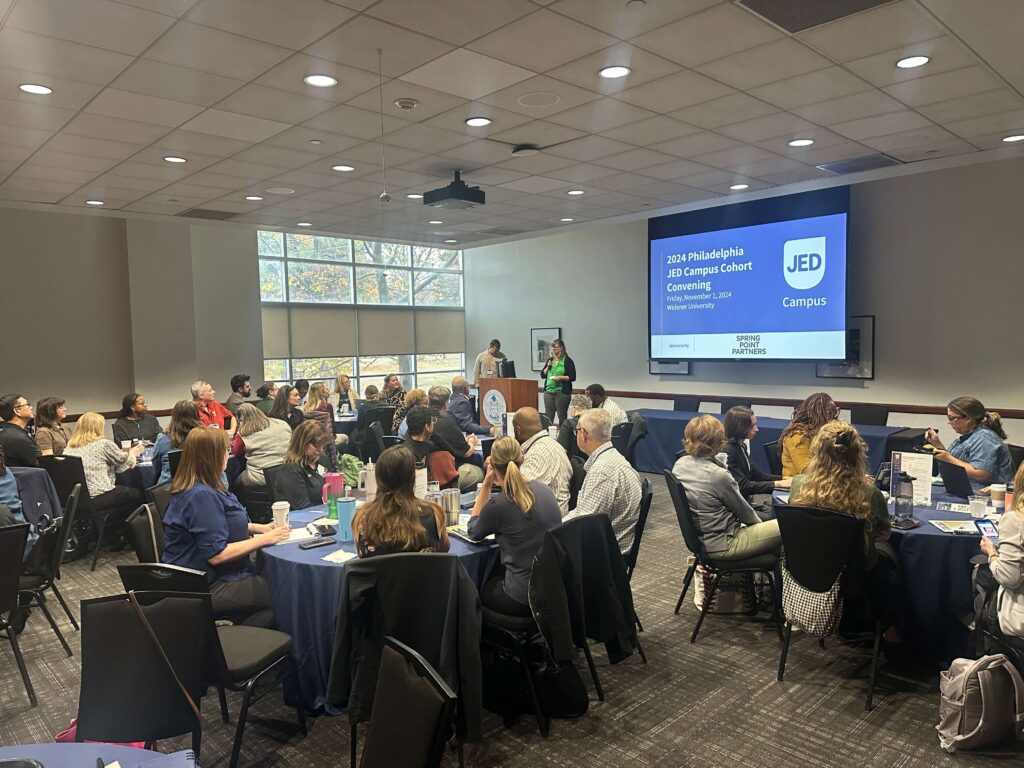
Educators participating in the Philadelphia JED Campus cohort meet at Widener University in Chester, Pennsylvania.

The Philadelphia JED Campus cohort met at Widener University in Chester, Pennsylvania, on Nov. 1 to hear practical insights and strategies to enhance their implementation of JED Campus initiatives. 

The Philadelphia cohort, sponsored by Spring Point Partners, will come together for four annual meetings during their cohort journey. Members engage directly with experts and community partners, explore promising practices, and strengthen connections within the cohort. The November convening marked the second of four planned gatherings for the cohort.

Year one focused on connection and laying a strong foundation, while year two emphasized sharing and learning promising practices. Representatives from 11 higher education institutions and organizations, including special guests from the Pennsylvania Department of Education and the Philadelphia Mayor’s Office of Education, came together for a day-long program titled Building Your Implementation Toolkit.

The day began with a thought-provoking keynote by Dr. Kamla Modi, Senior Director of Learning and Evaluation at JED, who explored barriers to mental health support among U.S. teens. 

Attendees then engaged in one of three breakout sessions to discuss simplifying strategic plans and mobilizing data, supporting student-athletes more holistically, and reshaping faculty partnerships to better address student mental health.

Participants later dove into the intersection of student wellness and sociopolitical stress during election season with JED Campus Advisor Dr. Jeni Beckman. The day concluded with a session by the Office of Postsecondary and Higher Education, highlighting the connection between mental health and students’ basic needs.

These convenings are a vital part of the JED Campus cohort journey to engender this social connectedness and resource sharing as each campus works to break down barriers to mental health support for college students. 

Learn more about how JED can support your college, university, or state’s system of higher education.

The Future of Youth Mental Health: A Message from JED CEO John MacPhee

Students bring their mental health to school every day. That’s why schools need to be a big part of the safety net — and JED gives them the tools to make it stronger.

See what happens when schools make youth mental health a priority. The Jed Foundation (JED) CEO John MacPhee shares compelling evidence from 2024 and how we’re scaling life-saving work to schools nationwide.

teal blue button that says support this work

National & Local Media Coverage of JED’s New Report on Fraternities and Mental Health

Find local and national news coverage of Fraternities and Mental Health: Supporting Emotional Well-Being Among Members and Across Campus. 


Fraternities Impact Mental Health of Their Members and College Campuses, Administrators and Student Leaders Encouraged to Support Well-Being

New report by The Jed Foundation (JED) examines the mental health implications of fraternity membership and provides actionable strategies for improving the emotional well-being of members and the campuses they impact.

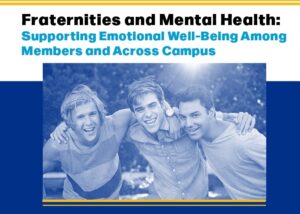
Greek Report Cover with three smiling male presenting college students standing together outside with arms on each other's shoulders

[December 2, 2024, NEW YORK CITY]The Jed Foundation (JED), a leading nonprofit that protects emotional health and prevents suicide for teens and young adults nationwide, issued a new report today, Fraternities and Mental Health: Supporting Emotional Well-Being Among Members and Across Campus. This research highlights the complex impact of fraternity membership on the mental health of fraternity members and explores the influence fraternities have on mental health campuswide. The findings, coupled with JED’s experience in this area, yield several key recommendations to enhance the emotional well-being of both fraternity members and other students on campus.

Fraternities have a substantial influence — both positive and negative — on college culture in the United States.Their influence comes with benefits and challenges for members and the larger campus community. Community-service requirements benefit the communities they are part of and offer members social and career benefits, but fraternity culture can also promote heavy drinking, sexual harassment and assault, and hazing — issues that can harm the mental health and well-being of both fraternity members and other students on campus.

“College is a critical time in a young person’s life, often contributing to the shaping of their identity. Young men who join fraternities tend to benefit from its social networks and sense of community,” said John MacPhee, JED’s CEO. “However, Greek life can sometimes foster a negative culture on college and university campuses that impacts both its members and non-members. Understanding and taking actions to mitigate these effects, while working to create healthy and inclusive environments where all students can thrive is paramount.” 

There are an estimated 750,000 fraternity and sorority members in college and more than nine million alumni in the U.S. 

In order to provide recommendations for how fraternities can promote positive mental health on campus, JED undertook a multifaceted research project, which included a review of established literature, secondary analysis of data from the Healthy Minds Study (HMS) and the American College Health Association’s annual National College Health Assessment, and two original studies. The findings encompass six key themes:

  1. Being part of a fraternity can create a sense of belonging and help members establish stronger social networks.
  2. The benefits fraternities offer may buffer mental health challenges for their members.
  3. Alcohol and other substance misuse is common in some fraternity settings and poses significant threats to well-being – for both members and non-members. 
  4. Fraternity members are more likely to commit sexual harassment and assault, harming the mental health of victims and campus safety overall.
  5. Students who are not part of fraternity life see fraternities as central to campus social life, but also see them as posing important risks to the well-being of the larger campus community.
  6. Fraternity members indicate that key factors in improving their mental health are increased awareness of their own and others’ needs and a greater ability to respond positively and respectfully.

The report details actionable recommendations for how fraternities can improve mental health supports and promote emotional well-being among members and the campuses they impact. 

View and download Fraternities and Mental Health: Supporting Emotional Well-Being Among Members and Across Campus.


About The Jed Foundation (JED)
JED is a nonprofit that protects emotional health and prevents suicide for our nation’s teens and young adults. We’re partnering with high schools, colleges, and school districts to strengthen their mental health, substance misuse, and suicide prevention programs and systems. We’re equipping teens and young adults with the skills and knowledge to help themselves and each other. We’re encouraging community awareness, understanding, and action for young adult mental health. 

Connect with JED: Email | X | Facebook | Instagram | YouTube | LinkedIn | Snapchat | Pinterest 

Media Contact
Justin Barbo
Director, Public Relations
The Jed Foundation
Justin@jedfoundation.org
914-844-4611

Get Help Now

If you or someone you know needs to talk to someone right now, text, call, or chat 988 for a free confidential conversation with a trained counselor 24/7. 

You can also contact the Crisis Text Line by texting HOME to 741-741.

If this is a medical emergency or if there is immediate danger of harm, call 911 and explain that you need support for a mental health crisis.