First-of-its-kind gathering of MHEC, NEBHE, SREB, and WICHE focused on postsecondary behavioral health marks a pivotal moment for national student well-being policy.
SALT LAKE CITY, Utah, June 23, 2026 — Postsecondary education represents a pivotal period of intellectual and personal growth, yet many students across universities, community colleges, and graduate and professional schools experience depression, anxiety, thoughts of suicide, and other behavioral health challenges.
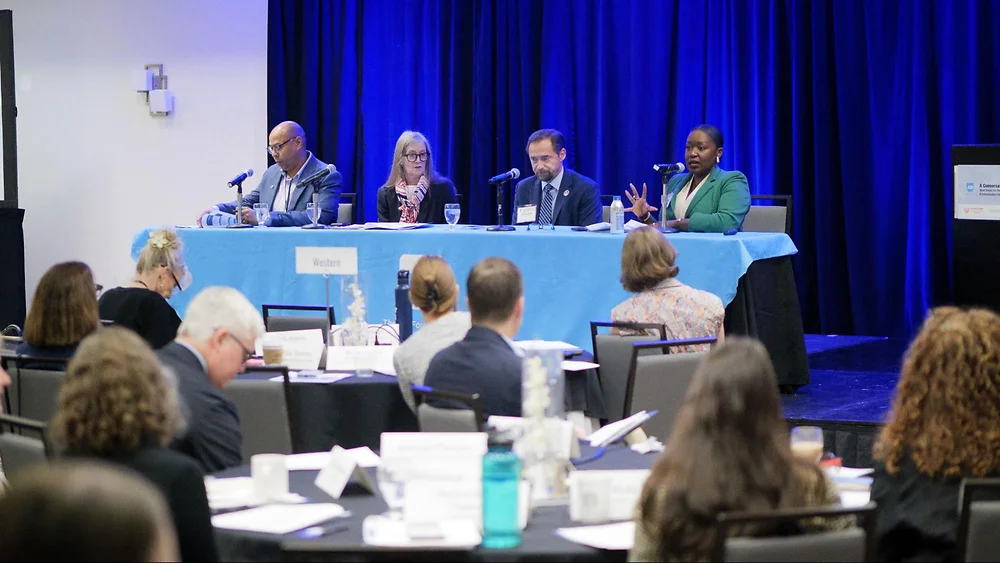
To confront these barriers and reshape the national conversation around campus mental health policy, The Jed Foundation (JED), in partnership with Lumina Foundation and Trellis Foundation, convened nearly 100 leaders from across higher education, public health, philanthropy, and student advocacy for a two-day policy convening.
Held June 16–17 in Salt Lake City, “A Conversation with the Compacts: Next Steps for States to Advance Behavioral Health in Postsecondary Education” marked a first-of-its-kind behavioral health nonprofit lead meeting, bringing together all four of the nation’s regional education compacts: the Midwestern Higher Education Compact (MHEC), New England Board of Higher Education (NEBHE), Southern Regional Education Board (SREB), and Western Interstate Commission for Higher Education (WICHE). These nonpartisan consortiums represent 47 states and territories and six affiliate partners.
Stephanie Marken, Gallup’s Higher Education Practice Lead, presented findings from the 2026 Lumina Foundation-Gallup State of Higher Education study. The data underscore the stakes of the moment: one in three students has considered stopping out or leaving school in the past six months, with emotional stress and mental health challenges cited as the leading reasons. These findings make clear that student mental health is a central driver of whether students stay, succeed, and complete their degrees.
“This is a defining moment for higher education. Student mental health is no longer an elective resource on campus; it is foundational to student success, workforce readiness, institutional resilience, and our nation’s future,” said Dr. Zainab Okolo, JED’s Senior Vice President of Policy, Advocacy, and Government Relations. “That is precisely why it is so important for the regional education compacts to come together now. No single institution or state can solve these challenges alone. By aligning across regions, sharing best practices, and advancing a common policy agenda, we have an unprecedented opportunity to accelerate meaningful systems change. The choices we make today will determine whether millions of students merely survive or truly thrive. We have the responsibility to build systems that recognize mental health as essential infrastructure for learning, opportunity, and long-term success.”
JED CEO John MacPhee joined compact leaders for a high-level policy conversation on what sustained, coordinated, national leadership on student behavioral health must look like going forward.
“At a time when students, educators, and institutions are navigating a higher education landscape with profound uncertainty, collaboration across sectors has never been more important,” said MacPhee. “We are proud of the success we’ve seen through the implementation of JED’s comprehensive approach across campuses, and are eager to continue to expand that approach across broader systems.”
Participants left Salt Lake City aligned around three main priorities to advance student behavioral health at the state and institutional levels:
- Suicide prevention demands a comprehensive, upstream approach with sustained investment in evidence-based programs and cross-sector collaboration that strengthens partnerships among K-12 schools, higher education institutions, health care systems, community organizations, philanthropy, and state agencies.
- Student voices are essential at every stage and must be included in both policy design and the implementation of programs that affect them. This means creating formal advisory councils, compensating students for their participation, and soliciting continuous feedback.
- Workforce development is a prerequisite for progress. The shortage of behavioral health professionals on and off campus remains one of the most pressing barriers to student care. States and institutions must work together to improve reimbursement and retention, strengthen training pipelines, expand supervision opportunities, and increase campus clinical capacity so that students can access support when and where they need it.
Utah State Senator Ann Millner (R-05) and Utah State Representative Steve Eliason (R-43), Senior Director of Behavioral Health at the Huntsman Mental Health Institute, participated in a policymakers fireside chat examining innovative strategies, such as Utah’s short-term Behavioral Health Tech certificates as an entry to clinical social work and psychology pathways.
“We passed legislation in 2024, established a code, and got the funding, with the result being five schools offering this program and producing 80 graduates, with 79 placed. It is a beginning, but we have a chance to make a difference. In order to meet workforce needs, it takes a partnership and innovation to ensure it will work in your state.” — Utah State Senator Ann Millner
“I was proud to help champion 988 at the federal level and support innovative youth mental health solutions in the Utah Legislature. These efforts are helping students in crisis, and are making a difference as evidenced by our lower rates of youth suicide. However, there is still much work to do to help young people thrive and prevent suicide. I was honored to join The Jed Foundation and higher education leaders to discuss how we can move further upstream in suicide prevention and build campuses and communities where every student has the support they need to succeed.” — Utah State Representative Steve Eliason, Senior Director of Behavioral Health, Huntsman Mental Health Institute.
During his closing keynote panel, Dr. Tom Harnisch, Vice President for Government Relations at the State Higher Education Executive Officers Association (SHEEO), examined the shifting federal policy landscape, including implications for the Substance Abuse and Mental Health Services Association, Higher Education Emergency Relief Fund successor programs, Medicaid, and Title IV, and how states can build resilient strategies in a volatile environment. Other sessions addressed the surge of artificial intelligence in higher education, changes in federal oversight, and pressures on state budgets.
The convening remained committed to centering student voices including, Saanvi Arora, Executive Director of the Youth Power Project, highlighted the roundtable as a catalyst for broader youth engagement in mental health policy.
“It was a really perfect opportunity for us to platform the ways young people can get more involved and should be incorporated into a lot of these conversations,” said Arora. “[The convening] got me thinking about ways that our advocacy can incorporate an understanding of how state and federal lawmakers address mental health issues and the urgency of also talking to school administrators.”
Several key remarks were offered by compact leadership, including Dr. Michael Thomas, President and CEO of NEBHE, who reflected on the significance of bringing this breadth of leadership together.
“Participants at this event have been vastly benefited by the opportunity to share insights and perspectives across institutions, organizations, and states,” said Dr. Thomas. “Our students, institutions, and communities deserve the best that we can offer to support them in achieving their potential. And the takeaways from this event will be prime fuel for our further efforts.”
The days concluded with collaborative conversations from across the compacts along with the creation of a shared policy agenda. Participating leaders from across state and national organizations included; The American Council on Education, The Association for University and College Counseling Center Directors, Coalition for Student Wellbeing, Complete College America, Eclatech Solutions, Futuro Health, The Healthy Minds Network, The Hope Center for Student Basic Needs, The Huntsman Mental Health Institute, inseparable, Mental Health America, Mental Health Literacy Collaborative, National Association of Student Personnel Administrators, New America, New York City Department of Health and Human Services, Ortus Foundation, The Philanthropic Collaborative for Education, State Higher Education Executive Officers Association, Trellis Strategies, Wellness Together, and Yale School of Medicine.
To view photos of the event, visit JED’s Facebook photo album. To learn more about JED’s policy, advocacy, and government relations work, visit JED’s website.
###
About The Jed Foundation
JED is committed to protecting emotional health and preventing suicide for our nation’s teens and young adults. JED partners with high schools, colleges, school districts, and youth-serving community-based organizations to strengthen their mental health, substance misuse, and suicide prevention programs and systems. JED equips teens and young adults with the skills and knowledge to help themselves and each other, and encourages community awareness, understanding, and action for young adult mental health.
Connect with JED: Email | LinkedIn | Instagram | Facebook | TikTok | Snapchat | YouTube
Media Contact
Justin Barbo
PR Director
The Jed Foundation (JED)
[email protected]