

Mental Health Care Access Must Remain a Public Priority
The Jed Foundation (JED) is deeply concerned about the fear, grief, and distress that youth and families are experiencing amid uncertainty, loss, and community upheaval. ...
National leaders across mental health, education, philanthropy, policy, and youth advocacy sectors unite to advance sustainable solutions and protect the emotional well-being of young people.
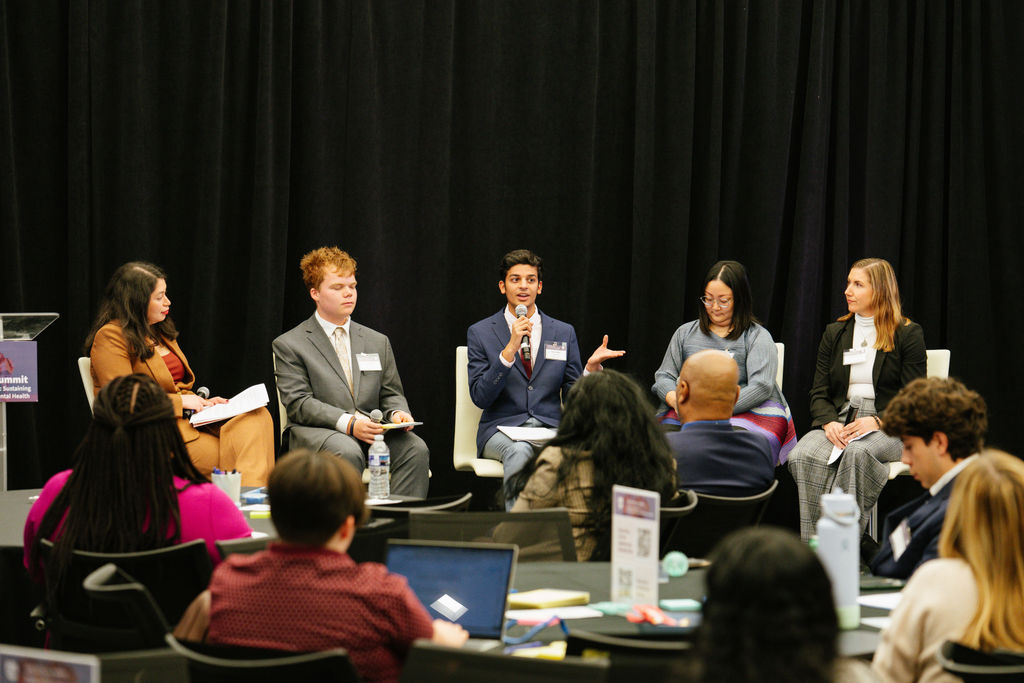
[October 21, 2025, Washington, D.C.] — The Jed Foundation (JED), a leading nonprofit that protects emotional health and prevents suicide for teens and young adults nationwide, gathered mental health experts, policymakers, advocates, educators, and young people for its third-annual policy summit in Washington, D.C., on October 15. The summit, “Meeting the Moment: Sustaining Progress in Youth Mental Health,” focused largely on the growing influence of artificial intelligence (AI) and the role of legislative policies on the local, state, and federal levels in shaping mental health support, investments, and resources for students in the digital age.
The summit began with an inspiring introduction and framing of the moment by Dr. Zainab Okolo, JED’s senior vice president of policy, advocacy, and government relations, who reflected on the national policy landscape and what it means to sustain progress. She debuted JED policy framework, AI Policy Levers for Youth Mental Health, which calls for:
“The mental health and safety of our young people is not a partisan issue. It’s a shared national priority. JED’s summit underscored the absolute necessity of bipartisan collaboration,” said Dr. Okolo. “We must work across the aisle — among policymakers, technology leaders, or advocates — to forge solutions that secure resources and investments in vital mental health services and establish ethical, protective guardrails around emerging technologies. Our youth deserve nothing less than a united front dedicated to their well-being.”
Michael Satow, JED’s board chair, offered opening remarks grounded in heartfelt thoughts about his brother, Jed, after whom the organization is named, while praising the summit for leaning into conversations about safeguarding the emotional health of youth in digital and school spaces.
“More than two decades after losing my brother Jed, our family continues processing a loss that may never fully make sense, but what we can do is ensure no other family endures this pain alone. This summit represents the kind of forward-thinking dialogue we need, examining how emerging technologies like AI intersect with youth mental health and suicide prevention, and translating those insights into actionable pathways that strengthen communities and save lives,” Satow said. “By sustaining these critical conversations and implementing evidence-based frameworks — like JED’s Comprehensive Approach to Mental Health Promotion and Suicide Prevention — that build connection, reduce risk, and expand access to care, we move closer to a future where every young person has the support they need to thrive.”
Summit participants also discussed new National Survey on Drug Use and Health (NSDUH) data that offers hopeful signs about youth mental health trends, showing declines in depression, suicidal thoughts, and suicide attempts among many demographics of teens and young adults from 2021 to 2024. While these findings underscore the impact of dedicated efforts in youth mental health and suicide prevention, this progress is being challenged. Federal budget cuts have put mental health services and adjacent supports at risk, from Medicaid and school-based programs to 988 crisis line services and youth-specific resources. Simultaneously, AI and evolving technologies are presenting significant safety issues to the mental health and well-being of youth.
“Recent national data from 2024 and 2023 shows overall declines in youth depression and suicidality, offering a powerful beacon of hope, validating the tireless work of so many dedicated to youth mental health. However, these improvements were not experienced across all groups of youth, showing that youth suicide prevention remains an urgent priority, and that the progress made is uneven and fragile. Therefore, we must remain committed in our resolve to this work and mission,” said John MacPhee, JED’s CEO. “As we face federal budget cuts to essential services and confront the alarming new risks for youth posed by unregulated AI development, JED’s third-annual summit was more vital than ever. JED remains committed to working with leaders across sectors to ensure that young people’s safety is a top priority.”
Congresswoman Becca Balint (VT-AL) highlighted a bipartisan bill, co-sponsored with Congressman Bryan Steil (WI-01), that aims to strengthen youth mental health supports by expanding access to care, aligning federal resources, and incentivizing cross-sector partnerships. Her remarks underscored how federal legislation can sustain progress, advance equity, and provide practical solutions for states, campuses, and communities.
“Despite the strides we have made to normalize mental health, this topic can still be incredibly hard for people to talk about, especially for young people. It’s complex. It’s personal. It can be scary and overwhelming,” said Rep. Becca Balint. “Today, I’m so proud to join JED for their policy summit to bring together experts, advocates, and young people with a common goal of addressing mental health challenges and the impacts of social media and AI. It’s more critical than ever that we take real steps to require technology companies to implement safeguards and provide our youth with the resources they need and deserve.”
Members of JED’s Youth Advocacy Coalition, including the 2025 JED Texas Youth Advocacy Coalition Fellowship Cohort, shared insights and recommendations rooted in what they identified as disconnects between youth needs and adult-led policy agendas.
“As a JED Texas Youth Advocacy Coalition fellow and event panelist, the policy summit felt like a true seat at the table,” said Rohan Satija, 2025 JED Texas Youth Advocacy Coalition fellow and 2025 JED Student Voice of Mental Health Award high school honoree. “I felt like my lived experience was heard and taken into account, helping shape policy. I’m excited to implement the insights I learned from the summit in my own community.”
Additional discussions and priority topics at this year’s summit included:
Featured policy summit speakers, panelists, and participants also included:
The policy summit was sponsored by the Trellis Foundation and the Lumina Foundation.
View photos from the summit. For more information on JED’s policy, advocacy, and government relations work, please visit our website.
Interviews available with John MacPhee, JED’s CEO, and Dr. Zainab Okolo, JED’s senior vice president of policy, advocacy, and government relations, as well as with youth voices from the summit.
##
About The Jed Foundation (JED)
JED is a nonprofit that protects emotional health and prevents suicide for our nation’s teens and young adults. We’re partnering with high schools, colleges, and school districts to strengthen their mental health, substance misuse, and suicide prevention programs and systems. We’re equipping teens and young adults with the skills and knowledge to help themselves and each other. We’re encouraging community awareness, understanding, and action for young adult mental health.
Connect with JED: Email | LinkedIn | Instagram | Facebook | TikTok | Snapchat | YouTube
Media Contact
Justin Barbo
Director of Public Relations
The Jed Foundation
Justin@jedfoundation.org
If you or someone you know needs to talk to someone right now, text, call, or chat 988 for a free confidential conversation with a trained counselor 24/7.
You can also contact the Crisis Text Line by texting HOME to 741-741.
If this is a medical emergency or if there is immediate danger of harm, call 911 and explain that you need support for a mental health crisis.