
How brokeness is making young Americans sick — literally
Anxiety and depression is spiking among young people. No one knows why.
JED’s Chief Medical Officer, Dr. Erickson-Schroth, Featured on NBC News
JED Chief Medical Officer Dr. Laura Erickson-Schroth spoke on the emotional impact teens and young adults may face due to a potential TikTok ban.
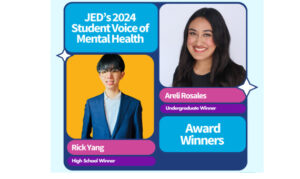
2024 Student Voice of Mental Health Award Recipients Appear In National & Local Media Coverage
Find news coverage about JED’s 2024 High School and Undergraduate Student Voice of Mental Health Award recipients, Rick Yang and Areli Rosales.
- Education Week: Act on Student Ideas to Improve Mental Health, Youth Advocate Urges
- Scarsdale10583: SHS Senior Receives Mental Health Award
- The Epic Mentor Newsletter: What This Winner of the Nation’s Top Mental Health Award Wants Girls to “Keep in Mind”
- Harvard Public Health: Why are young people in the U.S. so unhappy?
- ABC News One: JED honors two youth leaders for work towards mental health awareness
6 Ways Educators Can Bolster Boys’ Social Skills
Student Voice of Mental Health Award Winner Areli Rosales on the Power of Vulnerability
Areli Rosales has always felt it was her duty to help heal the people in her life. Growing up the child of an immigrant mother with three sisters, she saw the struggles her loved ones faced and wanted to be the one to break generational trauma — but mental health was rarely discussed.
That was until Areli faced mental health challenges of her own, and decided to use her experiences to open up the conversation and inspire others with her vulnerability. In her journey of healing she has created a path for others to do the same. And as this year’s undergraduate Student Voice of Mental Health Award winner, Areli continues to dedicate herself to being an advocate for all.
 A first-generation college sophomore at the University of Texas at San Antonio, Areli is studying to one day become a clinical psychologist. She founded KeepInMind, an initiative committed to raising mental health awareness that has expanded across her college campus through support groups and weekly workshops. Areli is also a mental health peer advocate, podcast host, writer, and short film producer.
The Jed Foundation (JED) created the Student Voice of Mental Health Award to recognize students for their outstanding efforts to raise awareness for mental health issues and encourage help-seeking behaviors in their school communities. The award includes a $3,000 scholarship and presentation of the award at JED’s annual gala in New York City on June 3, 2024.
We talked to Areli about her efforts to create a culture of vulnerability and acceptance.
What does it mean to you to have won this award?
It means I am moving in the right direction in my mental health advocacy work. I’ve been fond of The Jed Foundation’s work for a while, and I have been keeping my eye on the award, as well as previous winners and the incredible efforts they have been making in the youth mental health space. The fact that I am now in their company and being recognized for my work serves as a reassurance that I’m making a positive impact. I feel empowered to keep going.
You speak very openly about the mental health challenges you’ve experienced, which takes a lot of courage. What has allowed you to be so candid and confident in conversations around mental well-being?
When I first left psychiatric treatment in 2020, I was very open with a friend about what I had just been through. I did it even though I was hesitant to be open with anybody. My friend’s response was very encouraging in the sense that she had gone through similar experiences with her mental health. It was a powerful moment for me that showed that vulnerability invites vulnerability. If you open up, you might encourage someone else to share their story and find strength. It also was a catalyst for deepening my relationship with my friend, which showed me that being vulnerable can create a path to deeper, more meaningful connections.
Based on your experiences working in the youth mental health space — and being a young person yourself — what do you think teens and young adults need to be more comfortable opening up about when it comes to their mental health?
We need to break down stigmas around mental health and barriers to help-seeking, and a big part of that is seeing the adults in our lives talk about uncomfortable, heavy things in an open and transparent way. We also need to see that behavior at school and in the media we consume every day. Mental health is often talked about in such a cautious, selective way. We need to be having real, raw conversations about what it can look like to struggle with your mental health and get help. Like I said, vulnerability can inspire vulnerability!
You created the KeepInMind initiative to raise mental health awareness. As part of that, you also launched a podcast on which you and your peers talk about mental health topics such as overcoming trauma and comparing yourself to others. Can you talk more about your inspiration for those efforts and your goals for each?
During the pandemic, so many of us were not having in-person interactions and we were feeling isolated. I got the idea to start an Instagram page to discuss mental health and spread awareness in a way that’s accessible to all. I reached out to my community’s social media page where local events and initiatives are featured, and once they posted about KeepInMind, it took off!
I received a lot of feedback from people in the community who were interested in being part of the conversation and sharing their own mental health experiences. That led me to start support groups and look for even more ways to unite the community around mental health. Now I have a team from my hometown that I collaborate with to keep the initiative going, and I’m proud to say it has been growing with me. As I start to look toward my career, I hope I will not only be able to give people a space to talk about their mental health, but I’ll also develop the skills to train them to be mental health advocates.
Can you talk a little bit about the impact your family — namely, your mother and sisters — has had on your mental health journey and decision to become a mental health advocate?
The women in my life are warriors who have gone through so much. They are huge inspirations to me. As I was growing up, I saw the trauma they experienced and I felt empowered to be a source of healing for them. They taught me that it’s possible to still live a beautiful life despite experiencing trauma. That trauma is not a barrier — it is just an obstacle to overcome.
My family is the primary reason I have a great interest in working with Hispanic communities. Not only because I was raised in one and it’s a big part of who I am, but also because I believe Hispanic culture is one of resilience and one I want to celebrate and add to.
With all you do, how do you make time to care for your own mental health?
I’m a big advocate for therapy. It has helped me on my journey and it’s something I’ll continue to utilize. It’s a space for me to unravel my thoughts and my experiences. I’ve also developed a meditation practice over the past few years. It’s non-negotiable every single day to let my mind stop for a little bit and just breathe.
Journaling is also a big part of my daily life and mental health routine. My pen and paper will never get tired of me talking about the same thing. It has been helpful for me to understand my experiences and better understand myself. All those things help me stay grounded and give me perspective.
Student Voice of Mental Health Award Winner Rick Yang on Helping Youth Take Up Space
Like so many young adults, Rick Yang felt isolated during the COVID-19 pandemic. He was so focused on checking boxes — virtual learning, FaceTiming friends, dinner with family — that he didn’t realize he was struggling with his mental health.
After engaging in meaningful conversations with friends, he began to open up to them — and himself — about the challenges he faced. He then made the brave decision to use his experience to advocate for youth mental health.
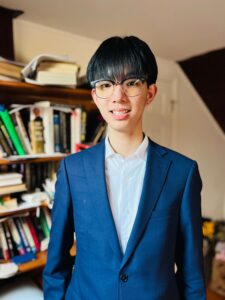 As this year’s high school Student Voice of Mental Health Award winner, Rick has dedicated himself to combating mental health stereotypes and putting teens and young adults at the forefront of conversations and decision-making about youth mental health.
He is the youngest member of the Mental Health America Young Leaders Council for 2023-2024, as well as the co-founder and CEO of Frontiers of Fulfillment, a nonprofit that offers advocacy and lobbying workshops in over 30 states to amplify youth voices in policymaking. In his school district, Scarsdale Public Schools in New York, Rick organized and implemented SchoolSight: A Comprehensive Mental Health Vision, an initiative aimed at identifying and implementing evidence-based interventions to safeguard student mental health. Findings from the research ultimately led Rick, along with his peers and district superintendent, to secure a $125,000 grant to create wellness spaces for 5,000 local students. Rick is continuing his advocacy work through his senior year of high school and into his college career, which he will begin at Harvard University in the fall.
The Jed Foundation (JED) created the Student Voice of Mental Health Award to recognize students for their outstanding efforts to raise awareness for mental health issues and encourage help-seeking behaviors in their school communities. The award includes a $3,000 scholarship and presentation of the award at JED’s annual gala in New York City on June 3, 2024.
We talked with Rick to learn more about his advocacy and impact.
What does it mean to you to have won this award?
Receiving this award is quite surreal, because I never thought I would get it. When I got accepted, I thought to myself, “Hey, I really did this.” But it wasn’t just me, there were so many people who helped me along the way. My sister supported me continuously, my parents drove and flew me places, and all the other advocates and councils I’ve partnered with encouraged me to apply. It feels great.
You’re doing incredible work to break down mental health stereotypes, including the model minority myth, a damaging stereotype that affects Asian-American students. How have these stereotypes factored into your mental health journey, and why is shattering them crucial to protecting youth mental health?
The model minority myth certainly played a large role in my mental health journey. Throughout middle school and into high school, I faced the societal expectation — and expectations within my community of Asian-Americans, specifically, Chinese-Americans — to be a high achiever. I found it really hard to be proud of myself, because there’s a lot of comparison. Even if I got a 99 on an exam, there would be some kid who got 100 — and those kinds of details are discussed and criticized in my community. There was always a way to be better, and I had to learn to cope with that pressure.
When it comes to improving youth mental health, it’s very interdisciplinary. Different cultural factors are at play and they need to be addressed for young people to get the support and help they need. For example, there are cultural barriers that often prevent youth from accessing mental health services in the first place. Those are the kinds of obstacles we need to tear down so no one goes without help.
You spearheaded an initiative, SchoolSight, to implement evidence-based mental health interventions in your school district. One of those interventions is creating wellness spaces in your high school. Can you share more about the inspiration behind that effort?
I attended a district mental health meeting. The sentiment that came out of it was that students are stressed, but that’s just a common thing that occurs and there isn’t much that can be done about it. My immediate thought was, “If there’s a problem, there is a way to solve it. I have to do something.” That started my journey of finding ways to better fund mental health services in my school.
I conducted interviews with district psychologists, social workers, and other stakeholders in my county, and students and parents too. I learned that students were definitely stressed out, but they weren’t visibly distressed, and a lot of the mental health funding my district received was for high-risk students showing signs of distress. The funding wasn’t wasted, but it wasn’t being optimized for the needs of students in my particular district.
I attended Congressman Jamaal Bowman’s Youth Leadership Conference in May 2023, and that’s where I came up with the idea of implementing wellness centers in my district. I later presented the idea to a group of legislators and worked with my district superintendent to secure a grant for the project.
We’re working on creating wellness spaces with students’ needs at the center, which we’re learning about through upcoming surveys. We’re also working on deploying wellness kits in every classroom. These kits will have stress balls and other fidget-items and resources to help students ease stress and anxiety before or after a test, or whenever they need it.
The pandemic was a difficult time for so many of us, but you used the challenges you faced as a catalyst for positive change in your life and in the lives of others. Can you tell us more about that?
I’ve used various aspects of my lived experience as a catalyst for the advocacy work I’ve engaged in. I think leaning on our lived experiences is crucial for proper mental health dialogue and storytelling. Real stories are often more impactful than a statistic, or they shed more light on a statistic. They should also inform policy. Youth with lived experience coping with mental health challenges should be working alongside seasoned professionals to shape services, practices, and policies.
With everything you do, how do you make time to take care of your emotional health?
I’m a former professional esports player, but I still play a lot of video games with my friends. That might come across as a cliché teenage boy, but I find that it’s de-stressing and bonds me and my friends together. I also enjoy playing soccer or Spikeball with my friends on the weekends, playing board games with my family, and beatboxing. I sometimes practice beatboxing to de-stress. It lets me create my own internal rhythms that let me focus when I’m doing work or other things.
What’s next on your advocacy agenda as you approach high school graduation?
I’m definitely looking to continue working on the initiatives I’ve started, and I’m passing down info and ideas to some younger advocate friends so they can continue the work after I’ve graduated.
I hope to discover new avenues for mental health activism and research and continue advocating for the importance of youth voices in youth mental health and school mental health policies. If we genuinely want to make a difference, then adults need to do more than allow young people to speak up. They have to actively encourage youth to share their novel ideas and perspectives and create spaces where young people feel safe to express their thoughts. We deserve to be treated as equal partners in these conversations, which ultimately have outcomes that affect our well-being.
The Jed Foundation’s 17th Annual Student Voice of Mental Health Awards Honor Rick Yang and Areli Rosales
Both students are leading advocacy initiatives to build support systems and encourage help-seeking among youth in their school communities.
[April 1, 2024, New York City] — The Jed Foundation (JED) announced today that students Rick Yang and Areli Rosales are the recipients of the 2024 Student Voice of Mental Health Awards (SVMHA). Each year, JED honors one high school student and one college student doing outstanding work to create communities of care in their schools. Award recipients are raising mental health awareness by leading initiatives, encouraging their peers to reach out for help, and building support systems for youth mental health and suicide prevention.
Rick Yang (he/him/his) is a senior at Scarsdale High School in Scarsdale, New York, and describes himself as a “mental health champion” who experienced feelings of isolation as a result of the COVID-19 pandemic and virtual learning. He identifies as Chinese-American and has experienced the cultural struggles associated with help-seeking for mental health issues, prompting him to begin his advocacy work. The 17-year-old is the co-founder and CEO of “Frontiers of Fulfillment,” a nonprofit that operates in more than 30 states and impacts thousands of people through advocacy and lobbying workshops that ensure youth voices are heard in local, state, and federal mental health policymaking. In his school community, Rick organized and implemented “SchoolSight: A Comprehensive Mental Health Vision” an initiative that seeks to implement evidence-based mental well-being interventions throughout Westchester County. Rick will be attending Harvard University in the fall.
Areli Rosales (she/her/hers) is a first-generation college sophomore at the University of Texas at San Antonio studying psychology on a path toward master’s and doctoral degrees. Areli was raised in a Hispanic household by her immigrant mother and three sisters along the United States-Mexico border in El Paso, Texas, while her father was imprisoned, and mental health was rarely discussed. A sexual assault and suicide attempt survivor, she found strength in her struggles and founded “KeepInMind,” a nonprofit committed to raising mental health awareness. Areli has expanded KeepInMind across her college campus via support groups and weekly workshops. The 20-year-old is a devoted mental health peer advocate, podcast host, writer, and short film producer. Her on- and off-campus advocacy efforts include raising awareness about sexual violence, promoting emotional well-being, and providing resources and education to teens, parents, and educators in the development of a national mental health and wellness curriculum.
“Congratulations to Rick and Areli on this well-deserved award. Having the insight and motivation to channel your personal experiences into your impressive local and national youth mental health advocacy work is remarkable, and will undoubtedly impact many lives,” says John MacPhee, CEO of The Jed Foundation, “As JED marks its 25th year, we are pleased to honor your achievements and recognize you both as 2024 Student Voice of Mental Health Award recipients.”
A committee selected the awardees based on their video essays and personal statements. Winners each receive a $3,000 scholarship, a trip to New York City to attend JED’s annual gala, and ongoing opportunities to represent and work with JED.
Created in 2008, the Student Voice of Mental Health Awards have honored 19 students from various backgrounds who have gone on to make incredible strides in normalizing the conversation around youth mental health and suicide prevention.
Both winners will be honored at JED’s annual gala on June 3 at Cipriani Wall Street.
The Jed Foundation (JED)
JED is a leading nonprofit that protects emotional health and prevents suicide for our nation’s teens and young adults. We’re partnering with high schools and colleges to strengthen their mental health, substance misuse, and suicide prevention programs and systems. We’re equipping teens and young adults with the skills and knowledge to help themselves and each other. We’re encouraging community awareness, understanding, and action for young adult mental health.
Connect with JED: Email | Twitter | Facebook | Instagram | YouTube | LinkedIn | Snapchat | Pinterest
MEDIA CONTACT:
Justin Barbo
Director of Public Relations
The Jed Foundation (JED)
(914)844-4611
The Jed Foundation/SHEEO Mental Health and Equity Initiative
Cyberbullying Resources for Parents and Caregivers

As caring and supportive adults, we aspire to guide youth toward becoming compassionate, understanding, and resilient individuals. In a world where social and emotional challenges are plenty, teens need the right tools to navigate life’s complexities with kindness and empathy.
That’s why The Jed Foundation (JED) is a proud member of The Choose Kindness Project. Guided by an alliance of 22 of the nation’s leading organizations on bullying prevention, intentional inclusion, and mental wellness, The Choose Kindness Project’s primary goal is to foster collaboration and innovation that expands our reach and impact with youth, families, coaches, and other caring adults.
In support of the Alliance, we are thrilled to introduce the Choose Kindness Project cyberbullying resources to complement the Parent Playbook and Educator & Coach Toolkit.
Decision Trees
Teens can face many different situations when it comes to cyberbullying. Our decision trees offer a step-by-step approach for parents and caregivers to handle these situations. Each decision tree provides a practical guide for thoughtful action.
- 4 Steps to Protect Your Teen From Cyberbullying
- What to Do If Your Teen Is Being Cyberbullied
- How to Help Your Teen Stop Cyberbullying Others
- How to Help Your Teen Develop Empathy and Compassion
Each branch of the decision tree poses questions and scenarios that encourage critical thinking and self-reflection. By exploring these paths, young people are better positioned to understand the consequences of their choices and to consider other people’s feelings. Each decision tree is a conversation starter, problem solver, and kindness coach all in one.
Engaging Videos
Along with the decision trees, JED has crafted a series of videos that bring the concepts of kindness and empathy to life. Led by two of JED’s clinical experts Dr. Laura Erickson-Schroth and Dr. Katie Hurley, the videos provide relatable, real-life narratives and are designed to help make kindness and mental health a priority for youth and their communities.
Through storytelling, our videos aim to inspire and motivate, demonstrating how every act of kindness — no matter how small— can make a significant difference in someone’s life.
The Parents Guide: Your Roadmap to Raising Kind Kids
To further support your journey, we invite you to download The Choose Kindness Projects comprehensive Parent Playbooks. The guide is full of insights, tips, and actionable strategies to help you foster an environment where kindness is celebrated and practiced daily.
Join Us in Choosing Kindness
At JED, we believe in the transformative power of kindness. We are committed to providing resources that support the emotional health of teens and young adults. We invite you to explore these resources anytime, anywhere. Together, let’s embark on this journey of kindness, creating a brighter, more compassionate future for teens and the world they will shape.
15 School Districts Join JED and AASA in Transformational Youth Mental Health and Suicide Prevention Program for Pre-K-12 Students
Pilot cohort convenes March 20-21 with districts across 14 states, serving diverse populations of students in rural, suburban, and urban communities.
[March 20, 2024-Alexandria, Virginia and New York, New York] The Jed Foundation (JED) and AASA, The School Superintendents Association, announce the selection of 15 school districts to participate in the District Comprehensive Approach (DCA) pilot, a transformational program that guides districts in improving systems of support for pre-K-12 students’ emotional well-being. Inaugural district cohort members will be at the forefront of learning and leading powerful mental health and suicide prevention practices that will benefit both staff and students.
In addition to powerful professional learning experiences, program participants will receive a written locally developed district strategic plan to serve as a roadmap for building comprehensive student mental health and suicide prevention programming. All participating districts will also receive two years of technical assistance from JED experts as they implement their plans to enhance systems of support to create first-class school mental health systems.
In just its first year, the inaugural DCA cohort class of 2024 will serve more than 356,000 students from 480 schools across 14 states. The full list of school districts includes:
- Chandler Unified School District (Chandler, Arizona)
- Fargo Public Schools (Fargo, North Dakota)
- Hardin Public Schools (Hardin, Montana)
- Harford County Public Schools (Bel Air, Maryland)
- Kuspuk School District (Aniak, Alaska)
- Laurens County School District 55 (Laurens, South Carolina)
- Minnetonka Public Schools 276 (Minnetonka, Minnesota)
- Montgomery County Public Schools (Rockville, Maryland)
- San Ramon Valley Unified School District (Danville, California)
- Scarsdale Public Schools (Scarsdale, New York)
- Silvis School District (East Moline, Illinois)
- Stafford County Public Schools (Stafford, Virginia)
- Summit Academy North (Romulus, Michigan)
- Vineland Public Schools (Vineland, New Jersey)
- Washington Local Schools (Toledo, Ohio)
The cohort’s first official convening is slated for March 20-21, 2024. Participating school districts will join several virtual workshops, led by JED’s experts and AASA’s educational leaders, to outline the DCA program. The sessions are packed with a combination of learning, connection, and actionable insights education leaders will bring back to their districts. Topics will include district readiness for mental health systems change, an overview of the DCA self-assessment, perspectives from a high school student, and the impacts of social media, artificial intelligence, and virtual reality on student mental health.
“School leaders know that getting in front of the youth mental health crisis requires thinking far beyond one-size-fits-all approaches,” says David R. Schuler, executive director at AASA. “That’s why we’re partnering with JED to launch a comprehensive, transformative, and scalable district-wide approach that is designed to meet this urgent need. This initiative will provide an evidence-based framework combined with the expert support, best practices, and data-driven guidance our students, families, staff, and caregivers deserve.”
According to the Centers for Disease Control and Prevention (CDC), 42% of high school
students reported feelings of sadness or hopelessness in the past year. This rate has grown significantly for female students from 36% in 2011 to 57% in 2021. Meantime, suicide continues to be the second leading cause of death for 10- to 34-year-olds, following accidents. In recent years, suicides among younger children, ages 5 to 11 in elementary schools, have increased by 15% per year.
“The District Comprehensive Approach by JED in partnership with AASA is a milestone moment marking the start of systemic and structural change for youth mental health and suicide prevention across the public education system,” says Tony Walker, senior vice president of academic programs at JED. “This first group of district cohort participants are true trailblazers, reinventing how schools help students — and their mental health — thrive, not just in their hometown, but now, nationwide.”
In April 2023, JED and AASA formed an exclusive partnership to develop and deploy the District Comprehensive Approach program, together, providing pre-K–12 school districts across the nation with an evidence-based framework — combined with expert support, best practices, and data-driven guidance — to protect mental health and prevent suicide for millions of students. This collaboration combines JED’s 25 years of experience protecting emotional health and preventing suicide for more than 1,200 schools, districts, and campuses with AASA’s 150-year commitment to serving public education and school district leadership. The creation of the DCA establishes and exemplifies the significance school district leaders are placing on their students’ emotional health.
The DCA derives from JED’s evidence-based High School Comprehensive Approach. Through this framework, school districts will ensure that existing systems support the mental health of — and reduce suicide risk for — all students.
For more information on the DCA program, participation, and the AASA Leadership Network, visit JED’s website.
Quotes from local DCA cohort superintendents can be found below. Expanded responses and interview opportunities available are upon request by contacting:
Justin Barbo
Director
Public Relations
The Jed Foundation (JED)
justin@jedfoundation.org
(914) 844-4611
James Minichello
Director
Communications & Public Relations
AASA, The School Superintendents Association
jminichello@aasa.org
(703) 774-6953
“There is no health without mental health, and if left untreated or inadequately treated, it can negatively impact a young person’s ability to learn and grow,” says Franklin R. Narducci, superintendent of Chandler Unified School District. Schools are on the front lines of the mental health crisis, making educators agents of change. Participating in the District Comprehensive Approach ensures that our students have learning environments that are emotionally and physically safe and healthy. This ultimately promotes caring relationships and culturally responsive routes that enhance whole child development while minimizing future trauma, supporting families, and building an infrastructure of health.”
“When a district focuses on student emotional well-being, it creates a positive and inclusive learning environment and fosters a sense of safety and belonging for all students,” said Rupak Gandhi, superintendent of Fargo Public Schools. “Fargo Public Schools’ involvement in the District Comprehensive Approach by JED and AASA has the potential to benefit many students and their families through holistic support, early intervention, increased awareness, community engagement, access to support services, strengthened partnerships, equity in education, and the empowerment of students.”
“Like many schools, we are dealing with more mental health issues than in the past and are searching for ways to better support our students and staff,” says Tobin Novasio, superintendent of Hardin Public Schools. “In addition to the challenges all districts face, we also serve a population that is predominately low-income, minority, and rural — all factors which have been statistically shown to impact emotional well-being. One of our hopes for the District Comprehensive Approach is to create a more systematic plan to optimize the impact of our resources, both those already implemented and those new to our district, to best support our families, students, and staff. By providing increased mental health support, we can positively impact students’ lives both inside and outside of our school walls.”
“Harford County Public Schools is focused on the whole child and understands that a student’s emotional well-being plays a vital role in not only their overall physical and mental health, but also their academic performance and opportunities to achieve future success,” says Sean Bulson, superintendent of Harford County Public Schools. “To this end, we are excited to partner with the experts at JED and AASA to learn best practices from across the country and incorporate new ideas into our existing programs. Through this collaboration, we will engage in proactive strategizing that will ultimately result in healthier students across our district. We hope to gain a better understanding of how the components of our mental health work can be streamlined into a more comprehensive program.”
“Given our remote location and continued issues with high rates of teen suicide and suicidal ideation, joining the District Comprehensive Approach will bring our community a more holistic approach to mental health,” says Madeline Aguillard, superintendent of Kuspuk School District. “We believe that our participation will reassure our students, families, and faculty that it’s OK to ask for help and prioritize emotional well-being.”
“The emotional well-being of students is a priority to our district as we fully understand its impact on their academic performance and daily lives,” says Jody Penland, interim superintendent of Laurens County School District 55. “We are aware of the mental health challenges and rising suicide rates among young people and appreciate the opportunity to collaborate with JED and AASA on bringing the District Comprehensive Approach to our schools and community. Our pioneering participation will have a positive ripple effect while also providing critical feedback that will inform, improve, and shape the future of the DCA and public school culture.”
“We strive to be proactive, rather than reactive, in our efforts to address the challenges and opportunities our students and staff encounter, as mental health is a top priority for our school district,” says David Law, superintendent of Minnetonka Public Schools. “Students do better when they feel safe, supported, and connected, and teachers and staff are happier and more productive when they feel respected and supported. We are eager to make this investment in the District Comprehensive Approach because we feel it is an important opportunity to learn and grow alongside other innovative and proactive educational and mental health leaders. This group of school districts will be a model for how to strengthen mental health supports for students while also improving their academic and emotional well-being.”
“Students nationwide and right here in Montgomery County — one of the largest and most diverse districts in the United States — experienced a pandemic, deep divisions impacting schools and classrooms, a racial reckoning, and mental health challenges,” says Damon Monteleone, associate superintendent of the Office of School Support and Well-Being at Montgomery County Public Schools. “These national trends demand a national framework and our participation in the District Comprehensive Approach brings an opportunity to learn from experts in the field, thought partner with other school districts, and implement research-driven, evidence-based practices to improve student well-being, mental health, and academic success. We are hopeful that the inaugural DCA cohort will serve as a national leader in transforming how public school districts strategically approach well-being planning, implementation, and evaluation.”
“Student emotional well-being is a top priority for us because we understand its critical role in academic success, personal development, and overall well-being,” says John Malloy, superintendent of San Ramon Valley Unified School District. “We embrace the District Comprehensive Approach to promote mental health and suicide prevention efforts not only within our district, but also throughout the community and, eventually, across the country. Our goal is to reduce stigma surrounding mental illness, increase awareness of available resources, and empower students to develop resilience, coping skills, and help-seeking behaviors. We aspire to continue learning, growing, and implementing best practices to ensure our students receive the support they need to thrive emotionally, academically, and personally.”
“Two of the most critical prerequisites for each student’s complete development and contribution to the community, society, and world are developing a sense of belonging and experiencing well-being,” says Drew Patrick, superintendent of Scarsdale Public Schools. “Unfortunately, the trend among youth suggests these attributes are harder to develop and maintain in today’s world, and one of the indicators of this is the increased demand for mental health care resources. We believe that the District Comprehensive Approach is a valuable tool that we can use within our community to help address these trends. Through the implementation of this approach across our schools, we can help students and their caregivers know how to access the support they need to be successful and achieve the sense of belonging and well-being they need to thrive.”
“The mental health needs of the students we serve have grown exponentially in recent years,” says Terri VandeWiele, superintendent of Silvis School District. “We’re participating in the District Comprehensive Approach to evaluate the effectiveness of our current supports and programs, while also working to meet the needs of our students, faculty, staff, and community at large. We are hopeful that this program will serve as a model for other school districts for how to improve and prioritize student emotional well-being.”
“Stafford Schools is committed to providing a safe and welcoming environment, where every student and staff member is fully supported,” says Thomas W. Taylor, superintendent of Stafford County Public Schools. “We know that mental health is a critical component in providing that environment, and we are proud to be an inaugural participant in the District Comprehensive Approach from JED and AASA. This powerful partnership will provide our schools with much-needed tools to address this complex social-emotional issue and create communities of care.”
“Participating in the District Comprehensive Approach is our commitment to prioritizing the well-being of our students,” says Leann Hedke, superintendent of Summit Academy North. “This will allow us to cultivate a positive and inclusive culture within our district, fostering resilience, promoting mental health awareness, and ultimately creating an environment where students feel supported and empowered to thrive academically and personally. Sharing insights and successful strategies can inspire other districts and help foster a collective movement toward prioritizing mental health in education, which can ultimately benefit students and educators across the country.”
“Our district is located in one of New Jersey’s lowest-income counties, with many community services fully utilized,” says Alfonso Llano, superintendent of Vineland Public Schools. “Our priority is to help our students develop academically, socially, and emotionally. We are proud to participate in the District Comprehensive Approach, which provides students, families, and staff with options for mental health support and addresses areas of improvement. This collaboration enables the community, and the nation as a whole, to perceive public education as a positive force that can support all students.”
“The physical, mental, and emotional health and safety of our students come first for us,” says Kadee Anstadt, superintendent of Washington Local Schools. “We know that mentally healthy students are in much better positions to make good decisions, engage academically, attend school regularly, and build lasting, healthy relationships with those around them. Having a cohort of individuals facing similar challenges and working toward the same goal provides support not only to our students but also to our district as a whole. Participating in the District Comprehensive Approach means that a supportive network of professionals will be working together collaboratively to provide necessary resources for the students entrusted to our care.”
About The Jed Foundation (JED)
JED is a nonprofit that protects emotional health and prevents suicide for our nation’s teens and young adults. We’re partnering with high schools and colleges to strengthen their mental health, substance misuse, and suicide prevention programs and systems. We’re equipping teens and young adults with the skills and knowledge to help themselves and each other. We’re encouraging community awareness, understanding, and action for young adult mental health.
Connect with JED! Email | X (formerly Twitter) | Facebook | Instagram | YouTube | LinkedIn | Snapchat | Pinterest | TikTok
About AASA, The School Superintendents Association
AASA, The School Superintendents Association, founded in 1865, is the professional organization for more than 13,000 educational leaders in the United States and throughout the world. AASA’s mission is to support and develop effective school system leaders who are dedicated to equitable access for all students to the highest quality public education. For more information, visit www.aasa.org.