Page 3 | The Jed Foundation

What a Mother Learned After Losing Her Son to Suicide

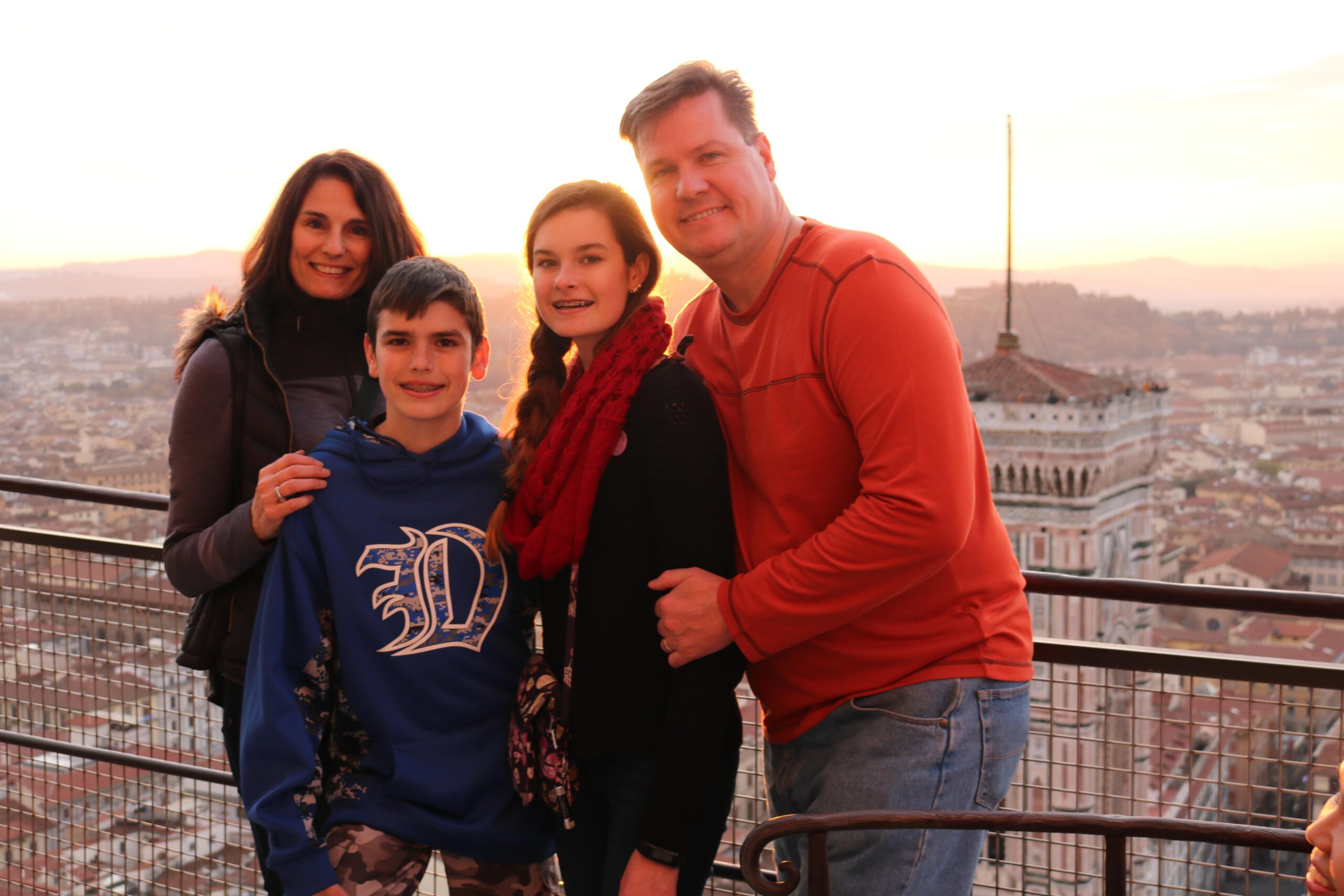
The Dunleavy family in Florence, Italy, 2016.

The first item in their new house was a brown little army guy that Joey placed on top of a motion detector to keep everyone safe. On the day Joey died, his sister gathered many of his soldiers he had collected since he was little and placed them throughout the house. 

They had been part of his life for as long as anyone could remember. 

As a child he carried bags of them to swim meets and theater rehearsals, quietly entertaining himself for hours. He had “thousands of little army men,” his mom, Nora, said.

His interest in military history was passed down from his father and grandfather, reinforced by evenings spent watching the history channel together, and reading the oversized military history books he paged through as a child.

“He was funny. Wicked smart,” Nora said. At school, “he was a bit of a mentor.” If someone was being picked on, “he would step in.” 

What Joey did not do — Nora now understands painfully — was show himself the same kindness he showed everyone else.

“He was super hard on himself,” she said. And even though he was surrounded by people who loved him, “I think he felt alone.”

Joey had ADHD, and staying on top of school assignments was difficult. Then came COVID.

For a child like Joey, remote schooling was “the absolute worst possible setup,” Nora said. A social kid was suddenly isolated. A teenager who needed connection felt suddenly cut off.

When the school gave him more flexibility on assignments, Nora said Joey fell further behind. His parents tried to help. 

“It was kind of this unfortunate culmination of everything happening at the same time,” she said. “What do you call that? The perfect storm.”

Joey continued to deal with depression and had a hard time finding his way. He loved the idea of being on the football team, but when he was placed on the junior team, mostly with younger students, “he felt less than.” His parents found him a therapist, consulted a psychiatrist and his pediatrician, and reached out to his school, but he continued to struggle. 

After Joey died at age 16, people in Nora’s community, friends, neighbors, and other parents began reaching out.

“So many people said, ‘My kid is struggling too,’ or ‘My kid had a suicide attempt,’” she said.

When Nora and her husband wrote Joey’s obituary, they refused to hide that he had died by suicide.

They didn’t want any other family to feel the anguish they were feeling.

A grief that was overwhelming.


“I was just a walking zombie,” Nora said of the first year. She cried every day for three years.

But something shifted.

“Acceptance isn’t quite the right word,” Nora said. But she discovered another way to move forward. 

She attends suicide awareness walks. She speaks publicly. She shares her story with other parents when it might help. And she has learned to ask new kinds of questions, questions she asks her daughter: “Do you want me just to listen? Do you want me to be your companion as you work through this? Do you want me to offer help?”

It’s the kind of presence she wishes she had understood sooner.

“Each kid is on their own journey,” Nora said. “Be on that journey with them. Meet them where they are.”

“The biggest thing for me,” Nora said, “is that not enough people talk about it. The stigma urges silence. People just aren’t talking about mental health and suicide in a safe way.”

There are still moments when the loss strikes unexpectedly. For Nora, airports are the hardest.

“He’ll never see the world like I always imagined he would see it.”

Nora still has Joey’s soldiers scattered throughout the house, including the ones her daughter placed there the day he died. When Nora sees one, she feels his presence watching over them.

Find out how you can make an impact on youth mental health.

If you or someone you know needs to talk to someone right now, text, call, or chat 988 for a free confidential conversation with a trained counselor 24/7. 

You can also contact the Crisis Text Line by texting “HOME” to 741741.

If this is a medical emergency or if there is immediate danger of harm, call 911 and explain that you need support for a mental health crisis.

Where Suicide Preventions Starts: A Student’s Perspective

The places young people go every day are where suicide prevention needs to be strongest — schools, campuses, afterschool programs, and community organizations. JED has been showing up for our nation’s young people for the last 25 years, in those spaces and beyond.

If you’re a parent, caregiver, or someone who cares about young people, this matters. That’s especially true this year, when many schools lost mental health staff and resources. And it’s the students who are carrying the weight of that.

Support this work

National & Local Media Coverage on MacKenzie Scott’s $40 million gift to The Jed Foundation (JED)

Find local and national news coverage on the second unrestricted gift from Ms. Scott to advance JED’s mission of protecting emotional health and preventing suicide for teens and young adults.

  • Yahoo! Finance: The Jed Foundation Receives $40 Million Gift From MacKenzie Scott
  • Morning Star: The Jed Foundation Receives $40 Million Gift From MacKenzie Scott
  • KTLA: The Jed Foundation Receives $40 Million Gift From MacKenzie Scott

The Jed Foundation Receives $40 Million Gift From MacKenzie Scott

The unrestricted gift is the second since 2022 and will advance JED’s mission to support emotional well-being and prevent suicide for teens and young adults.

[December 5, 2025, New York, New York]The Jed Foundation (JED), a leading nonprofit that protects emotional health and prevents suicide for teens and young adults nationwide, today announced that it has received an extraordinarily generous $40 million gift from philanthropist MacKenzie Scott. 

The unrestricted gift, the largest in JED’s history and arriving nearly four years after Ms. Scott made a $15 million donation to the organization, comes at a critical time for youth mental health. Suicide is the second-leading cause of death among people aged 10 to 34, and according to a 2024 report by the Substance Abuse and Mental Health Services Administration, 2.6 million adolescents age 12 to 17 years (10.1%) had serious thoughts of suicide in the past year. Approximately 1.2 million (4.6 %) made a plan for suicide, and 700,000 (2.7%) attempted suicide in the past 12 months. And yet, mental health receives just 0.5% of all philanthropic health spending, the lowest proportion of any area of health care funding.

“We are deeply grateful for MacKenzie Scott’s continued, transformational generosity to The Jed Foundation and the trust she has placed in us. The gift she made in 2022 helped catalyze the growth we’ve since achieved, adding four million youth served through JED’s school and community-based programs. Today’s gift significantly builds on her support for our mission,” says John MacPhee, JED’s CEO. “This powerful endorsement of our direction and team allows us to think boldly and strategically about how we will dramatically elevate our impact. We plan to utilize these resources over the next five to eight years to ensure they create durable, sustainable change.”

“Ms. Scott’s milestone gift, as well as the continued support from our many generous donors, is very much appreciated and an altruistic testament to the importance of our work,” said Adee Shepen, JED’s chief growth officer. “The commitment from the philanthropic community is critical to the success of our team’s tireless efforts and organization’s mission helping young people thrive while also equipping them with lifelong skills for sustained emotional resilience and growth.”

For more than 25 years, JED has touched the lives of more than seven million students and formed partnerships with over 550 colleges, 150 high schools, and 28 school districts representing an additional 670 schools. JED also works with youth-serving community-based organizations, representing over 1.8 million youth, to strengthen their mental health, substance misuse, and suicide prevention programs and systems through its Comprehensive Approach to Mental Health Promotion and Suicide Prevention.

A recent report by JED analyzed a decade of data (2013 to 2023) from schools participating in its JED Campus program and found that JED’s Comprehensive Approach was effective. Schools that completed JED Campus saw statistically significant improvements in student mental health at the end of the program compared to baseline. Students reported they were: 

  • 10% less likely to experience suicidal ideation
  • 13% less likely to make a suicide plan
  • 25% less likely to attempt suicide in the last year

Students also had improved average anxiety and depression scores and were more likely to stay in school and graduate.

JED was created in 2000 by Phil and Donna Satow following the loss of their youngest son, Jed, to suicide while he was in college. At the time, there was no uniform model for preventing suicide in schools, and mental health was frequently overlooked due to the shame, secrecy, and stigma that often surrounded mental health challenges. As a result, the Satows created a suicide prevention blueprint to help students navigate the emotional challenges of high school and college, prepare for adulthood, and thrive.

“Since we lost Jed, we committed ourselves to helping other parents avoid our heartbreak,” said Phil Satow, JED’s co-founder, board member, and former board chair. “This remarkable expression of generosity is sure to touch countless families giving young people the chance for a full life. We are so grateful and thank MacKenzie Scott from the bottom of our hearts.”

Visit jedfoundation.org for information or get tips and resources to support the emotional well-being of teens and young adults at JED’s Mental Health Resource Center.


###


About The Jed Foundation (JED)
JED is a nonprofit that protects emotional health and prevents suicide for our nation’s teens and young adults. We’re partnering with high schools, colleges, school districts, and youth-serving community-based organizations to strengthen their mental health, substance misuse, and suicide prevention programs and systems. We’re equipping teens and young adults with the skills and knowledge to help themselves and each other. We’re encouraging community awareness, understanding, and action for young adult mental health.

Connect with JED: Email | LinkedIn | Instagram | Facebook | TikTok | Snapchat | YouTube 

Media Contact

Justin Barbo
Director of Public Relations
The Jed Foundation
Justin@jedfoundation.org


Armitron Closes Out 50th Anniversary Giving Year with The Jed Foundation (JED)

Armitron Closes Out 50th Anniversary Giving Year with The Jed Foundation (JED)
Armitron Donates 50 Watches to Support Youth Mental Health and Suicide Prevention

(New York, NY) December 1, 2025 — As it wraps up its 50th-anniversary celebration, Armitron, the beloved American watch brand known for timeless style and purpose-driven values, is proud to announce the donation of 50 watches to The Jed Foundation (JED), a nonprofit that protects emotional health and prevents suicide for our nation’s teens and young adults.

As part of Armitron’s year-long initiative to support organizations aligned with its core pillars — kindness, wellness, sustainability, and women’s empowerment — this donation reflects the importance of mental wellness and the power of time in healing, growing, and seeking help. The watches will support JED’s ongoing efforts to help schools support the mental health of their students.

“JED’s mission to support young people through some of life’s toughest moments is incredibly important,” said Bobbie Weichselbaum, CEO of E. Gluck Corporation. “These watches are a small but meaningful way to remind people they’re not alone, and that better days lie ahead.”

Through education, school partnerships, and systemic advocacy, JED has worked with more than 550 colleges, 150 high schools, and 20 school districts representing over 400 schools. By providing technical assistance that is grounded in their Comprehensive Approach to Mental Health Promotion and Suicide Prevention, these efforts collectively reach more than 7 million students nationwide and help equip with them  tools to manage mental health, seek help, and foster connected communities.

“This donation from Armitron is more than a gift — it’s a timely messaging highlighting the priority of youth mental health and suicide prevention,” said Adee Shepen, JED’s chief growth officer. “We’re grateful for their support in helping young people find hope, resilience, and strength.”

The donation marks the conclusion of Armitron’s 50th-anniversary campaign, which has provided 600 watches in total to twelve incredible organizations throughout 2025. Learn more by visiting Armitron Gives Back.

About The Jed Foundation (JED)
JED is a nonprofit that protects emotional health and prevents suicide for our nation’s teens and young adults. We’re partnering with high schools, colleges, school districts, and youth-serving community-based organizations to strengthen their mental health, substance misuse, and suicide prevention programs and systems. We’re equipping teens and young adults with the skills and knowledge to help themselves and each other. We’re encouraging community awareness, understanding, and action for young adult mental health.

Connect with JED: Email | LinkedIn | Instagram | Facebook | TikTok | Snapchat | YouTube 

When Young People Turn to AI for Emotional Support: JED’s Response to the APA’s New Advisory

The American Psychological Association’s new APA Health Advisory on the Use of Generative AI Chatbots and Wellness Applications for Mental Health offers one of the clearest statements yet on how rapidly evolving artificial intelligence (AI) tools are affecting mental health, especially for teens and young adults. The advisory arrives at a moment of growing urgency: Young people are increasingly turning to AI tools for emotional support, and yet independent testing has demonstrated the very real and present safety risks. 

In last week’s bipartisan House Energy and Commerce Oversight hearing, lawmakers from both parties expressed serious reservations about young people’s use of generative AI platforms and AI companions for emotional support, as these systems were not designed for this purpose and are not evaluated or regulated as mental health tools. Members highlighted real cases involving self-harm, suicide, and harmful interactions with AI companions. Witnesses underscored that youth tend to form attachments to chatbots easily, and may not understand where their most personal information is going or how it may be used. Further, new findings from Common Sense Media and Stanford’s Brainstorm Lab reveal that leading chatbots consistently fail to recognize common mental health conditions affecting young people, validate what teens say rather than directing them to real help, and create engagement patterns that delay or discourage help-seeking.

As evidence and bipartisan concern continue to build, one message is clear: AI can be a helpful tool in certain circumstances, but cannot replace human connection and professional support. And as these tools play a bigger role in young people’s emotional lives, they must be held to the same standards of evidence, safety, and transparency we expect from any tool that affects health. It is also critically important to ensure strong federal protections that serve as a floor for youth safety, not a ceiling, especially as new proposals emerge that could limit states’ ability to adopt stronger safeguards.    

Why Young People Are Turning to AI for Support

Teenagers and young adults are increasingly turning to AI for help with anxiety, depression, loneliness, and thoughts of self-harm. The APA Advisory highlights several drivers: 

  • Mental health provider shortages are widespread.
  • Many families face cost barriers or are unable to find in-network care.
  • In rural and under-resourced communities, waitlists can stretch for months.
  • Young people want anonymity, privacy, and nonjudgmental spaces to talk about difficult emotions.
  • Teens and young adults tend to be highly comfortable with technology and experiment with new tools before adults fully understand them.
  • AI tools offer 24/7 availability and instant responses, and can mimic supportive conversation. For some young people, that can feel easier than approaching an adult or waiting for a professional appointment.

These motivations are understandable. They also highlight the gaps in our mental health system and why strong safeguards are needed to ensure that AI is not a risky substitute for real care.

What Kinds of Tools the Advisory Covers

The APA advisory focuses on consumer-facing technologies used without clinical oversight, including:

  • General-purpose generative AI chatbots, including tools originally built for information, productivity, or entertainment, but often used for emotional support. Companion AI, the kind that is built to act like a person you can interact with and build a relationship with, falls under this category.
  • Wellness apps that use generative AI like tools developed to support emotional well-being or stress management, but that make no medical claims and so are not regulated as treatments.
  • Non-AI wellness apps, such as mindfulness tools, symptom trackers, habit-building tools, and similar supports for general well-being.

The advisory does not address AI tools used only by providers, inside health systems, or by patients when prescribed, such as clinical decision support or FDA-regulated digital therapeutics. 

This is an important distinction. Many young people are using general-purpose AI in ways that look and feel therapeutic, even when those tools were not designed for diagnosis or treatment and explicitly avoid therapeutic claims (and are therefore not regulated in the same way). This gap between intended design and real-world use is at the heart of the risks the APA identifies. 

The Benefits and the Risks

AI holds extraordinary promise, and there are exciting bright spots around its potential use for mental health support — when it is designed and used safely.

The advisory acknowledges potential benefits. For example, AI-enabled wellness apps that teach coping strategies, support behavior change, or reinforce skills learned in therapy can be helpful when integrated into a broader plan of care. And AI-driven measurement and risk-detection systems can strengthen care in clinical settings by helping identify concerns earlier and supporting evidence-based practice.

However, significant risks arise when general-purpose AI chatbots, including companion AI, are used for mental health support, since they were not created for that purpose. The advisory emphasizes: 

  • AI cannot replace a trained clinician. Generative AI tools cannot accurately assess risk or understand the nuance of someone’s history, environment, or symptoms. They may offer guidance that sounds confident but is inaccurate or unsafe.
  • Crisis situations require human intervention. AI chatbots have repeatedly failed to recognize or appropriately handle situations involving suicidal thoughts, self-harm, or acute distress. 
  • Emotional dependency can form. AI can make users feel attached to the tool in ways that displace healthy human relationships through personalized responses, warm or emotionally expressive tones, human-like avatars, or even by presenting itself as a person. For isolated or potentially vulnerable youth, this dependency can be particularly strong.
  • Manipulative or addictive design features intensify risk. Some AI systems use tactics that make users feel they should keep talking, such as implying the AI will be “hurt” or disappointed if the conversation ends, using emotional language, or imitating familiar relationships. These features can make the interaction feel personal in ways that blur boundaries and increase vulnerability.
  • AI often reinforces, rather than challenges, unhelpful thinking. Many large language models are designed to be agreeable. As a result, they may validate distorted thoughts, amplify fears, or reinforce maladaptive patterns.
  • Privacy concerns are substantial. AI systems may store or use sensitive mental health disclosures without users’ meaningful consent or control in ways they may not understand. 
  • Bias remains a major problem. The data on which AI is trained may not reflect the full spectrum of young people’s backgrounds and experiences, which can lead to biased, insensitive, or even harmful responses.

AI tools have already given teens harmful and inappropriate responses. They have provided how-to instructions for suicide, offered advice on hiding symptoms from parents, engaged in sexual interactions with minors, and pretended to be real people, making them especially unsafe in moments of distress. These risks grow more serious when a young person is already vulnerable, socially isolated, or navigating complex mental health challenges.

JED’s Perspective: AI Must Not Replace Real Care for Young People

As new evidence continues to show how young people are using AI for emotional support, and how often these tools fall short, JED’s position remains clear: AI must be designed, deployed, and governed in ways that protect young people and reinforce human connection. 

  • AI can support, but never replace, caring adults or trained providers. AI may help young people practice skills, reflect on emotions, or gather information, but human relationships remain the core of emotional support and healing.
  • AI companions are too risky for minors. Tools that claim to be a friend, romantic partner, or therapist and simulate intimacy, mirror emotion, or consistently blur boundaries create dependency, delay help-seeking, and undermine real relationships. AI must make its identity explicit by repeatedly reminding people it is not human in conversations or chats, not just on the page beside or below it. 
  • Manipulative or engagement-driven design features must be limited or prohibited. AI systems accessible to minors must not use tactics that pressure users to stay engaged, such as implying the AI will be disappointed if the conversation ends, simulating emotional closeness, or imitating caregivers or peers. These features make the interaction feel reciprocal or relational, heightening vulnerability and making it harder for teens to disengage.
  • Privacy protections must be youth-centered and enforced. Mental health disclosures should not be used for advertising, personalization, or model training without explicit opt-in consent. Young people and parents must have clear, meaningful options for deletion and data control. Privacy defaults for minors should be the most protective available.
  • Regulation must follow function, not just marketing. Some AI products, while not labeled as therapeutic, still invite users to share their concerns and then respond as if they were a therapist. When a tool gives mental health advice, it must be held to strong standards of safety, transparency, privacy, and evaluation, regardless of what it calls itself in its marketing. 
  • AI cannot replace or distract from fixing our mental health care system. We must not allow enthusiasm for new technologies to distract from improving mental health systems, strengthening school-based supports, and expanding access to and affordability of treatment. Technology alone cannot solve structural challenges such as costs, workforce shortages, and barriers to care.

AI has the potential to add value in supervised clinical settings, but that promise should not be confused with the risks of unsupervised use. AI’s introduction in health care settings cannot overshadow the need to protect, and in many places restore, the mental health supports currently being reduced through cuts to Medicaid, school mental health services, and community care.

What Tech and Policy Leaders Must Do

The APA advisory highlights a significant, time-sensitive gap between how AI-enabled tools are being used by young people and the level of oversight needed to ensure safe, developmentally appropriate, and ethical use. JED supports:

  • Prohibiting AI tools from presenting themselves as therapists or licensed professionals
  • Setting guardrails and safety requirements for AI systems accessible to minors, including restricting manipulative or engagement-driven design features
  • Ensuring clear privacy standards with the most protective settings by default
  • Closing loopholes that allow companies to sidestep oversight
  • Requiring transparency about how AI companies test their products for psychological and behavioral risks, including clear safety protocols and escalation pathways
  • Providing guidance for schools, youth-serving organizations, and caregivers on appropriate use, supervision, and consent for minors
  • Funding independent, community-informed, and longitudinal research on AI’s impact on youth mental health
  • Investing in the mental health workforce and school-based supports so AI is not filling preventable gaps in care
  • Ensuring federal protections establish a baseline while preserving states’ ability to adopt stronger safeguards where greater youth protections are warranted
  • Establishing and enforcing accountability measures to ensure compliance and integration of AI safety measures, including cross-sector advisory groups to inform emerging safety standards and research priorities
  • Embedding AI safety within broader mental health, school health, and infrastructure policy so that digital tools supplement and do not replace investments in people, staffing, and care delivery

Taken together, these steps will help ensure AI protects young people, strengthens rather than weakens trusted relationships, and supports, not substitutes for, the real care and connection youth need. Innovation and safety can move forward together when policy and practice reflect the experience and needs of young people and are backed by shared accountability. 

What We Are Doing

JED is committed to shaping safer AI, media, and tech spaces for young people. Our work includes:

  • Advising technology companies on crisis protocols, safety standards, and healthier design practices
  • Advocating for policies that protect young people from high-risk AI uses and design
  • Developing youth-centered guidance about safe AI use
  • Elevating youth voices in conversations about AI governance and digital well-being
  • Creating digital resources that emphasize coping skills, connection, and pathways to human help

Young people deserve real care and real connection, and they deserve digital tools that support their well-being rather than compromise it. The APA advisory, continued evidence, and bipartisan concern serve as important calls to action. JED will continue working across sectors to ensure AI tools are built and governed in ways that reflect the needs, vulnerabilities, and strengths of the young people we serve. Young people will always gravitate toward exciting new technologies, and it is the responsibility of the creators and regulators of those technologies to ensure they are safe for them to use. 

—–

How Young People and Families Can Navigate AI More Safely

For teens and young adults:

  • Use AI for brainstorming, practicing skills, or gathering general information. Do not use it for diagnosis or treatment.
  • If you ever feel unsafe, overwhelmed, or at risk of harm, contact a trusted adult right away.
  • Avoid sharing personal details that could identify you or someone else.
  • If AI gives advice that feels extreme or confusing, bring it to a trusted adult or professional.
  • Notice your patterns. If you feel you cannot get through the day without talking to an AI tool, consider reaching out for help.

See JED’s guidance for teens on the use of companion AI technology.

For parents and caregivers:

  • Approach conversations with curiosity. Ask what your teen likes about the tool and how it helps them.
  • Learn about the privacy practices of the apps they use.
  • Talk with them about when AI can be helpful as a tool versus when they should turn to a person. 
  • Pay attention to shifts in behavior or mood, such as your teen referring to AI as if it is a real person, talking excessively about advice they got from AI, or starting to doubt or mistrust people they previously trusted.
  • Consult a healthcare provider if concerns arise about AI use or emotional changes.

See JED’s guidance for parents and caregivers on teens’ use of AI companions.

More from JED on AI and Youth Mental Health
Surviving Suicide Loss: Charlotte’s Story

Joseph Rosario and his daughter, then-toddler Charlotte
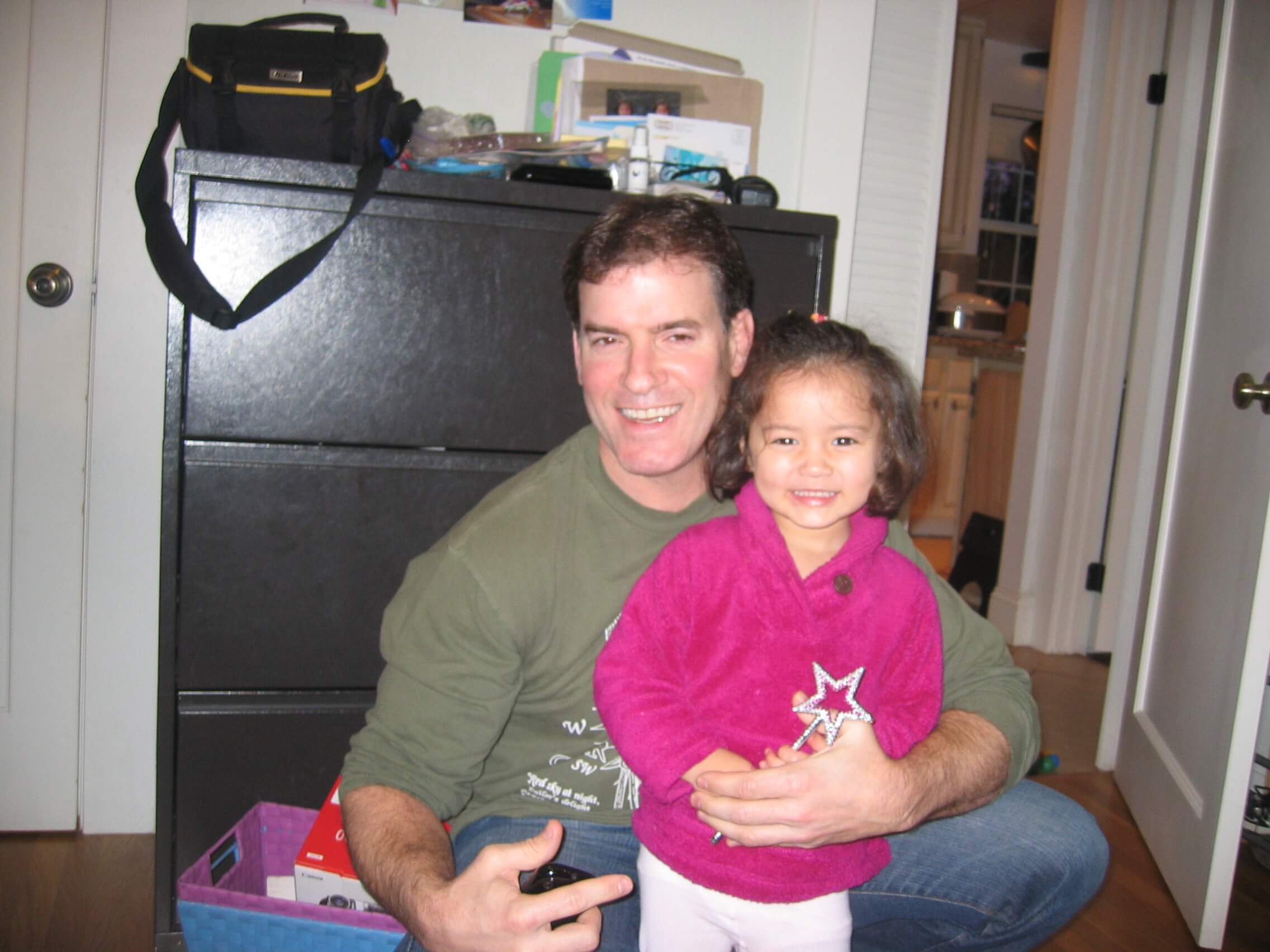
Charlotte Rosario with her father, Joseph.

When Stanford soccer player Katie Meyer died by suicide in 2022, 14 year old Charlotte Rosario was heartbroken. But what stayed with her was how quickly the world seemed to move on. That silence felt familiar.

Charlotte had lost her father, Joseph, to suicide two years earlier, just one week before pandemic lockdowns began in 2020. She was 12. As the world closed in, she spent most of the next two years alone in her room. She told a few friends what had happened but mostly kept it to herself.

“I’ve been very fortunate to have such an amazing and supportive family, my mom and brother, and friends,” Charlotte said. “But I did not really have any outlet to talk about what had happened. There was a lot of shame.”

Around that time, she discovered photography.

“I used it as an escape to get me outside and explore my community,” she said. “And at the time I had heard about so many people in my community struggling.”

What began as a hobby became the Community Photobooth, a youth-led project that helped raise funds for local causes, including mental health. In 2022, Charlotte wrote and directed a short film on youth mental health called “It’s Time We Talk About It.” 

By high school, Charlotte had become more involved in mental health advocacy. She served on her county’s Behavioral Health Commission Youth Action Board and worked with organizations like the National Alliance on Mental Illness. What she learned surprised her.

“Young people are definitely more aware of their mental health today, and may even know that resources exist to help,” she said. “But I think the challenge for a lot of young people is knowing what resources are actually the best fit for them. And then having the courage, the confidence, and the support to go and access those resources.”

Joseph Rosario holds up his daughter Charlotte
Charlotte Rosario and her father, Joseph.

Charlotte sees how much has changed. “When you compare my parents’ generation and mine, it’s black and white,” she said. “There’s a lot of nuance now when it comes to mental health. But I would say it is something that is talked about so much more now, which is why the next task for us as advocates and for people who are trying to create change is how can we actually connect people to get quality help and the right resources.”

In 2023, combining her interests in coding and mental health, Charlotte built a website that uses artificial intelligence to match people with local mental health resources. “It’s not perfect. No tech product can be,” she said. “But it’s better than searching aimlessly on Google.”

Now a freshman at Stanford, she’s studying computer science and thinking about how technology can make support more accessible — without losing the human connection that people still need.

She also thinks often about her dad. He loved coffee shops, she said. Sometimes he’d take her to one before school and let her play Subway Surfers on his phone.

“There’s no one thing,” she said. “I just miss being with him.”

Charlotte shared her story as part of JED’s International Survivors of Suicide Loss Day campaign. You can read more stories, access resources, and share a memory of your own here.

If you or someone you know needs to talk to someone right now, text, call, or chat 988 for a free confidential conversation with a trained counselor 24/7. 

You can also contact the Crisis Text Line by texting “HOME” to 741741.

If this is a medical emergency or if there is immediate danger of harm, call 911 and explain that you need support for a mental health crisis.

Surviving Suicide Loss: After Years of Silence A Sister Finds Her Voice

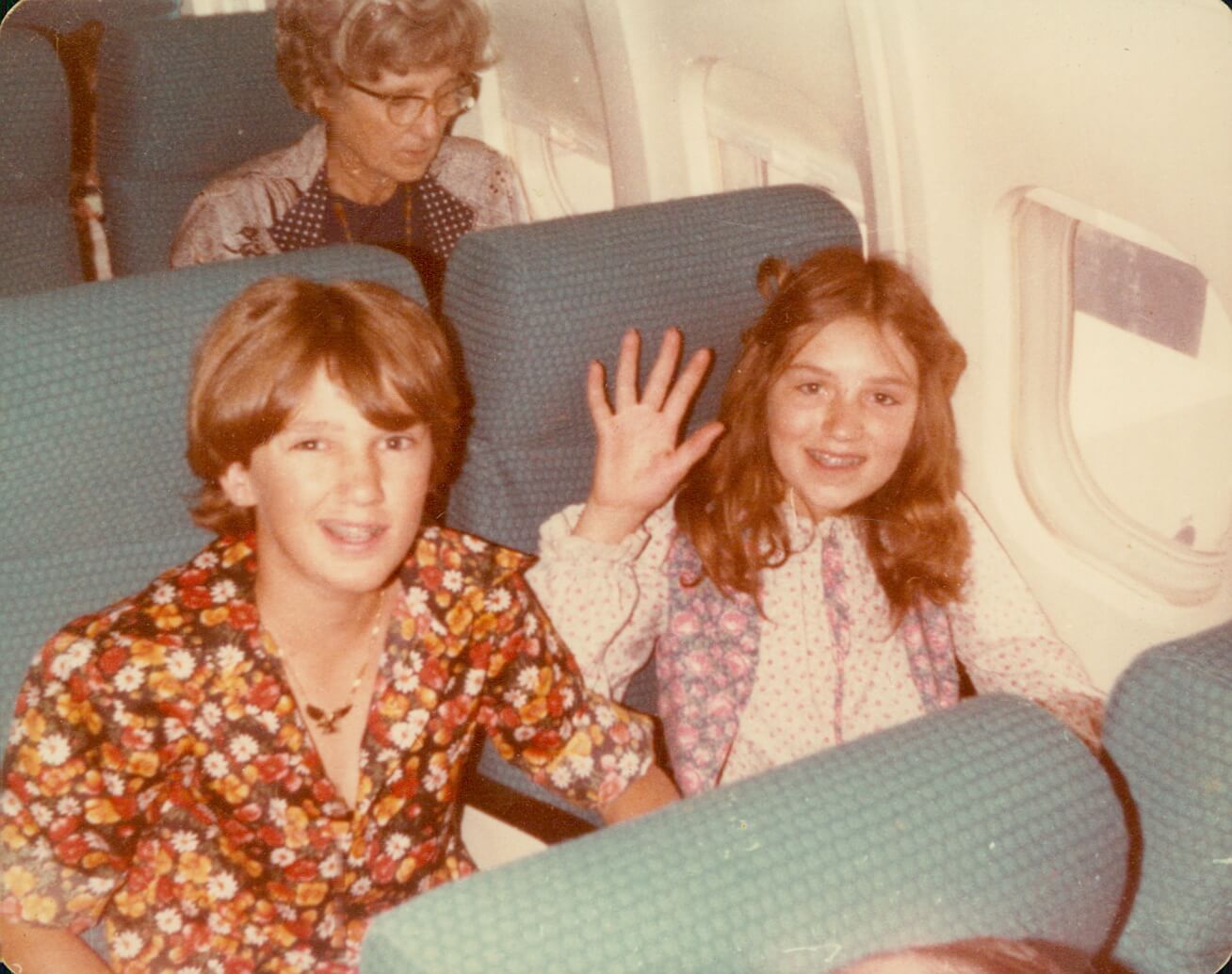
Chryss and her brother Mark on a plane
Chryss and her brother, Mark.

Chryss felt her chest tighten.

Watching her oldest daughter walk through the double doors at her high school for the very first time, Chryss thought: “It’s going to eat her up. She’s not going to come back out.”

She thought about going inside to make sure she was OK, to ask someone to look out for her. She realizes today that it was her own childhood that was haunting her. 

It was 2018, nearly 40 years after Chryss lost her older brother, Mark, to suicide. 

He was 15, a high school freshman, funny and high-energy, the kind of brother whose musical tastes became hers. Who shared dozens of quiet moments with his sister. Brushing teeth over the sink. Walking to the school bus. Digging for arrowheads in the summer. Catching frogs.

She was 12. That was the year her childhood ended.

For decades afterward, she didn’t talk about him. “I repressed it for maybe 30 years,” she says. “Most people in my life didn’t even know I had a brother.”

Then one day, two students at a nearby high school died by suicide. Chryss, a reporter with the local paper, watched as editors struggled with speculation. Why would they do that?

“You’re never going to know the answer to that,” she thought. She wrote an opinion piece about her own experiences called “Pain That Never Leaves Hits Home.” It ran on the front page.

When Mark died in 1981, the adults around Chryss didn’t know how to respond. The morning after his death, she was sent to stay with family friends, who sat her down and said: “When you go home, be strong for your parents.”

Six months later, ABC filmed a national segment on teen suicide at her family’s home in Loveland, Colorado. In the footage, 12-year-old Chryss sits at one end of the couch, her parents at the other.

“I remember watching it years later and thinking, why didn’t somebody have their arm around me?” she says. “Why didn’t anyone hold my hand?”

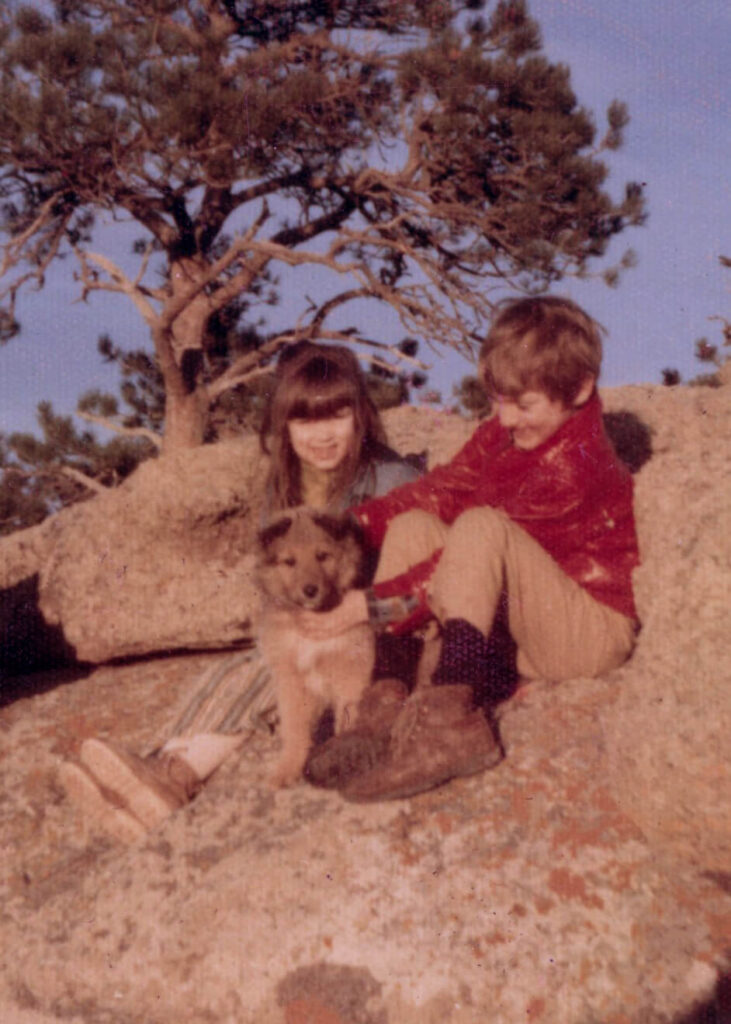
Chryss, Mark and their dog
Chryss, her brother Mark, and their dog Shaggy.

Her parents grieved differently. Her mother threw herself into activism, speaking publicly about suicide prevention. Her father, an engineer, turned inward. “He kept his head down. Went fishing.” 

No one really knew how to talk about suicide, or comfort a child living through it. Chryss found the most comfort from Mark’s friends. 

Fast forward to when her daughter walked into that high school decades later and the past came rushing back.

“I didn’t expect it,” Chryss says. “I saw her go through those doors, and I just couldn’t leave.”

When the pandemic hit, things got harder. “My daughter was 15, the same age as Mark. And in my head, that meant I was going to lose her, too.”

She found a therapist. She started writing again. She began to talk about Mark.

“My grief was patient,” she says. “It just waited for me to grow up.”

Today, Chryss teaches journalism at Colorado State University. She begins each class with a mental-health check-in: How’s your roommate? What’s overwhelming you this week?

Her students, many of them freshmen, often respond with relief. “They want to talk about this stuff,” she says. “They’re not getting it anywhere else.”

Chryss’s parents still live in the same house where she and Mark grew up. When she visits, she sits and talks to him.

“I was always on Mark’s side,” she says. “Someone should have helped him.” But they didn’t know how back then.

Now, she’s trying to be that person for others, especially for siblings. “After a suicide, everyone says, ‘your poor parents,’ and that’s true. But siblings are often forgotten mourners,” she says. “They lose their person.”

At sunset each day, Chryss looks to the horizon and continues that conversation with Mark.

“I ask him for advice,” she says. “He’s my biggest champion, my professor, my advocate.”

Forty-four years after his death, she’s written the book she wishes someone had written for her. It’s called At the Top of the Stairs: A Child’s Story of Losing her Sibling to Suicide.

It’s where she sat as a 12-year-old, listening to the adults downstairs, waiting for someone to say his name.

Chryss Cada shared her story as part of JED’s International Survivors of Suicide Loss Day campaign. You can read more stories, access resources, and share a memory of your own here. You can also visit Chryss’s website to learn more about her work.

If you or someone you know needs to talk to someone right now, text, call, or chat 988 for a free confidential conversation with a trained counselor 24/7. 

You can also contact the Crisis Text Line by texting “HOME” to 741741.

If this is a medical emergency or if there is immediate danger of harm, call 911 and explain that you need support for a mental health crisis.

Surviving Suicide Loss: One Family’s Journey Through Grief and Their Son’s Art

The Bernstein family on the beach
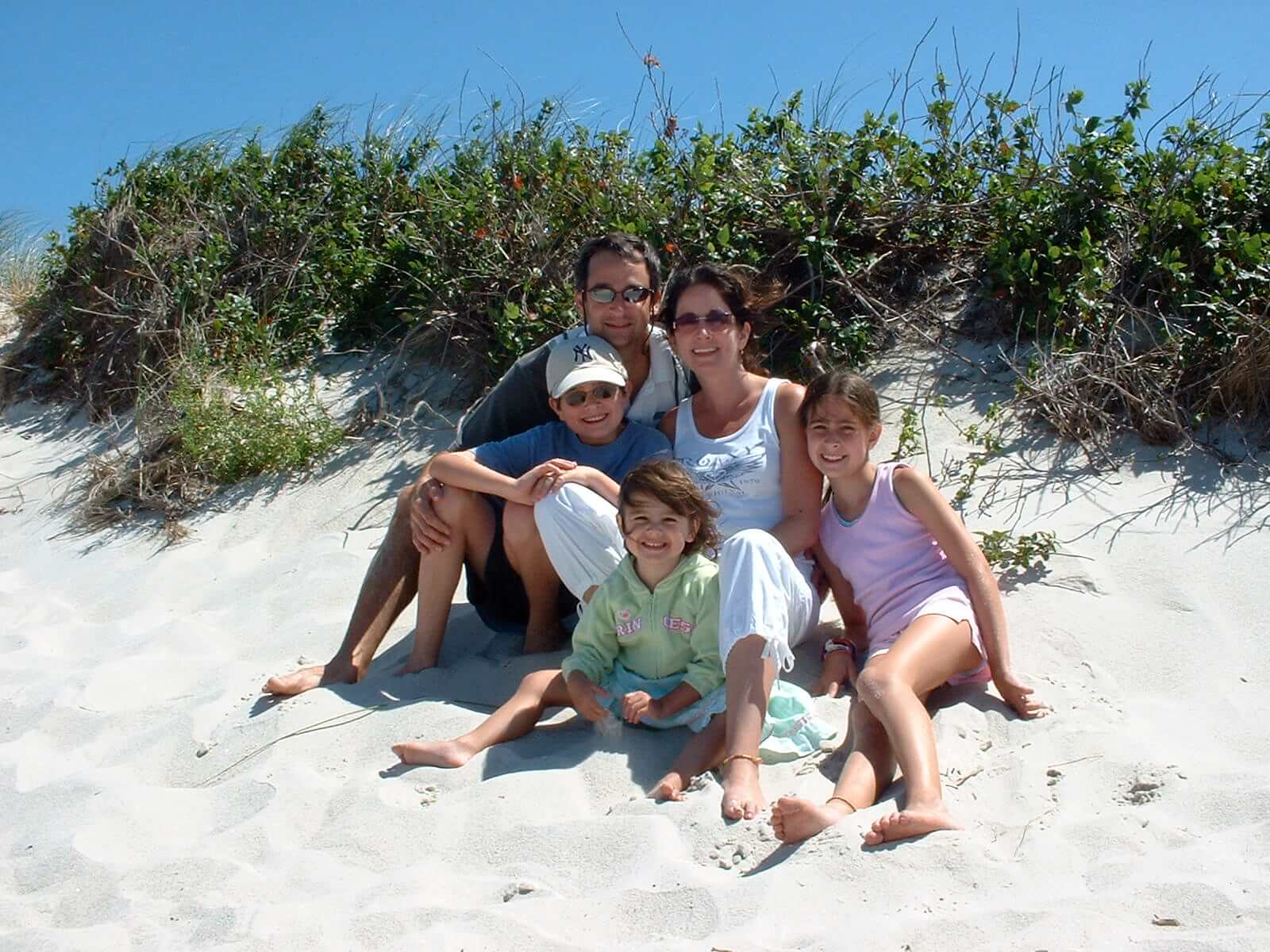
The Bernstein family at Cape Cod, Massachusetts. Jason (age 12, back left) with his sister Jessica (age 10), sister Cayla (age 3), and parents Lauren and Brian.

A couple of times a year, the Bernstein family gets together to watch Jason’s old films.

“He made over 100 home movies when he was younger. We love watching those,” his father, Brian, says. “Those were mostly happy times before he really started to spiral.”

In the very early ones, he’s at home directing his sisters and their friends. In others, he’s sitting at a piano, lost in improvisation.

His later work during and just after his time at Chapman University is more polished, sometimes funny, sometimes dark. “His final piece on the piano hurts,” Brian says. “I just feel his pain when I listen to it, and the abrupt ending is haunting.”

Jason died by suicide when he was 25 years old. 

It’s been six years, and his family mostly talks about how funny and charming he could be. That’s the version they hold closest — the kid whose imagination filled every room.

He was creative from the beginning. At 2, he was already fascinated by music, pretending to strum along with a bike pump or anything else he could find.

But, despite his outward charm and humor, Jason experienced complex emotions that, at times, seemed to make the world harder to face. 

Jason Bernstein
Jason Bernstein at age 20.

His parents saw signs early. Anger that lingered long after even a minor slight, overwhelming anxiety about school, a shyness that kept him close to his mother’s side.

By his teens, the anxiety had sharpened into shame. He grew afraid of blushing, of being seen. “He wanted so badly to do something about the blushing,” his mother, Lauren, recalls. “He even asked about surgery.”

He tried a combination of therapy, medication, hospitalization, and even a wilderness program, but his complex mental health condition persisted. “We tried everything we could possibly imagine trying. And it didn’t stop it,” Brian says.

“The unlucky ones are the families who never see it coming. We did. And it’s not anybody’s fault when these things happen.”

Their advice to other parents is to keep showing love, even when it’s hard. Don’t take the pain personally.

“The thing that got us through it was holding onto each other,” Lauren says. “We didn’t let it destroy everything else.”

After Jason died, they found a short journal he’d kept near the end. On one page, he’d written two words: Good parents.

“He knew we loved him,” Brian says. “That means everything.”

In the years since, they’ve searched for ways to keep Jason’s creativity alive. Brian and Lauren — drawing on Brian’s more than two decades in the toy industry — started Jasey’s Toy Chest, a toy company launching in early 2026. Their toys help toddlers and preschoolers develop early childhood skills like emotional regulation, frustration tolerance, social connection, and resilience, building a foundation for emotional wellbeing from the earliest years. They’re a supporter of The Jed Foundation’s work in youth mental health.

“We wanted to do something that would keep Jason’s memory alive for us,” Brian says. “Something that reflected who he was — curious, creative, full of imagination — and that could help kids like him.”

When the family gathers to watch Jason’s films, they are transported back to earlier times as the house fills again with his voice and music.

In these moments, they feel connected to Jason once again.

The Bernstein family shared their story as part of JED’s International Survivors of Suicide Loss Day campaign. You can read more stories, access resources, and share a memory of your own here.

If you or someone you know needs to talk to someone right now, text, call, or chat 988 for a free confidential conversation with a trained counselor 24/7. 

You can also contact the Crisis Text Line by texting “HOME” to 741741.

If this is a medical emergency or if there is immediate danger of harm, call 911 and explain that you need support for a mental health crisis.

KyleCares and JED: Helping Schools Support Student Mental Health Across New England

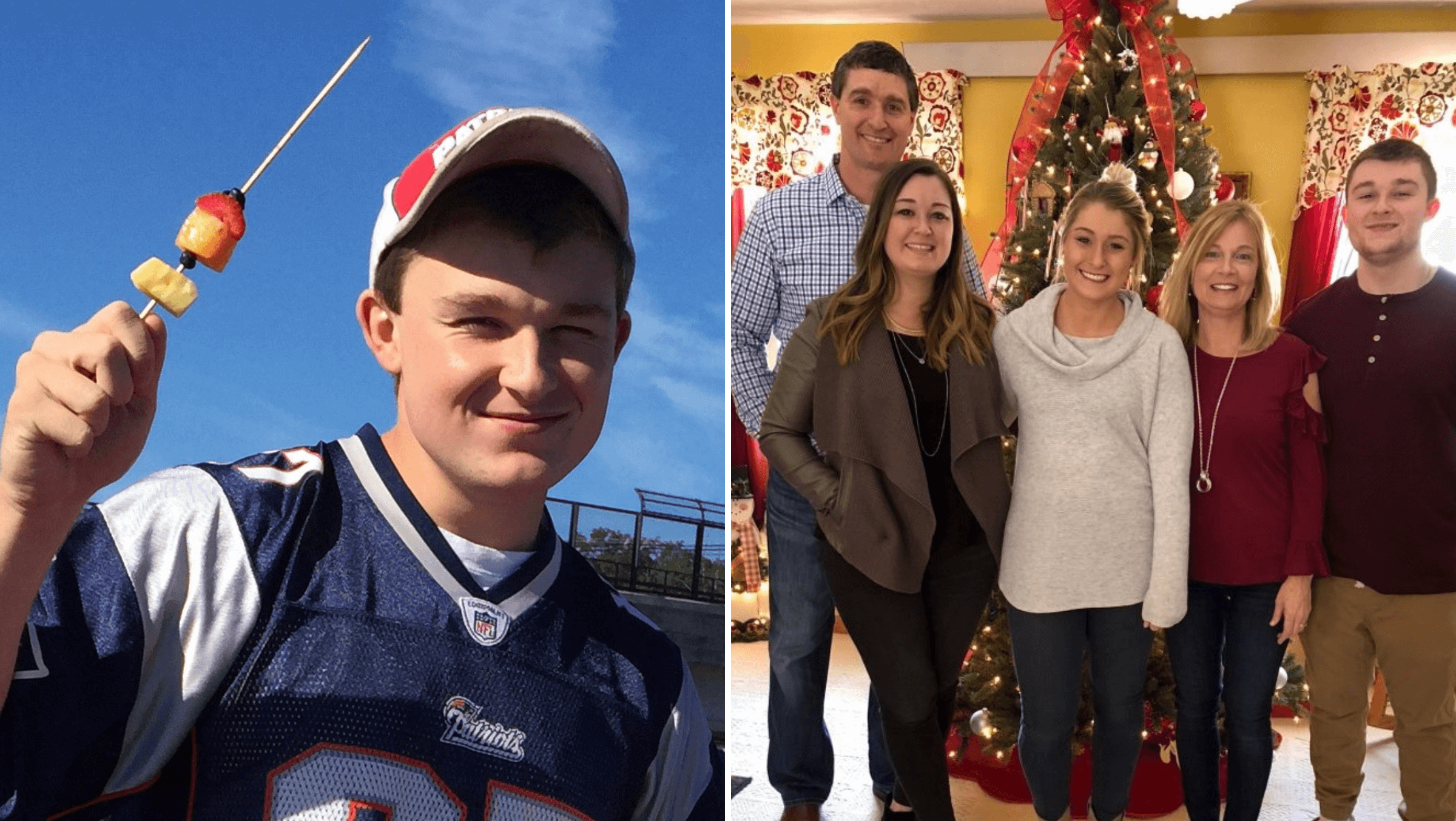
Left: Kyle. Right: The Johnson family – Jim, Katie, Lauren, Sue, and Kyle – in December 2017.

Kyle’s parents would never have guessed he was thinking about suicide.

Yes, he’d been diagnosed with obsessive compulsive disorder at 9 years old, and with anxiety and depression in high school and college. But his parents saw his funny side come through most. He was always smiling, always the one to make others laugh.

But at 19, Kyle died by suicide.

The grief was overwhelming. But in that loss, Kyle’s parents, Jim and Sue Johnson, and their daughters Katie and Lauren, resolved to turn that tragedy into a mission. 

They founded KyleCares, a nonprofit dedicated to changing how schools talk about – and respond to – student mental health. Over the years, that has led to a meaningful and productive partnership with The Jed Foundation (JED).

Building a Movement in Schools

Since then, KyleCares has worked with more than 120 schools across New England, mostly in Massachusetts but now expanding in Rhode Island and Maine.

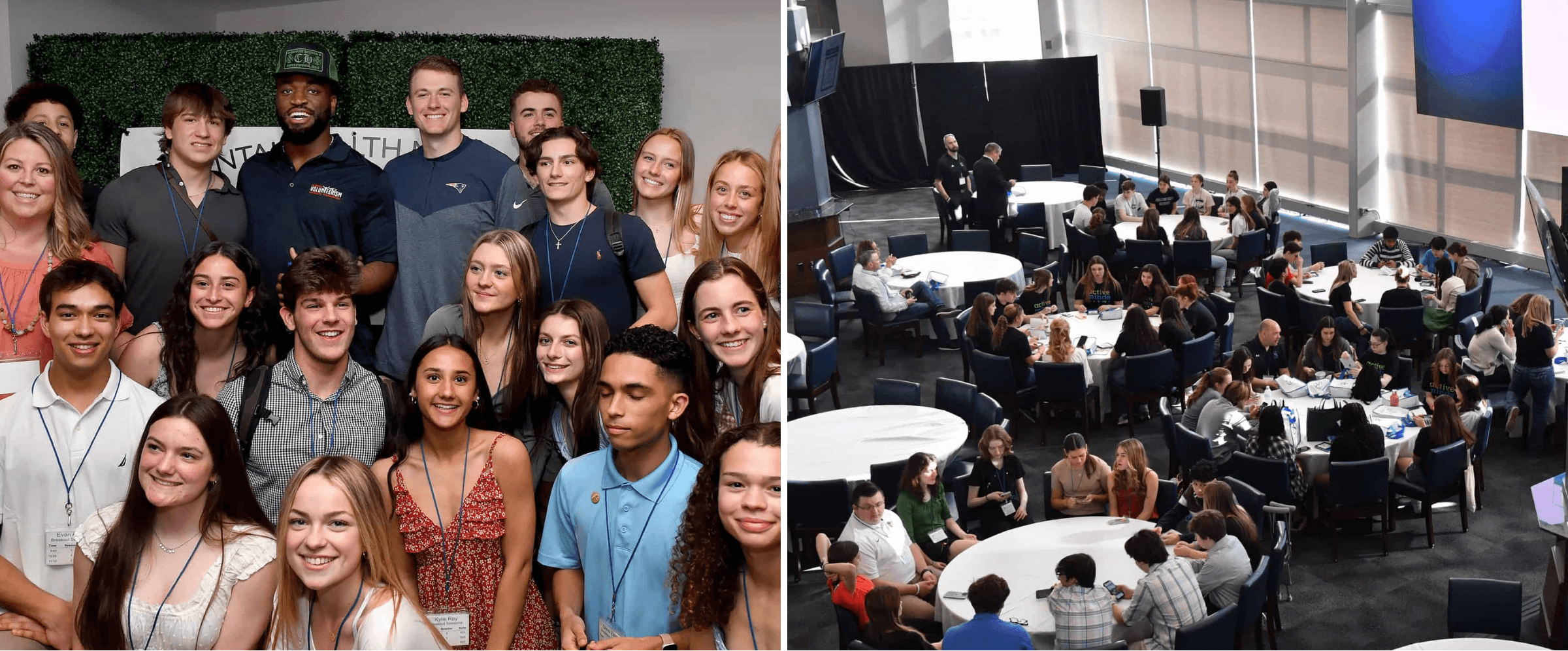
The organization provides grants to help schools bring in evidence-based mental health programs, launches student-led mental health clubs (more than 60 so far), and organizes annual conferences at Gillette Stadium, home of the New England Patriots NFL team, that bring together hundreds of teens to learn, share, and inspire each other.

Teens collaborating on mental health issues at a KyleCares event
KyleCares 2023 event at Gillette Stadium brought together hundreds of teens to collaborate on student-led mental health initiatives.

“We want to work with schools to help change the culture, to create an environment that gives kids confidence to ask for help without hesitation,” Jim says.

Partnering with JED

It wasn’t long after launching KyleCares that Jim and Sue came across JED.

Jim remembers reaching out on a whim, unsure if anyone would even write back. But soon after, JED’s Chief Clinical Officer drove out to meet them in a coffee shop in Connecticut. They talked for over two hours, and that conversation set the tone for everything that followed. 

JED not only gave KyleCares encouragement, but a framework: a proven, evidence-based roadmap schools could follow to protect student mental health. Jim calls it “foundational” to their approach.

Since then, KyleCares and JED have worked side by side. JED brings the blueprint — comprehensive strategies like JED High School and JED Campus — while KyleCares helps schools put them into practice with grants, conferences, and student-led initiatives. 

Six years later, that partnership has helped dozens of schools build lasting cultures of support where no student has to struggle in silence.

The Impact

What started slowly has become what Jim calls “a movement.” 

Jim says it’s incredible to watch what happens after the conferences they organize: Students return to their home schools ready to make things happen. They start new groups, organize events, and find creative ways to keep conversations about mental health going at school. And more often than not, they’re the ones pulling teachers and even parents into the work.

For Jim, the real win is seeing students take what they’ve learned and keep it going, becoming advocates in college and beyond, and helping to break the shame and secrecy that too often exists around mental health for the next generation.

“The hope is that as more schools work with KyleCares and work with JED, neighboring schools and neighboring communities start to adopt a common language of how all students everywhere are being cared for and supported,” Jim says. 

“And then eventually you really change the culture everywhere.”

Find out how you can make an impact on youth mental health.

If you or someone you know needs to talk to someone right now, text, call, or chat 988 for a free confidential conversation with a trained counselor 24/7. 

You can also contact the Crisis Text Line by texting “HOME” to 741741.

If this is a medical emergency or if there is immediate danger of harm, call 911 and explain that you need support for a mental health crisis.

Get Help Now

If you or someone you know needs to talk to someone right now, text, call, or chat 988 for a free confidential conversation with a trained counselor 24/7. 

You can also contact the Crisis Text Line by texting HOME to 741-741.

If this is a medical emergency or if there is immediate danger of harm, call 911 and explain that you need support for a mental health crisis.