Page 4 | The Jed Foundation

Pi Kappa Alpha Fraternity Partners with The Jed Foundation (JED) to Create Suicide Postvention Guide for Members, Chapters, and Alumni

Customized resource will provide clear steps for responding to a suicide or other mental health challenge.
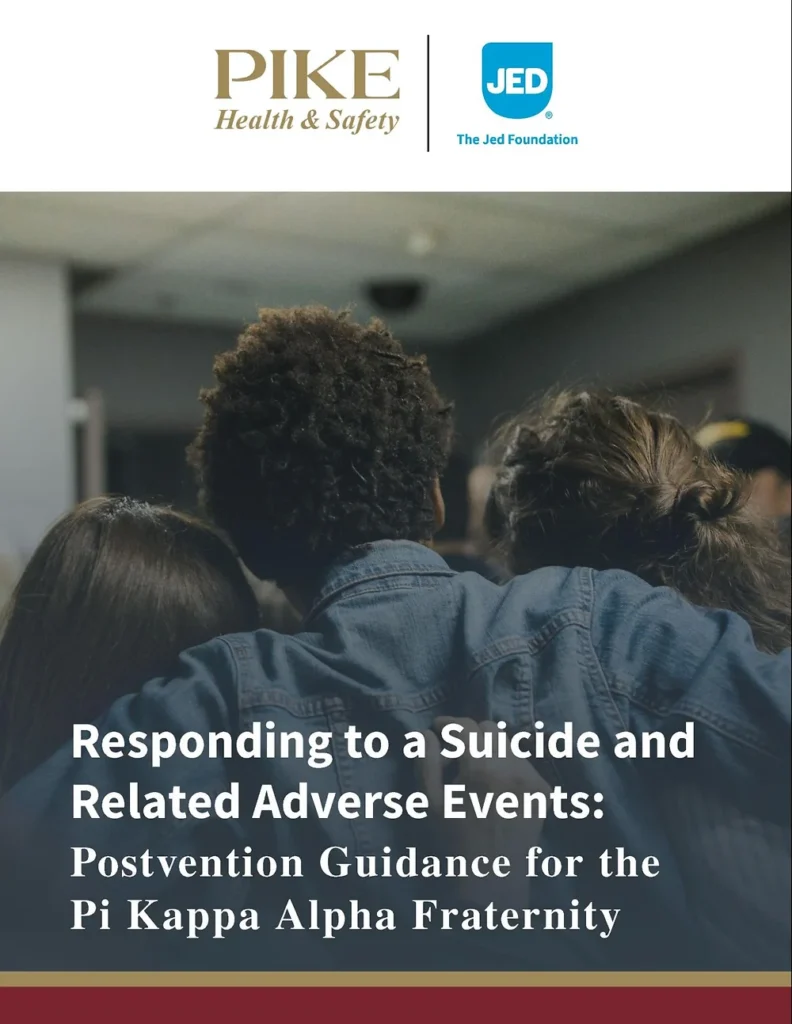
[November 12, 2025, Memphis, T.N. AND New York, N.Y.] – The Pi Kappa Alpha International Fraternity (PIKE) is proud to announce its collaboration with The Jed Foundation (JED), a leading nonprofit that protects emotional health and helps prevents suicide for teens and young adults, to create Responding to a Suicide and Related Adverse Events: Postvention Guidance for the Pi Kappa Alpha Fraternity. The new guide is a practical resource for PIKE brothers, chapter leaders, and alumni advisors on what to do in a mental health crisis and how to respond to various mental health situations, including the suicide of a fraternity brother or community member.  

“The guide will well serve our undergraduate leaders and those who support them in moments of crisis,” said Kimberly Novak, Pi Kappa Alpha’s health & safety officer. “This is exactly the type of resource that the Blake Nicholas Caummisar Fund was established to support.”

“Postvention” refers to the strategies implemented in a community after a suicide to support those affected, promote healing, and reduce the risk of additional suicides. PIKE’s chapter leaders and advisors are trained to manage various challenges, such as organizing events, handling conflicts, and maintaining a safe living environment. However, specific guidance, training, or support on how chapter leaders and advisors should respond to a loss by suicide or a serious mental health challenge within a chapter is less common.

To address this need, the guide will provide chapter leaders and advisors with clear steps for responding to a brother’s suicide or serious mental health challenge. In this guide, leaders will learn about suicide postvention, how suicide affects the entire chapter and the fraternity and sorority life community broadly, and the immediate, short, and long-term steps they can take to support members while reducing the risk of further tragedy.

“Suicide loss is a catastrophic event for loved ones, peers, and communities. Greek-letter organizations are no exception. While it’s difficult to imagine losing a brother to suicide, it’s critical to have a customized and comprehensive suicide postvention plan in place for fraternities,” said Dr. Kurt Michael, JED’s senior clinical director. “We commend PIKE for their commitment to supporting chapter members, leaders, and advisors in addressing mental health challenges, reducing the risk of further loss, and connecting those impacted with resources to process their grief. In many ways, postvention is prevention and PIKE is helping to protect both their brotherhood and the broader campus community through this vital work.”

Some of the guidance contained in this newly developed guide resource was adapted from or aligned with already-established frameworks, including the 2014 Higher Education Mental Health Alliance (HEMHA) publication POSTVENTION: A Guide for Response to Suicide on College Campuses and the recently published Responding to a Suicide: Postvention Guidance for Student Housing Managers (JED, 2024).

Learn more about JED’s customizable suicide postvention consulting services for addressing the immediate needs of schools, campuses, and Greek-letter organizations.


###


The Pi Kappa Alpha Fraternity was founded at the University of Virginia in 1868 and has grown to an international brotherhood composed of more than 300,000 members, 200 chapters and 150 alumni associations. Pi Kappa Alpha has maintained the largest average chapter size of any inter/national fraternity for most of the past 20 years, and through its members has donated millions of hours and dollars to philanthropic causes and community organizations across North America.

About The Jed Foundation (JED)
JED is a nonprofit that protects emotional health and prevents suicide for our nation’s teens and young adults. We’re partnering with high schools, colleges, school districts, and youth-serving community-based organizations to strengthen their mental health, substance misuse, and suicide prevention programs and systems. We’re equipping teens and young adults with the skills and knowledge to help themselves and each other. We’re encouraging community awareness, understanding, and action for young adult mental health.

Connect with JED: Email | LinkedIn | Instagram | Facebook | TikTok | Snapchat | YouTube 

Media Contact
Pi Kappa Alpha International Fraternity

901-748-1868

media@pikes.org

Justin Barbo
Director of Public Relations
The Jed Foundation
Justin@jedfoundation.org
 

Finding Belonging Through Storytelling

Photo of Rohan Satija and other youth advocacy leaders

By Rohan Satija, The Jed Foundation Youth Advocacy Coalition Texas Fellow ’25

Growing up in Auckland, New Zealand, my childhood was characterized by family trips to the beach, frolicking around with my sister, and cooking dinner with my grandparents. Community was an inherent part of my everyday life, so when I immigrated from New Zealand to Austin, Texas, at the age of 10, I expected that same sense of belonging to follow me.

However, my new world felt bigger yet lonelier. I was bullied for my strange accent and other cultural differences from my peers, and I faced anxiety and panic attacks as a result. That year, I began shrinking myself. I rehearsed specific words in the mirror and started mimicking the way my classmates spoke. I felt like I had to trade in my identity to fit in at my new home.

What helped me find my voice again? Ironically, it was other people’s voices. I found comfort in books, especially those that featured South Asian characters whom I could relate to. When they won in their stories, I believed I could too.

Over time, I realized I should try telling my own story instead of just consuming others’ stories. I began writing narratives in fifth grade and joined the theater department at my school. In my narratives, I wrote about struggling to find belonging and feeling immense shame whenever I had a less-than-ideal social interaction. In theater, I played other characters, and by portraying their stories, I built my confidence and empathy on stage. I realized that examining both external and internal narratives can help us have a clearer understanding of our lives. 

As I grew more comfortable on stage, that confidence began to spill over into my everyday life. I stopped rehearsing conversations in my head before they happened and started speaking more freely, without worrying about saying the “wrong” thing. I noticed that my voice stopped trembling when speaking in class, and I didn’t feel the heat rise to my face whenever I spoke. I began to trust that whatever I said, even if I made a mistake, was enough. Theater taught me that I didn’t have to perform to belong, and I could just be myself. 

Evidence shows that drama and theatrical interventions can support mental health. A 2023 meta-analysis of 25 drama-based studies (totaling 797 participants) found that these interventions had the potential to improve trauma-related disorders and psychological well-being. In another study, participants were asked a series of factual questions about mental health symptoms before and after watching a play centered around mental health challenges for Latino youth; their correct answers on a question related to recognizing signs of mental health concerns rose from 31% before the play to 59% afterward. This data shows that storytelling and drama can be used for self-expression, and they have a measurable impact on our mental health outcomes.

In fifth grade, I co-founded my nonprofit, Let’s Learn Foundation, with my younger sister after learning that many children in Texas lacked access to the same books that had been my lifeline. We started by selling cookies and lemonade to raise funds. Now, seven years later, we’ve delivered over 60,000 books, 100,000 school supplies, and 5,000 mental health kits to more than 13,000 students in under-resourced communities. We intentionally choose books depicting characters of a variety of cultures and races so that children can see themselves reflected in what they read. 

I also founded the Vibrant Voices Project, guiding youth in juvenile detention to write and perform monologues about mental health. Over 60 students across three facilities have participated so far, and many have shared that telling their stories helped them “feel more seen” by their peers.

Now, as a JED Texas Mental Health Youth Advocacy Fellow, I continue using storytelling to drive change. Humans, at our core, are storytellers. We are hardwired to respond to others’ stories, which have an amazing power to generate empathy. Stories can humanize data and offer new perspectives to people, often influencing their behavior and the way they think.

I’ve learned through my fellowship that personal narratives can become powerful policy tools. For example, when a young person shares what it’s like to have limited mental health support at school, their lived experience becomes evidence of a policy gap. This is why storytelling is so important. When we invest in creative expression, such as drama programs and arts education, we’re funding empathy and supporting mental health. Storytelling is a form of early intervention, and it needs to be treated as such.

If you are reading this and carrying something heavy, try setting a timer for 10 minutes and writing about whatever emotions come to mind. Don’t worry about neatness or grammar, just let your writing flow. And if you feel brave, read a line to someone you trust. Each sentence can be a step toward reclaiming your story.

Visit JED’s Mental Health Resource Center to find easy-to-use tools and tips for managing feelings like anxiety and sadness, as well as guides to supporting the people you love, including how to get professional support if you—or they—need it. You can also find specific resources to help you deal with bullying

If you’re interested in storytelling, you can check out the following resources: 

For film, digital series, and podcasts: The Mental Health Media Guide

From Hiding My Pain to Learning We Heal Together

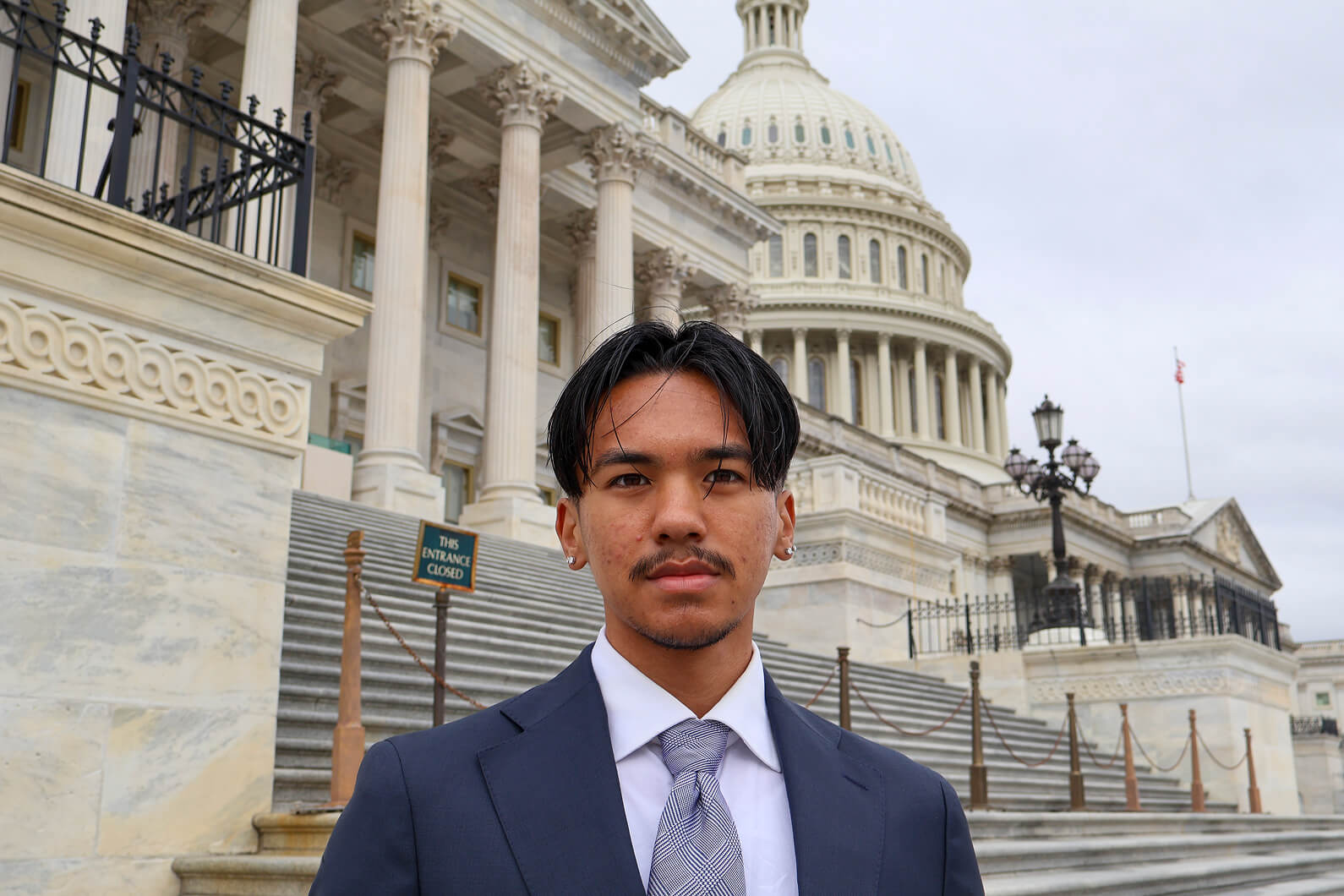
Juan Garcia standing in front of capital building

By Juan Garcia, The Jed Foundation Youth Advocacy Coalition Texas Fellow ’25

For years, I felt that I was trapped by my mental health challenges and there was no escaping them. As a teenager, I was bullied for how I looked and for simply being myself. I began to hate what I saw in the mirror, and self-loathing followed me into nearly every relationship I had. I tried to pretend everything was fine, but inside I was breaking apart. The conversation around mental health in my community only made things worse. I grew up hearing that mental health struggles were “a weakness” or “not real.” I was told that men don’t cry, that we’re supposed to be strong. I engaged in self harm as a way to release what I couldn’t express. It wasn’t that I wanted to die. I simply wanted to escape the pain that consumed me and the life I was living. At the time, I wasn’t aware of safer methods to release this pain. I did not know that things would eventually get better.

I wrote this poem during that most difficult time. It’s really hard to look back at it today because I’m in such a different place.

Through his blues

He entails the darkest hues

Disgraced and confused

His story written on his sleeves

Trying to disguise the pain

Bearing sorrow in his eyes

Too heavy to hide

Drowning in rising tides of sentiment 

Behind comforting lies

He feels forever bound to his suffering

Clinging onto what little faith remains

Can’t seem to tend to his emotions

He tends to crumble up

Left with no devotions

Another moon, another plight

Falling victim to his fears

His vague hope eclipses

But at the turn of the night

He notices the colors changing in the sky

As a way forward dawns upon him

With a warmth that slowly dries his tears

Starting college brought new challenges. Transitioning to a different lifestyle, combined with my ongoing struggles and lack of healthy coping mechanisms, led me back into self-harm and suicidal thoughts. I sought help at my university wellness center, only to be disappointed. The counselor told me they didn’t have much to say since I already seemed “aware” of my emotions and their root causes, and therefore any follow-up was up to me. The lack of interest in supporting me with a treatment plan or regular appointments felt like my pain had been acknowledged but dismissed at the same time. Unfortunately, the experience led me to avoid seeking any further help on my campus. 

However, a major part of my healing journey was realizing I wasn’t alone. A close friend from high school was going through almost the same thing — the same silence, the same lack of institutional support, the same cultural stigma. We both realized how widespread mental health struggles are and how they are often treated as personal failings rather than systemic issues.

Looking back, I am proud of myself for finding the strength to take care of myself and heal; however, I recognize that there should have been more resources and support for me to turn to. The limited resources in the nearby rural communities discouraged me further from seeking help. While the county I grew up in (Erath, Texas) has the highest rates of depression among adults in the region, challenges such as costs and insurance coverage persist as barriers to mental health care.  My experience illustrates the significance of policies that make mental health care accessible to all. Often, someone’s life may be on the line. 

By seeing other people going through the same thing I was, I learned to see myself for who I truly was. I learned that I wasn’t defined by my emotions or my past. I learned to love myself. I learned that change starts from within. I learned that life truly is beautiful and worth living. Slowly, I began developing healthier ways of coping. I adopted habits such as journaling, meditating, and practicing gratitude. Living in the moment became essential. I learned that it’s unrealistic to expect healing without putting in daily effort. Growth doesn’t happen all at once; it’s a gradual process that takes time and requires patience with oneself.

Healing taught me to be honest and compassionate with myself and others. I learned that strength doesn’t mean suppressing your emotions. It means confronting them honestly. I also learned that silence helps no one. When we share our stories, we give others the strength to speak up and to heal. My story, alongside the stories of others, reveals that addressing mental health challenges shouldn’t have to depend solely on the individual. We need support systems that care for people and equip them with coping tools before they reach their breaking point. It is increasingly important that our systems allow for people to be themselves and cater to a wide set of different needs and cultures. Addressing the shame and secrecy around mental health through education and media is of utmost importance in order to continue shifting the narrative surrounding mental health. In an ideal community, everyone would have access to mental health as preventive care rather than only as a crisis response. 

While my poem represents the darkness I endured, I hope my story may serve others as a reminder of the light that follows. Although I may never erase my past, it doesn’t have to define me. The present is a gift, and so I choose to live in the moment; one day at a time.

If you see yourself in any part of my story, please reach out for help. You are not alone.

Having suicidal thoughts is not uncommon, but they should always be taken seriously. Use these resources to have open and important conversations, reach out for help, and begin feeling better.

You are not alone if you are struggling with suicidal thoughts or behaviors, or if you are worried someone in your life may be. There is hope and help available. Use these resources to have open and important conversations, reach out for help, and begin feeling better: 

  • If you or someone you know needs to talk to someone right now, text, call, or chat 988 for a free confidential conversation with a trained counselor 24/7.  
  • You can also contact the Crisis Text Line by texting HOME to 741-741. 

If this is a medical emergency or if there is immediate danger of harm, call 911 and explain that you need support for a mental health crisis.

You can find resources on self-injury, which includes what self-injury is, why someone might turn to it, and how to recognize the signs in yourself or someone else. You can also find resources for suicidal thoughts.

Visit JED’s Mental Health Resource Center to find easy-to-use tools and tips for managing feelings like anxiety and sadness, as well as guides to supporting the people you love, including how to get professional support if you—or they—need it


Choosing Myself Over the Version I Pretended to Be

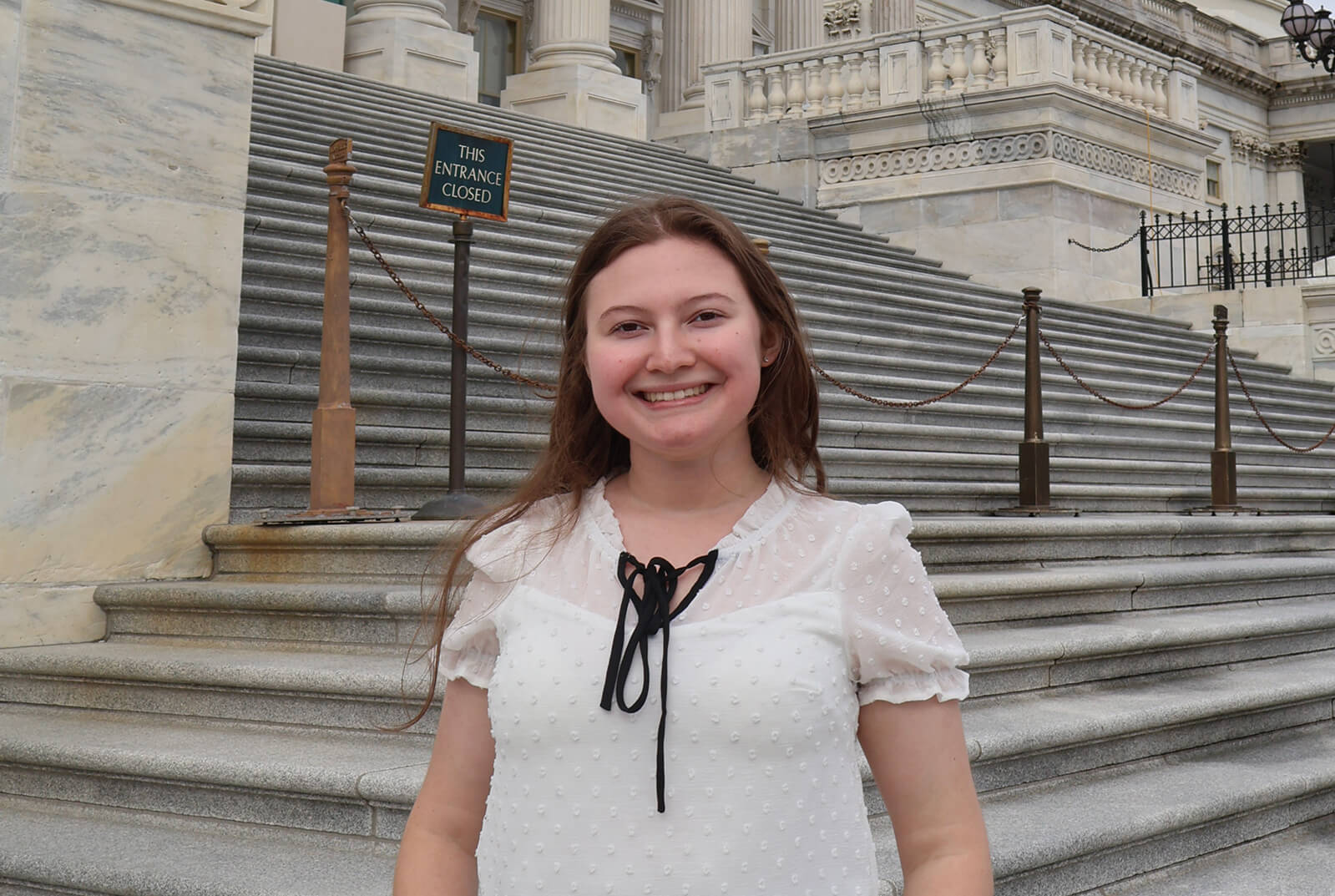
Ivanna SIntes standing in front of capitol building

By Ivanna Sintes, The Jed Foundation Youth Advocacy Coalition Texas Fellow ’25

I was the best actress I knew, and I never even had lessons.

Growing up, I was always drawn to acting. I’d perform skits with my friends and family, and I joined every play I could. Acting was something that came naturally to me.
Cry on cue? Easy. Smile in photos? Convincing. Pretend everything was fine? That was my greatest role of all. My teachers, friends, and family thought I had it all together. But the truth was, I wasn’t just acting on stage. I was acting every single day of my life.

What I didn’t realize at the time was that pretending to be fine was something I’d later have to unlearn, and that being open about how I truly feel would become the role that took the most practice.

It took me years to realize there was a word for what I’d been doing all along: masking.
I would later learn that masking means hiding how you truly feel to appear okay, smiling through sadness, laughing when you want to cry, or keeping busy so you don’t have to feel. For many, it’s not a choice. It’s survival.

For me, masking started young. After my parents divorced, my mom moved out, and my self-esteem faded. Feelings of depression arrived at my door like an unexpected visitor; it didn’t just knock; it moved in. At the time, I didn’t understand what it was, only that it made everything feel heavier. That I woke up tired even after sleeping, that the things I used to enjoy didn’t feel fun anymore, and that I didn’t have the motivation to do anything. 

Occasional sadness is a normal part of life, but what I was feeling was different. It lingered for long periods, clouded everything, and took energy. I thought that if I ignored it, it would go away. It didn’t. It actually made everything worse. 

But instead of reaching out, I did what I’d been taught: I stayed quiet and looked “fine.”

In Hispanic culture, mental health struggles are often treated as a taboo topic. Growing up, I was taught to never say, “I feel depressed.” In my family, therapy wasn’t something we turned to. Instead, we prayed, toughed it out, and stayed quiet. We didn’t talk about mental health not because we didn’t care, but because strength and love were how we showed support and gave hope to others. It took me a long time to realize that asking for help doesn’t go against those values; it honors them. Before I had that realization, I acted as if vulnerability was something you hid behind closed doors and sadness was something you fixed in silence.

So, I smiled. I made jokes. I got good grades. And when people said, “You’re always so happy,” I took it as a compliment, even though it was really just proof that my mask was working.

At home, however, the performance would come to an end. I’d close my door, collapse on my bed, and finally let the tears fall. I’d wish it would be okay to stop pretending.

When I finally told my dad I felt depressed, he didn’t believe me. 

How could he? I had hidden it too well. 

My parents told me not to tell anyone, to keep it private, because people might see me differently. And so I listened. My silence became another costume.

But after that conversation, something changed. When I told my dad I was depressed, he said, “If that’s true, let’s go to a psychiatrist.” He didn’t mean it harshly. He just didn’t understand. He had never struggled with mental health himself, and neither had the people around him, at least not openly. Because of that, it was hard for him to grasp that many people, including me, learn to mask their depression behind a smile.

That’s when I was officially diagnosed with major depressive disorder. It was the first time I realized what I’d been feeling had a name. I was able to see that many people my age were going through the same thing, often in silence, and that help existed.

Since the stigma had been ingrained in me from an early age, I still didn’t feel comfortable talking to people, but I would talk to the pages in my journal. Writing was my outlet, the one place I didn’t have to act. I wrote about the sadness, the secrecy, and the ingrained shame, often in metaphors. I wrote about how I could help others. I wrote about plans on how I could be an advocate. I wrote letters to my younger self, writing what I wish someone had told me. 

It wasn’t until I got to college that I finally allowed others to see the real me and removed my mask. 

It took me a long time to understand how common masking is, especially in my community, where showing emotion can be seen as weakness or shame. But those messages don’t protect us they isolate us.

Masking can look different for everyone. For some, it was staying productive to avoid breaking down. For others, it’s being the “funny” one or the “strong” one. But underneath, there’s a quiet exhaustion, the kind that comes from pretending your feelings don’t exist.

The truth is, masking works until it doesn’t. Eventually, it becomes too heavy. You start forgetting who you are underneath it all. And when that happens, the bravest thing you can do is take off the mask, even if just a little.

That’s what I’m learning to do now: to be honest about how I feel, even when it’s uncomfortable. To let people see me when I’m not okay. Because pretending to be fine doesn’t make the pain go away, it just hides it. 

Healing can only start when we stop hiding.

If you’re reading this and you’ve been acting, too, know this: Your truth deserves space to breathe. You don’t have to perform to be loved. You don’t have to be “strong” to be worthy. It’s okay to be real. Because you were never meant to be an actor in your own life. You were meant to live it.

Visit JED’s Mental Health Resource Center to find easy-to-use tools and tips for managing feelings like anxiety and sadness, as well as guides to supporting the people you love, including how to get professional support if you—or they—need it. You can also find specific resources about sadness and depression.

Youth Voices Are Necessary to Sustain Progress in Mental Health

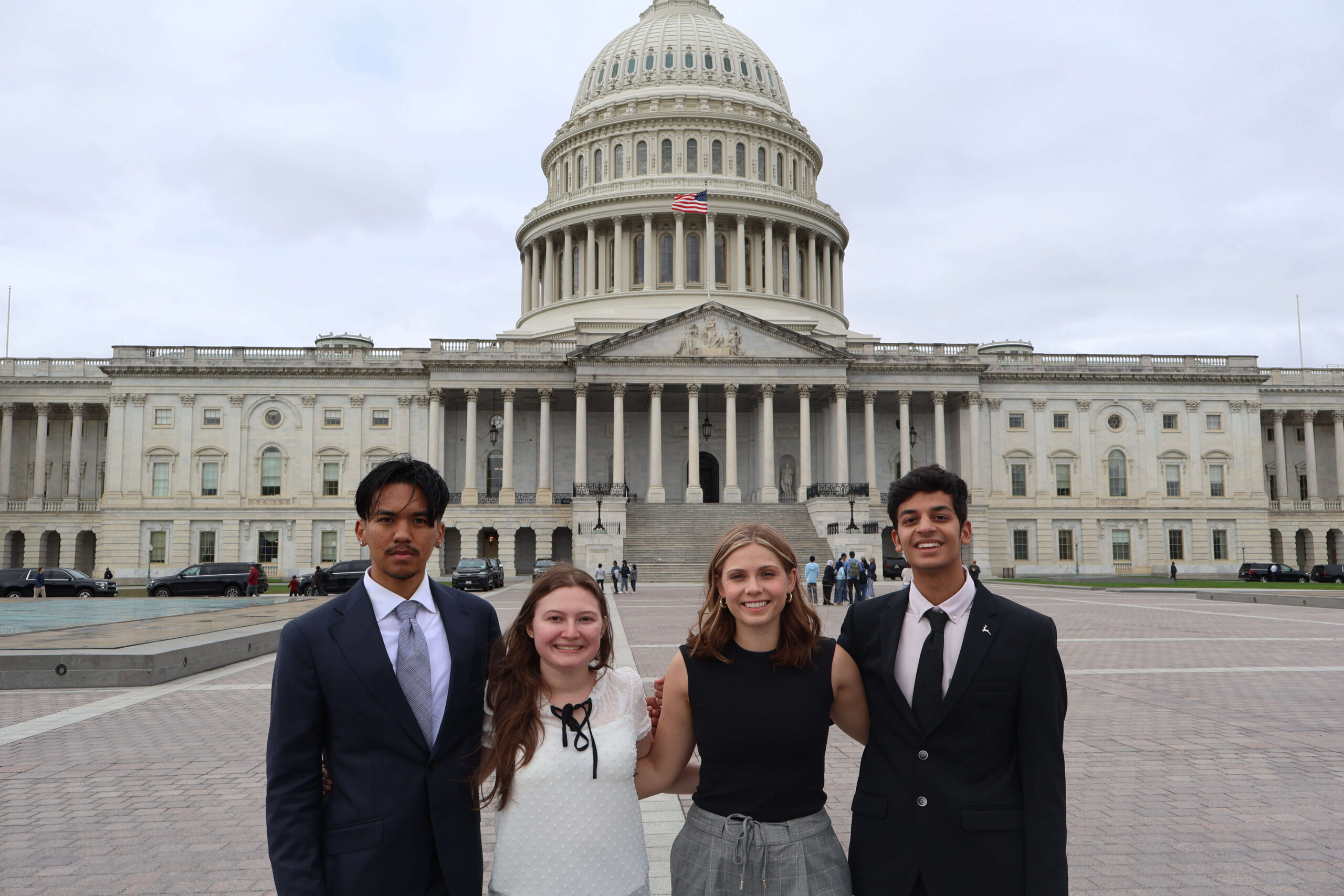
JED's Texas Mental Health Youth Advocacy Coalition (YAC) Fellows in front of the U.S. Capitol Building
The Jed Foundation (JED)’s Texas Mental Health Youth Advocacy Coalition (YAC) Fellows Juan Garcia, Ivanna Sintes-Klein, Rachel Davis, and Rohan Satija in front of the U.S. Capitol Building.

This fall, The Jed Foundation (JED) launched the Texas Mental Health Youth Advocacy Coalition (YAC) Fellowship Program, a paid six-week mental health advocacy training program for college students in and from Texas. Made possible by the generosity of the Trellis Foundation, the YAC fellowship was established to train young people in mental health policy and advocacy at the local, state, and federal levels. 

The Texas YAC fellowship addresses a critical need: ensuring that the voices of those most affected by mental health challenges — young people themselves — are heard by policymakers and decision-makers. At a time when mental health funding faces uncertainty and youth mental health needs remain urgent, empowering the next generation of advocates has never been more important.

Meet the Texas YAC Fellows

The inaugural class of fellows was chosen through a competitive statewide process and included four undergraduates from across Texas: Juan Garcia Jr., a fourth-year Public Health student at Tarleton State University; Ivanna Sintes-Klein, a  third-year Health Promotion and Behavioral Science student at University of Texas, Austin; Rachel Davis, a fourth-year psychology student at Texas A&M University Central Texas; and Rohan Satija, a freshman psychology and pre-med student at UT Austin. 

Each fellow brought with them personal experience navigating mental health challenges, whether in their own or their families’ lives, among friends, or within their communities. Most had never met with an elected official before joining the program and said they felt only somewhat confident in their ability as students to shape mental health policy. The YAC fellowship aimed to change that, transforming their lived experiences into powerful advocacy tools.

Building and Exercising Advocacy Skills

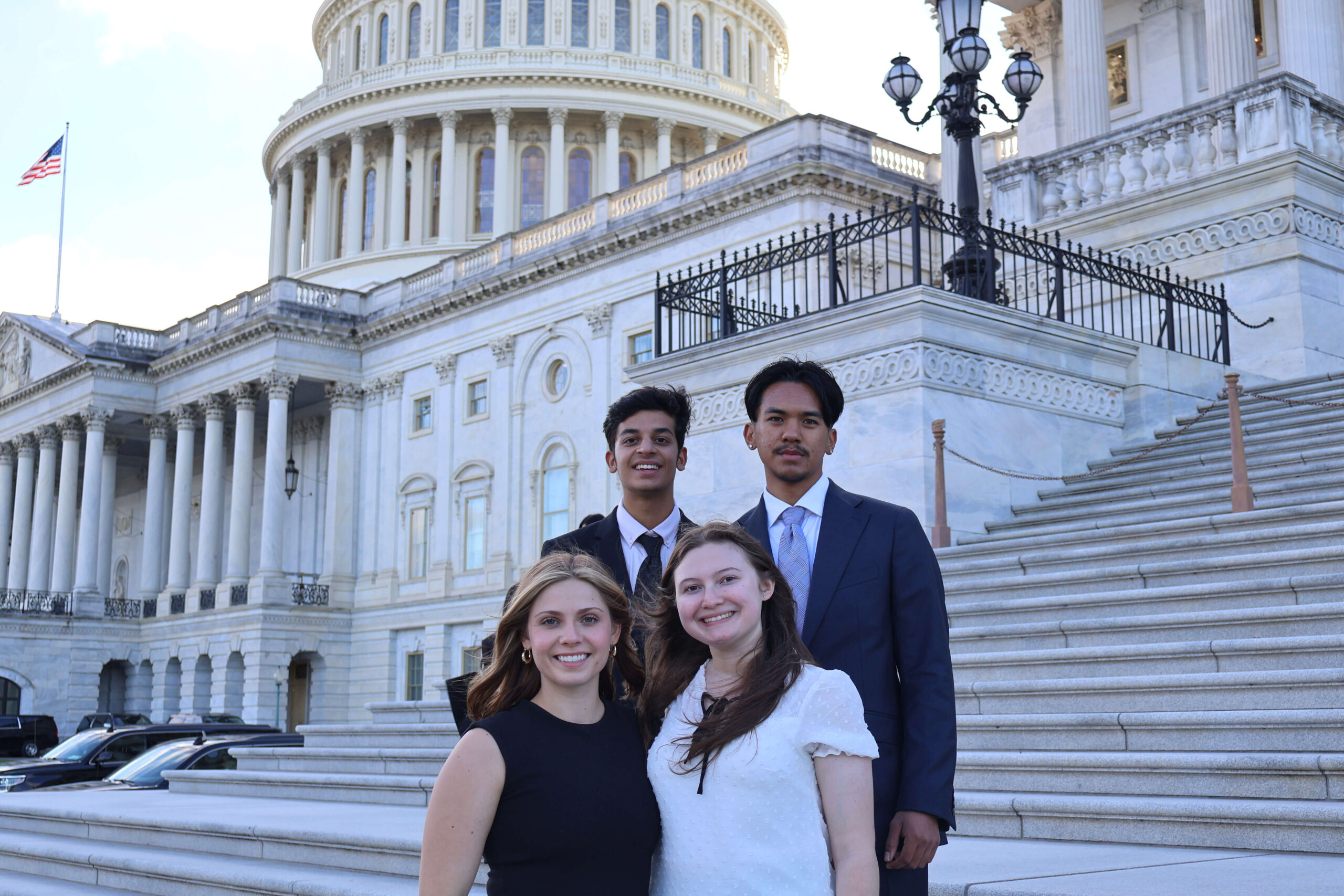
JED's Texas Mental Health Youth Advocacy Coalition (YAC) Fellows in front of the U.S. Capitol Building

The fellows received in-depth training on the policy and appropriations process for mental health programs. They participated in mock legislative meetings and researched legislation they believed could make a difference in their communities. 

On October 13th, in the midst of a government shutdown, the fellows travelled to Washington, D.C., for a “Hill Day” meeting with legislative staff members of their elected officials. They met with staff of five federal offices in person and with staff from four state- and council-level offices virtually. The experience helped them understand the power they held as constituents to focus their representatives’ attention on mental health issues.

Throughout their meetings, the fellows advocated for federal funding for programs including the Garrett Lee Smith (GLS) Suicide Prevention Campus grants, Project AWARE, and the 988 Suicide & Crisis Lifeline. These programs have supported the expansion of mental health services in K-12 schools, colleges, and universities, as well as providing support directly to youth who need it. Programs like GLS and Project AWARE remain a bipartisan priority in Congress and were both included in the President’s FY26 budget request. However, with the government stalled on funding negotiations and the severe staff cuts to the agency that manages these grants, funding is far from guaranteed. The fellows took the opportunity of their Capitol Hill meetings to remind Congressional staffers of the impact these funds make back in their home districts. 

The fellows also highlighted specific legislative proposals to address the mental health access barriers in rural Texas as well as the newer challenges youth are facing given the increase in artificial intelligence (AI) and social media:

  • Rachel Davis raised awareness with staffers about the importance of passing the Kids Online Safety Act (KOSA), a bipartisan bill that would increase safeguards on social media platforms.
  • Juan Garcia highlighted bills such as the Rural Wellness Act and the Community Mental Wellness and Resilience Act, both of which increase federal resources to address mental health access in communities like Juan’s.
  • In meetings with local state representatives, Rohan Satija proposed that they consider “warm transfer agreements” between universities and the state-managed 988 Suicide and Crisis Lifeline in which callers who identify as students and offer consent would be seamlessly connected to campus mental health services.
  • In another state-level meeting, Ivanna Sintes-Klein was able to discuss the importance of creating safe campus spaces for students to play active roles in advocating for their mental health. 

Why This Work is Needed

Five years post-pandemic, this is a critical time for organizations, colleges, and state agencies dedicated to mental health awareness and access. Some federal funds from the federal Bipartisan Safer Communities Act have expired, and as states and colleges manage tighter budgets, mental health programs are often the first to face cuts. 

Yet, we are also seeing some hopeful trends in youth mental health. The Substance Abuse and Mental Health Services Administration’s  2024 National Survey on Drug Use and Health (NSDUH) shows that, among youth aged 12-17, the percentage who had serious thoughts of suicide declined from 12.9% in 2021 to 10.1% in 2024, while the percentage who had a major depressive episode in the past year declined from 20.8% in 2021 to 15.4% in 2024. At the same time, the percentage of people 12 or older with a drug use disorder in the past year increased from 8.7% in 2021 to 9.8% in 2024. 

Despite these positive signs, too many young people are still struggling. In the fellows’ home state of Texas, according to the Youth Risk Behavior Survey (YRBS), 21.1% of high school students in 2023 had seriously considered attempting suicide while 42.4% had stopped doing some of their usual activities due feelings of sadness and hopelessness. 

Not only are these rates concerning, they are representative of many of the experiences that the fellows carried into their college years, having lived or personally been affected by mental health issues in their homes, among their friends, in their communities. At the same time, the fellows shared experiences that highlight how challenging it can be to seek help, especially in Texas, where 246 of the state’s 254 counties are designated Mental Health Professional Shortage Areas. 

The fellows channeled their experiences into a digital storytelling initiative that comprised a key component of the YAC program. In moving pieces to be published on JED’s website, each of the fellows shared part of their own struggles with mental health and how they addressed those challenges, touching on themes of depression, masking, social media harms, and social anxiety. Their hope is to harness the power of authentic storytelling to engage college students like themselves in normalizing conversations about mental health and inspiring help-seeking behavior. 

Through all of these initiatives, the YAC program offered a space for the fellows to draw on their experiences to assert their agency in advocating for change and exercising their drive to serve their local communities and peers.

What You Need to Know: SNAP Benefits, Food Security, and Youth Mental Health

Due to the ongoing federal government shutdown, millions of Americans are not receiving their Supplemental Nutrition Assistance Program (SNAP) benefits. This impacts many young people, college students, and families who depend on SNAP to meet basic food needs.

Food insecurity is more than an economic issue: It’s a mental health issue that can affect how someone feels, thinks, and shows up in daily life.

How Food Insecurity Affects Mental Health

When you’re not sure where your next meal is coming from, everything else gets harder. Research shows that food insecurity is directly linked to increased anxiety, stress, and depression among young people. It’s not just about feeling hungry — it’s about the constant worry, the mental energy spent calculating what you can afford, and the emotional weight of a basic need going unmet.

Youth and young adults experiencing food insecurity often struggle with difficulty concentrating in school or work. Persistent worry about where the next meal will come from is associated with stress and anxiety that can affect every aspect of daily life. This stress can manifest physically through headaches, trouble sleeping, and other mental health issues. Financial pressure around food can also strain family relationships, creating tension at home precisely when young people need support the most. And over time, a lack of basic needs like food can contribute to despair, which is linked to an increase in suicidality

If you experience any of these feelings, you’re not alone. But help and hope are available.

If You Or Your Family Are Impacted

When basic needs feel uncertain, it’s normal to feel overwhelmed. If you are a young person experiencing the emotional impact of the SNAP disruption, there are steps you can take to find support and protect your well-being:

  • Visit FoodFinder.us to locate food pantries, community meal programs, and other resources near you. You can also dial 211 to connect with local services and support.
  • Check with your school or campus: Many have food pantries, emergency meal programs, or emergency funds specifically for students.
  • Check your EBT card or your state’s SNAP website for updates, but limit how often you check the news if it’s increasing your anxiety.
  • If you’re feeling overwhelmed, anxious, or hopeless, talk to someone you trust, like a friend, family member, or mental health professional. You can always text or call 988 for free, confidential help 24/7.

Remember that asking for help is a sign of strength, not weakness.

What Policymakers and Advocates Can Do

Access to food is access to stability, dignity, and emotional well-being. These aren’t separate policy domains — they’re deeply interconnected elements of what young people need to thrive. We at The Jed Foundation (JED) are grateful for efforts underway at the federal and state levels to protect families’ physical and mental health by ensuring the continuation of food subsidies. 

On the federal level, Sen. Josh Hawley (R-MO) is sponsoring a bill, S. 3024, Keep SNAP Funded Act of 2025, to ensure SNAP continues to be funded during a government shutdown for FY 2026; it currently has 11 cosponsors.

Among states, as just one example, New York Governor Kathy Hochul has announced emergency state funding. This includes $30 million fast-tracked to provide about 16 million meals, and an additional $11 million to support food banks. She is also exploring creative “take-home” meal options for students via the state’s school meal program, ensuring children whose families rely on SNAP have access to extra food during a disruption in federal benefits. 

We call on all policymakers and advocates to use all levers available to advocate for continued SNAP benefits, including support for the Keep SNAP Funded Act, and to find ways at the state and local levels to ensure no one goes hungry because of this disruption.  

This should include:

  • Supporting young people experiencing food insecurity through school meal programs, counseling, and resource sharing. This could include maximizing participation in free and reduced-price meal programs, creating grab-and-go options at school or in local community centers, establishing or stocking school or community food pantries, and exploring weekend take-home meals.
  • Amplifying accurate information: Avoid panic while ensuring youth and families know where to find help. Share information about school- or community-based food resources, local food pantries, and SNAP updates.
  • Recognizing food security as a protective factor in youth mental-health policy and prioritizing continuity of benefits during federal funding lapses.
  • Ensuring mental health support is available and accessible. This may include training school staff and staff at afterschool and community programs to identify signs of food insecurity-related stress such as changes in behavior, concentration difficulties, or changes in mood and energy levels. It should also include creating safe spaces for students to talk about stress, and connecting families with mental health resources such as the 988 Lifeline. 

Access to food is access to stability, dignity, and emotional well-being. JED calls on leaders across government, education, and community systems to protect youth and families from the mental health toll of food insecurity

For those young people impacted by the SNAP disruption, we hope you will stay informed, connected, and kind to yourselves and one another. Remember: You matter. Your well-being matters. And help is available.

Related Resources

The Future of Youth Mental Health in the Age of AI: Insights from JED’s 2025 Policy Summit

By Rebecca Bauer

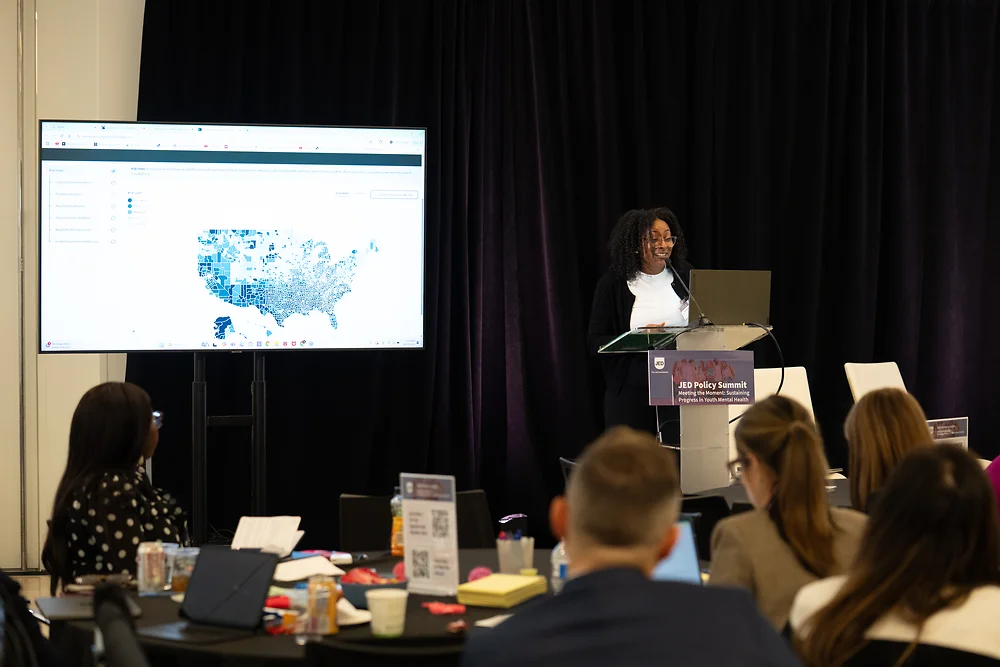
At a time when artificial intelligence (AI) and shifting policy landscapes are redefining how young people receive care, The Jed Foundation’s 2025 Policy Summit, Meeting the Moment: Sustaining Progress in Youth Mental Health, brought together researchers, policymakers, and youth leaders to chart the path forward. Throughout the day, speakers examined how technology is reshaping both risk and opportunity, how states are embedding behavioral health into their strategic planning, and how evidence and youth voice must drive future systems of support. 

Setting the tone for the day, Dr. Zainab Okolo, JED’s Senior Vice President of Policy, Advocacy, and Government Relations, reminded attendees that “progress must be built intentionally, structurally, and with sustainability in mind. We have to move beyond short-term interventions toward long-term systems of change.” From cutting-edge research on AI and adolescent well-being to frameworks for trauma-informed education and community resilience, the summit invited participants to look beyond crisis response toward a shared goal: building data-driven and human-centered systems that protect and promote youth mental health and prevent suicide.

The need to address AI’s impact on teens and young adults with deliberate and urgent action was clear from the first session. U.S. Representative Becca Balint (D-VT) opened the day with candid reflections on her own mental health journey. She then focused on what she’s hearing from educators, parents, and teens about how technology is shaping young people’s lives and on the role Congress can play in reducing tech’s harms. She didn’t mince words: “The algorithms are engineered for compulsive use rather than engagement.… You have companies making a tremendous amount of money off of our attention, and we have a right to say no, because it’s killing us.” 

Her message framed the conversations that followed: The mental health challenges facing young people are inseparable from the digital environment they inhabit. Meeting this moment will require accountability and collective resolve.

Speakers stressed that this moment offers a chance to learn from the past. As Danny Weiss, the chief advocacy officer at Common Sense Media put it: “After spending 20 years not regulating social media, we see where we ended up.” Our country failed to protect children from the perils of social media, allowing corporations to unleash these platforms unchecked, he said. Young people are already living with the consequences of technologies that evolved faster than the systems designed to protect them. Now we are seeing the same pattern play out with AI, and we cannot afford to leave the problems unaddressed. 

What can we do moving forward? Participants called for action on multiple fronts:

  • Build safeguards. Develop ethical guardrails, regulatory standards, and accountability measures now, as AI continues to embed itself in everyday life and the risk to youth mental health continues to grow.
  • Harness technology for connection. Use innovation to expand access, empathy, and care, and ensure that it does not deepen dependence or exploitation.
  • Center youth as co-creators of the future. Ensure that the technologies shaping young people’s lives are informed by their voices, experiences, and needs.

Throughout the day, speakers emphasized the need to strengthen systems and prioritize prevention alongside innovation. 

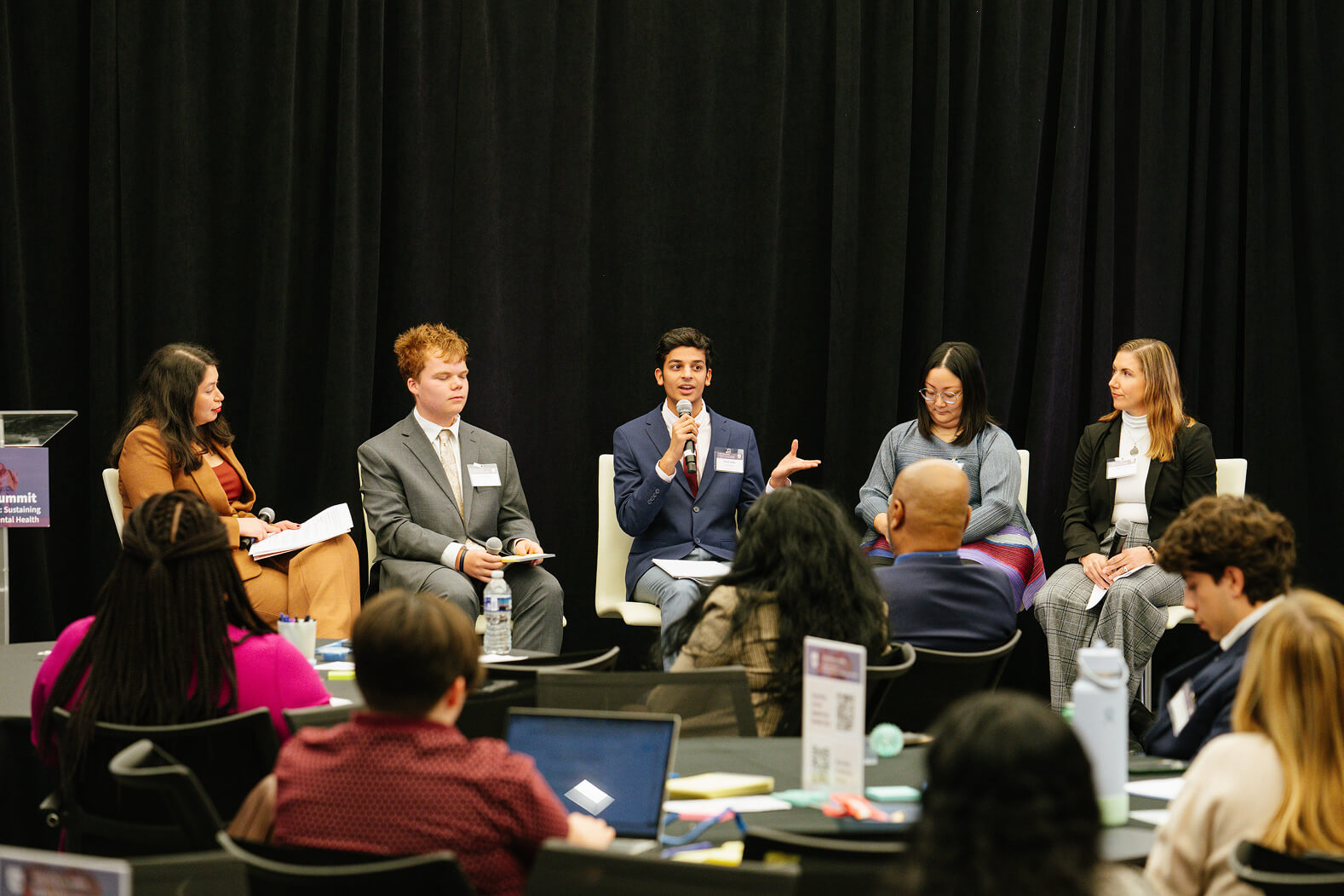
Panelists highlighted how strong leadership and cross-sector collaboration — from Utah’s SAFE crisis response app and behavioral health plan to the Southern Regional Education Board’s counselor training programs — are turning ideas into impact. A youth panel reinforced the value of early awareness and open dialogue, with Dartmouth freshman Trace Ribble speaking about breaking stigma in rural communities and Rohan Satija, one of JED’s 2025 Student Voice of Mental Health Award honorees, describing Let’s Learn, his initiative to bring mental health literacy into classrooms.

Conversations about equity reminded attendees that real progress depends on understanding the conditions that shape mental health outcomes. It also means investing in community spaces such as libraries, parks, and civic institutions that promote well-being beyond clinical care.

These discussions painted a broad picture of the challenges and opportunities ahead, but the conversation repeatedly returned to one powerful theme: the rise of AI. It was the thread that tied together questions of access and prevention, underscoring how technology now shapes every part of young people’s lives. The choices made now will determine whether AI becomes a force that widens gaps or one that strengthens connection, care, and access. The path forward isn’t just about managing technology, it’s about having the courage to ensure that the next generation inherits tools that heal rather than harm.

More From JED About AI and Youth Mental Health

Get Help Now

If you or someone you know needs to talk to someone right now, text, call, or chat 988 for a free confidential conversation with a trained counselor 24/7. 

You can also contact the Crisis Text Line by texting HOME to 741-741.

If this is a medical emergency or if there is immediate danger of harm, call 911 and explain that you need support for a mental health crisis.