Page 10 | The Jed Foundation

The Jed Foundation Student Voice of Mental Health Awards Honor Rohan Satija and Nora Sun

Students recognized for mental health advocacy in their school communities

[June 11, 2025, NEW YORK CITY] The Jed Foundation (JED), a leading nonprofit that protects emotional health and prevents suicide for teens and young adults nationwide, announced today that Rohan Satija of Austin, Texas, and Nora Sun of Seattle, Washington, are the 2025 Student Voice of Mental Health Award recipients, recognizing their outstanding work in youth mental health advocacy.

JED’s annual Student Voice of Mental Health Awards honor one high school student and one college student who demonstrate exceptional commitment to raising mental health awareness, fostering connection and belonging, and encouraging help-seeking behaviors among their peers in their school or campus communities. 

SVMHA Winner Rohan Satija17-year-old Rohan Satija, a 2025 graduate of Westwood High School, transformed his personal experiences with bullying, isolation, and anxiety into powerful advocacy. He founded the Let’s Learn Foundation, bringing educational resources into book deserts for local students, and established the Vibrant Voices Project, helping youth in juvenile detention centers express themselves through storytelling. Satija also serves on committees at the National Alliance on Mental Illness in Texas, Texas Children and Youth Behavioral Health, and the youth advisory board at The Born This Way Foundation. He will attend The University of Texas at Austin this fall.

“As someone who has faced mental health challenges, receiving this award feels like a full-circle moment,” Satija said. “Through storytelling, I’ve worked to support youth in low-resource communities, normalize the conversation, build empathy, and reshape policy.”

SVMHA winner Nora Yanyi Sun20-year-old Nora Yanyi Sun, a rising junior at Harvard University, found her deep interest in mental health advocacy and research after supporting a high school classmate struggling with depression. She became a crisis counselor and created the Little Talks Movement, an online peer-to-peer support platform. Nora also serves as CEO of mercuri.world, a nonprofit that curates and translates global mental health resources. Her published research focuses on identifying stressors as well as protective factors and gaps in mental health outcomes within intersectional subpopulations, and tailoring interventions to effectively meet the needs of various communities. 

“I am honored to receive this award,” Sun said. “My work focuses on developing evidence-based mental health interventions that can help all people access the support they need. I aspire to contribute to a future where quality mental health support is accessible for everyone.”

Award winners receive a $3,000 scholarship, recognition on JED’s platforms, and opportunities to collaborate with JED. 

“We are inspired by Rohan and Nora’s remarkable dedication to mental health advocacy,” said John MacPhee, JED CEO. “Their leadership exemplifies how young people can make a meaningful difference in preventing suicide and supporting emotional well-being for students.”

This is the 18th annual Student Voice of Mental Health Awards. Created in 2008, 27 students have been recognized for their contributions to youth mental health and suicide prevention. Both winners were honored at JED’s annual gala on June 4 at Cipriani Wall Street.

###


About The Jed Foundation (JED)
JED is a nonprofit that protects emotional health and prevents suicide for our nation’s teens and young adults. We’re partnering with high schools, colleges, and school districts to strengthen their mental health, substance misuse, and suicide prevention programs and systems. We’re equipping teens and young adults with the skills and knowledge to help themselves and each other. We’re encouraging community awareness, understanding, and action for young adult mental health. 

Connect with JED: Email | LinkedIn | Instagram | Facebook | TikTok | Snapchat | YouTube 

Media Contact
Justin Barbo
Director, Public Relations
The Jed Foundation
Justin@jedfoundation.org

Student Voice of Mental Health Award Winner Nora Sun on the Power of Peer-to-Peer Support

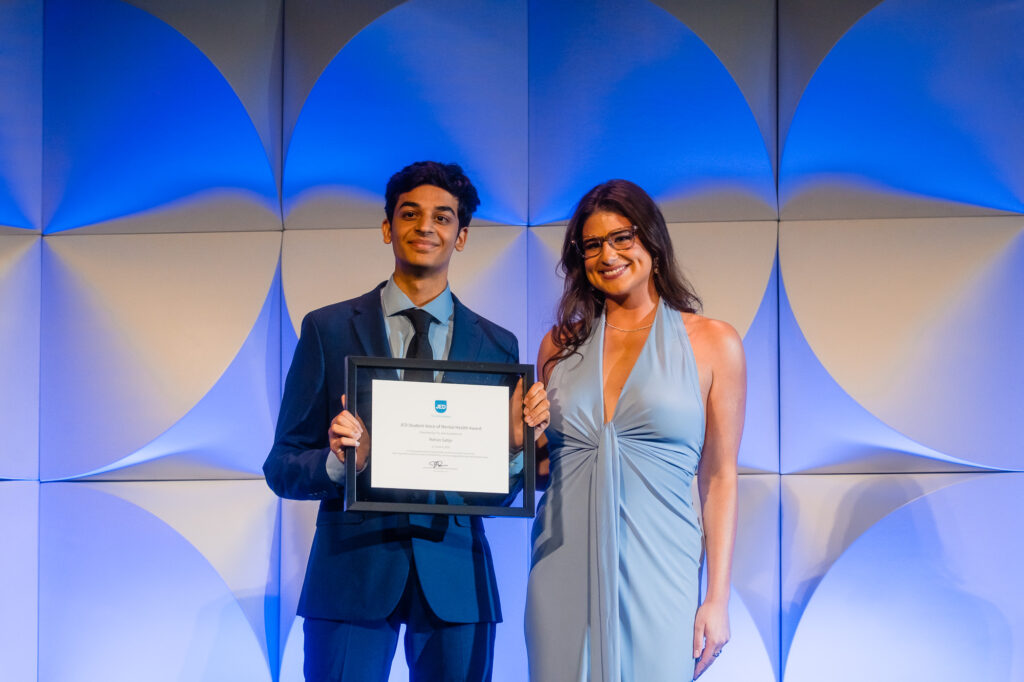
Nora Sun is honored with the Student Voice of Mental Health Award at the 2025 JED Gala.

Nora Sun, a 20-year-old junior at Harvard University and this year’s Student Voice of Mental Health Award undergraduate honoree, brings a powerful, research-driven approach to change-making. Her work is rooted in a core philosophy: Peer-to-peer support and mental health education have the potential to improve — and even save — lives.

That philosophy is backed by Nora’s research, in which she identifies key factors that protect against depression and anxiety in youth. Her work has been published in multiple peer-reviewed journals, including the Journal of Clinical Psychiatry and the Journal of Youth and Adolescence. Nora takes findings from her research out of academic settings and uses them to inform the strategies of multiple mental health initiatives she established. 

In early 2024, Nora founded mercuri.world, a campus-based mental health nonprofit built on the belief that digital innovation is key to filling gaps in access to mental health care. With over 30 international chapters, mercuri.world volunteers strive to break down language barriers in mental health care by curating and translating an expansive database of mental health resources. So far, the team has translated over 400 screeners, workshops, guides, and more into over a dozen languages. 

Through her work on mercuri.world, Nora found that creating an online space for mental health conversations may help young people overcome awkwardness and embrace vulnerability. She then launched the Little Talks Movement, an online platform that provides peer-to-peer support, cleverly incentivizing mental health conversations among students by offering volunteer hours and recognition.

The Jed Foundation (JED) created the Student Voice of Mental Health Awards to recognize students for their outstanding efforts to raise awareness for mental health issues and encourage help-seeking behaviors in their school communities. The award includes a $3,000 scholarship. Nora and JED’s high school honoree, Rohan Satija, received their awards at JED’s annual gala in New York City on June 4. 

We talked to Nora about her efforts to make peer-to-peer support and mental health education more accessible. 

What does it mean to you to have been selected as the Student Voice of Mental Health Award undergraduate recipient?

I’m truly grateful for this honor. When I began my mental health advocacy work, focusing on digital interventions, much of it felt new and untested. I wasn’t sure how successful these approaches would be. Receiving this recognition for what feels like a newer branch of mental health work is incredibly validating. I plan to use the resources and recognition from this award to further develop evidence-based interventions and support programs for people struggling with their mental health.

You’ve noted that peer support has been incredibly important to your mental health journey, and now you’ve made it your mission to make peer-to-peer support widely available. Can you tell me more about your philosophy on educating peers about how to have mental health conversations?

My approach, both in educating peers and in my broader mental health work, emphasizes a strength-based rather than a deficit-based philosophy. Through my research and experiences, I’ve observed that while the focus on groups with less representation has increased, much of this discourse centers on deficiencies.

Focusing on deficiencies presents both philosophical and practical problems. Philosophically, highlighting only deficits and trauma overlooks the resilience in these communities and the ways in which people are thriving. Practically, concentrating on deficits hinders effective intervention, drawing attention away from improving outcomes through actionable advice and changes within social systems.

When creating educational materials or training peer educators, I focus on imparting skills that enhance mental health outcomes and are culturally responsive. This means recognizing and building upon the specific cultural strengths that bolster mental well-being, rather than dwelling on deficits.

What are your goals for the initiatives you’ve started, as well as your personal advocacy work?

For the Little Talks Movement, we are nearly done translating our resources — websites, training guides, quizzes — into 19 to 20 languages. Our primary goal is to extend the movement’s reach globally, enabling mental health conversations worldwide.

As a biostatistics student at Harvard, I aim to conduct more rigorous studies to identify robust, evidence-based factors for mental health intervention. The field faces challenges: questions about mental health were only recently integrated into large-scale surveys, making long-term quantitative studies quite limited. There is also limited data for some previously underrepresented groups. I intend to apply the advanced statistical techniques I’m learning, including data imputation for handling missing data, to overcome these challenges and uncover more evidence-based insights.

Given your demanding schedule, how do you prioritize and practice self-care and take care of your mental health?

Self-care, to me, involves spending quality time with people I trust and feel close to. I have a tendency to be consumed by my work, but being surrounded by my friends helps shift my perspective and find more balance. They encourage me to view my days less as a list of things to achieve and more as a series of memories to make or experiences to have. Being surrounded by people important to me reminds me that I want to be part of their lives and experiences too. 

Also, my roommate has an emotional support cat named Bianca whom I live with. I love spending time with her; she’s gorgeous, and she’s an important part of my self-care.

If you could offer one piece of advice to a young person struggling with their mental health, what would it be?

Based on my experiences, including working at The Trevor Project and in peer support settings, a very important thing for young people to know is: Start thinking about how to take care of your mental health before you are in a moment of crisis. Many people put it off. But the most important thing is to identify people you trust and can talk to, or steps you can take — things that can calm you down in a moment of panic — before that crisis happens. Like any prevention effort, it can be hard to motivate yourself unless you’re staring the problem in the face, but knowing what to do in case of a mental health crisis — even if you don’t think it will happen to you — is so important.

Student Voice of Mental Health Award Winner Rohan Satija on Reclaiming Mental Health Stories

Rohan Satija is honored with JED's Student Voice of Mental Health Award.

For Rohan Satija, our 2025 Student Voice of Mental Health high school honoree, the connection between storytelling and mental well-being is deeply personal. His own journey began at 11, shortly after immigrating to the United States. It was during this challenging time that Rohan found solace and strength in the world of books.

Rohan soon recognized that many students, particularly in Texas, lacked access to the books and educational resources that had been his lifeline. This realization sparked action, and Rohan co-founded the nonprofit Let’s Learn Foundation. What started with lemonade stands and cookie sales has blossomed over six years into a force for change, donating more than 60,000 books,100,000 school supplies, and 5,000 mental health kits, impacting more than 13,000 students in communities with resource limitations. The foundation makes a point of donating books featuring characters with a wide range of backgrounds, to ensure students can see themselves represented in the stories they read. 

Now 17, Rohan has expanded the foundation to include the Vibrant Voices Project, a monologue-writing program for young people in juvenile detention. Youth are given guidance on writing and performing monologues about their mental health experiences such as navigating anxiety and depression or facing trauma. Rohan has led this program for over 60 young people across three juvenile detention centers.

In addition to leading his own initiatives, Rohan also serves on advisory boards for numerous mental health organizations including Teens4TeensHelp, the Children’s Kindness Network, This is My Brave, and Creative Visions.


The Jed Foundation (JED) created the Student Voice of Mental Health Award to recognize students for their outstanding efforts to raise awareness for mental health issues and encourage help-seeking behaviors in their school communities. The award includes a $3,000 scholarship. Rohan and JED’s college honoree, Nora Sun, received their awards at JED’s annual gala in New York City on June 4, 2025. 

We talked to Rohan about the power of storytelling to safeguard mental health:

What does it mean to you to be the 2025 Student Voice of Mental Health Award high school honoree?

It feels quite surreal. It means the struggles I’ve faced and the work I’ve poured into mental health advocacy since fifth grade have been seen and valued, which means a lot. I never thought I’d get to this point. I’ve admired The Jed Foundation’s mission for so long, so receiving this award from the organization makes me feel empowered to keep going and further my advocacy work.

You say that your mental health advocacy journey began in your school library. Can you share more about that and perhaps a book or genre that positively impacted you?

My advocacy journey began when I immigrated from New Zealand to Austin, Texas, at 10. Being in a completely new place, I felt out of place and struggled with isolation and being bullied for my accent and cultural differences. This led to anxiety and panic attacks, and books became my comfort. I was already an avid reader, but during this time, reading really became a way to take care of my mental health. 

I found escaping into new worlds and relating to characters incredibly helpful. My favorite books featured South Asian characters I could relate to culturally and personally. When they succeeded in their stories, I felt like I had the power to win in my life, too.

A specific example is Aru Shah and the End of Time. It’s a mythological book with a South Asian protagonist fighting a big fantasy battle. It helped me feel seen, like I could succeed too. Learning the power stories have in the library is really where my advocacy began, leading me to support other youth in gaining access to books and supplies, and helping them process emotions through storytelling.

You speak very openly and confidently about difficult experiences like managing anxiety and facing bullying. What has helped you develop that confidence in mental health conversations?

I believe talking openly is the foundation of advocacy because nothing engages empathy and authenticity like stories do. I see sharing my lived experience as a way to help others share theirs. For example, through the Vibrant Voices Project, we use the power of storytelling to help youth in juvenile detention reclaim agency over their narratives.

Stories have an unparalleled power to provide insight, humanize mental health struggles, break down stigma, and shed light on important topics. That’s what inspires me to be open about my own journey — believing it helps others build empathy and understand what it’s like to experience these struggles.

You’ve mentioned that drama therapy was particularly helpful for you. Can you tell us more about that experience and any advice for young people seeking mental health support that feels right to them?

I’m a big advocate for therapy, and drama therapy personally worked well for me. I started around sixth grade as well as doing theater at school. As a very narrative-oriented person, it helped me reshape my story. In sessions, I could write out my struggles as monologues and perform them, which was really empowering. Processing my narrative this way helped me process my emotions. 

It’s beneficial to look at your struggles from an outside, third-person perspective, which drama therapy helped me do. I’ve continued doing theater for six years now because I believe in its power to share stories that engage empathy. My advice for others is to find something that works for you. There are many options, and seeking external support, whether through more traditional therapy or drama therapy, is much better than internalizing struggles.

With all your advocacy work, how do you prioritize self-care?

Coming from an immigrant, South Asian background, there can be unspoken cultural pressure to always succeed. I used to feel that thriving was the only way to justify being here. But I’ve realized rest and self-care are extremely productive. I like to say that self-care is community care. If you’re an advocate aiming to make change, that change starts with taking care of yourself first.

Personally, I protect time each week for things that ground me. I do taekwondo — I’m a black belt — which really helps release stress. Journaling daily is also big for me; it helps me process emotions, and my journal doesn’t get tired of hearing me repeat things! My family is my biggest support system, so prioritizing time with them, like eating dinner together every night and talking about everything and nothing, is super important. All these things help me de-stress, feel grounded, and ultimately, further my advocacy work.

Looking back at your own experiences, what advice would you give a young person struggling with their mental health today?

One thing, which is easier said than done, is to avoid internalizing your experiences and struggles. When I first moved, I felt I should have instantly belonged and excelled. Feeling out of place felt like a personal failure, not a natural response to change, which it was. My advice is to find support that works for you and seek it externally, whether it’s therapy, a school counselor, a friend. It’s much better to speak openly about struggles than to internalize them and let them define your worth. I struggled with that for a long time, feeling unworthy. But there are truly so many support systems out there for everyone.

White House Officially Proposes Cutting National Suicide Lifeline for LGBTQ+ Youth

The Trump administration’s proposed budget for Fiscal Year 2026 calls to eliminate funding for the 988 Lifeline’s LGBTQ+ youth services, confirming leaked reports

[June 9, 2025] – The U.S. Department of Health and Human Services released the full budget proposal for Fiscal Year 2026, following a draft proposal which leaked in April, confirming that the federal government has officially proposed to eliminate all funding for the 988 Suicide & Crisis Lifeline’s LGBTQ+ Youth Specialized Services. This federal program, which was signed into law during President Trump’s first term with bipartisan support, provides emergency crisis support to LGBTQ+ youth considering suicide. The proposed cuts would eliminate these services, effective October 1, 2025. Since being implemented in 2022, this program, funded through the U.S. Department of Health and Human Services, has provided an estimated 1.3 million crisis contacts with life-saving, LGBTQ+-inclusive crisis services. 

“We do not have to agree on every policy issue to agree that every young American’s life is worth saving. It is deeply upsetting to see the administration reverse course on an evidence-backed, bipartisan program that has successfully provided life-saving crisis care to 1.3 million LGBTQ+ young people, and counting,” said Jaymes Black, CEO of The Trevor Project. 

“Since the news of this proposal leaked, The Trevor Project has been fighting back – each and every day – to urge our nation’s leaders to reject this fatal proposal. We have received an outpouring of support and shared concern from our partners, allies, and members of Congress of all political ideologies. We are grateful to the many people who continue to urge this administration and Congress to protect access to these life-saving services alongside us. In a nation where our children’s tears fall without distinction of how they identify, we must rise with one voice – across every faith, every belief, and every political line – now is the time for the full volume of our conviction. Now is the time to act. If you’re looking to take action to save young LGBTQ+ lives, visit TheTrevorProject.org/ActNow.”

Suicide is the second leading cause of death among young people aged 10 to 14, and the third leading cause of death among 15-24 year olds. LGBTQ+ young people are more than four times as likely to attempt suicide than their peers. The Trevor Project estimates that more than 1.8 million LGBTQ+ young people in the United States seriously consider suicide each year, and at least one attempts suicide every 45 seconds. 

In total, the 988 Lifeline has served more than 14 million contacts across the U.S. since its creation (this number includes the aforementioned 1.3 million LGBTQ+ young people). Following best practices for suicide prevention, Congress directed The Substance Abuse and Mental Health Services Administration (SAMHSA) to create specialized services that support the most at-risk populations in the United States. These services were implemented to support high-risk groups, including veterans and LGBTQ+ youth who contacted the 988 Lifeline.

“Research and data clearly show that LGBTQ+ youth experience higher levels of distress and risk for suicide. This is why the national 988 Crisis and Suicide Lifeline offers LGBTQ+ specialized services,” said John MacPhee, CEO of The Jed Foundation.“More than one million crisis calls have been routed to these LGBTQ+ focused services since 2022, providing specialized life-saving support to countless children, friends, siblings, and community members. The current budget proposal to eliminate funding for these existing, effective and widely used services puts young lives in danger. We urge lawmakers and administration officials to reconsider this proposal and to maintain these services that were carefully considered and wisely codified into law in 2020.”

In September 2022, The Trevor Project began providing its best-practice crisis services to LGBTQ+ youth through the 988 Lifeline. When individuals contact the 988 via phone, text, or chat, they are given the option to “press 3” or “reply PRIDE” to be connected with counselors trained specifically to assist LGBTQ+ contacts up to age 25. Initially, The Trevor Project served as the sole provider for the pilot phase of 988 LGBTQ+ youth specialized services, before transitioning to serve as one of seven centers that currently make up the LGBTQ+ Youth Subnetwork.

The Trevor Project serves nearly 50% of the LGBTQ+ youth specialized services’ contact volume. In 2024 alone, The Trevor Project directly served more than 231,000 crisis contacts, and trained and supported nearly 250 crisis counselors and operational support staff to support the 988 Lifeline. Previously, the LGBTQ+ Youth Subnetwork received up to $50 million in restricted federal funds to provide these life-saving services.

In response to this budget proposal, The Trevor Project’s supporters in the House and Senate advocated for the continued funding for these life-saving programs. The organization launched a petition to demand lawmakers protect LGBTQ+ youth and an Emergency Lifeline fundraising campaign. On June 2, 2025, more than 100 entertainment icons – across film, music, TV, sports, theater, comedy, fashion, culinary arts, and book publishing – joined The Trevor Project’s sign-on letter to protect federal funding for LGBTQ+ youth suicide prevention.

###

About The Jed Foundation (JED)
JED is a nonprofit that protects emotional health and prevents suicide for our nation’s teens and young adults. We’re partnering with high schools, colleges, and school districts to strengthen their mental health, substance misuse, and suicide prevention programs and systems. We’re equipping teens and young adults with the skills and knowledge to help themselves and each other. We’re encouraging community awareness, understanding, and action for young adult mental health.

Connect with JED: Email | LinkedIn | Instagram | Facebook | TikTok | Snapchat | YouTube 

About The Trevor Project
The Trevor Project is the leading suicide prevention and crisis intervention organization for LGBTQ+ young people. Trevor offers 24/7 crisis services, connecting highly trained counselors with LGBTQ+ young people whenever they need support. To drive prevention efforts, The Trevor Project also operates robust research, advocacy, education, and peer support programs. The Trevor Project envisions a world where all LGBTQ+ young people feel safe, seen, and accepted exactly as they are. 

MEDIA CONTACTS
The Trevor Project
press@thetrevorproject.org 

Justin Barbo
PR Director
The Jed Foundation
justin@jedfoundation.org


2025 JED Gala Honors Victoria’s Secret PINK, Eric Nam, Ally Love, and Student Mental Health Advocates

A speaker addresses a large audience at the JED Foundation gala, with guests seated at candlelit tables and JED logos projected around the room.”

[June 5, 2025, New York City] — The Jed Foundation (JED) hosted its annual gala on June 4 at Cipriani Wall Street in New York City, bringing together over 650 attendees and raising over $1.6 million to support its mission to protect emotional health and prevent suicide for teens and young adults. Emmy Award-winning journalist Savannah Sellers returned as host at the sold-out event, recognizing the honorees, presenters, and special guests championing JED’s work. 

“The mental health struggles of our young people are undeniable as suicide remains a leading cause of death for this population,” said JED CEO John MacPhee. “The dedication of tonight’s incredible individuals, organizations, and advocates — helping JED protect and prioritize student mental health with life-saving tools, resources, and connections — serves as a positive reminder that it takes every one of us to prevent suicide and foster a kinder community here at home and across the country.” 

Eric Nam, singer, actor, entrepreneur, and co-founder of DIVE Studios, and Ally Love, Peloton instructor and vice president of instructor strategy and development, TODAY contributor, and founder/CEO of Love Squad, were honored with the 2025 Voice of Mental Health Award for their leadership in normalizing conversations around emotional well-being. 

“Mental health is universal; it impacts how every one of us shows up in the world” said Nam, whose 2023 collaboration between Mindset, the self-care and wellness platform launched by DIVE Studios, and JED helped reach Asian American and Pacific Islander (AAPI) youth and K-pop fans through deeply personal storytelling from Korean artists. “Prioritizing self-care and valuing our mental health as much as our physical health is essential to being the best version of ourselves. There should be no shame in nurturing all aspects of our well-being.”

“My well-being journey motivates my desire to promote self-care and highlight the importance of mental health days,” said Love. ” Living with mental health challenges is part of my story, but it does not define who I am. I’m honored to be recognized by JED for keeping these conversations front and center.”

The 2025 Corporate Voice of Mental Health Award was presented to Victoria’s Secret PINK for its continued commitment and five-year partnership with JED to support young adult mental health. Together, they’ve engaged Gen Z in ways that resonate—launching tools like the Press Pause Hub, sparking meaningful conversations, and expanding access to resources through social media campaigns and campus outreach. The PINK with Purpose Project, a legacy initiative, honored 10 Gen Z advocates with $25,000 grants to support mental health and strengthen communities.

“PINK is all about inspiring Gen Z to show up authentically and find joy in this chapter of life,” said Leslie Nixon, associate vice president of community relations at Victoria’s Secret & Co. “Our work with JED highlighted that supporting positive mental health is the key to fostering growth, connection, and future success. This recognition celebrates five years of showing up together to help young adults feel more supported, more seen, and more ready to take on what’s next. We’re grateful for the partnership and honored to be recognized.”

Remi Bader, content creator, model, and fashion inclusivity and mental health advocate, introduced the 2025 Student Voice of Mental Health Award winners: Rohan Satija, a Texas high school senior bound for The University of Texas at Austin, and Nora Yanyi Sun, a Harvard University sophomore. Addressing the audience, both recipients detailed their personal journeys with mental health, and their community advocacy efforts.

The evening also featured powerful performances by Tony Award-nominated actress Lorna Courtney, Tony-, Emmy-, Grammy-, and Pulitzer-winning composer Thomas Robert Kitt, BAILEN the Band, and the Brooklyn United Marching Band, whose performances reflected themes of resilience, and hope.

View photos from the evening on JED’s Facebook photo album.

To support JED’s transformative work, visit jedfoundation.org/donate/.


###


About The Jed Foundation (JED)
JED is a nonprofit that protects emotional health and prevents suicide for our nation’s teens and young adults. We’re partnering with high schools, colleges, and school districts to strengthen their mental health, substance misuse, and suicide prevention programs and systems. We’re equipping teens and young adults with the skills and knowledge to help themselves and each other. We’re encouraging community awareness, understanding, and action for young adult mental health. 

Connect with JED: Email | LinkedIn | Instagram | Facebook | TikTok | Snapchat | YouTube 

Media Contact

Justin Barbo
Director of Public Relations
The Jed Foundation
914-844-4611
justin@jedfoundation.org

Pennsylvania Recognizes 15 Postsecondary Institutions for Efforts to Support Student Mental Health and Prevent Suicide

The Pennsylvania Department of Education designated 15 postsecondary institutions as PA CARES campuses

Group of seven professionally dressed adults standing indoors around a sign that reads “Connect, Assess, Respond, Encourage, Support” under the Pennsylvania Department of Education logo. They are smiling and posed in front of a Gothic-style archway with wooden paneling and a hardwood floor.

[May 28, 2025, Harrisburg, PA]Today at Temple University, the Pennsylvania Department of Education (PDE) recognized 15 postsecondary institutions across the Commonwealth for their commitment to preventing suicide and promoting mental health and wellness for their learners. PA CARES is a newly created recognition that ensures postsecondary students have access to support, tools, and resources to learn and thrive.

“It is everyone’s responsibility to collaborate, cooperate, and connect to ensure Pennsylvania’s postsecondary students have access to safe and supportive learning environments, and the PA CARES initiative recognizes the school communities that are doing the work day in and day out,” said Deputy Secretary of Postsecondary and Higher Education Dr. Lynette Kuhn. “We applaud these 15 colleges and universities for recognizing the importance of coming together for the learners on their campuses, and proactively working to enhance mental health and prevent suicide.”

PA CARES, which stands for “Connect, Assess, Respond, Encourage, Support,” recognizes postsecondary institutions that have implemented Act 110 mental health and suicide prevention plans, enabling school staff to engage with the campus community and empowering students to seek help when they need it.

Mental health support for students of all ages – K-12 through postsecondary education – has been a priority for the Shapiro Administration, which has invested $200 million to help schools hire mental health counselors, provide other mental health resources to fit the needs of each unique school community, and invest in school safety and security. Earlier this year, through the Pennsylvania Commission on Crime and Delinquency’s (PCCD) School Safety and Security Grant Program, the Administration announced grant funding for school safety and mental health supports to more than 780 K-12 schools.

For postsecondary students, in 2024, PDE launched a new anti-stigma campaign to ensure students know it’s okay to ask for help. In October, the department hosted school leaders, state officials, and advocates in Harrisburg for the second annual PA MASLOW convening to support postsecondary students in meeting their basic needs. Through the PA MASLOW You Good?” campaign, PDE developed posters that colleges and universities can personalize, print, and post on their campuses directing students to critical resources. PDE convened student panel discussions around the state as a proactive way to inform the anti-stigma campaign as well as the programs and policies that postsecondary institutions are implementing.

The National Institute for Mental Health (NIMH) estimates that there are 1,100 suicide deaths per year among college students across the country. According to researchers at Prevent Suicide PA, suicide is the second leading cause of death on American college campuses. It is critical that institutions of higher education (IHEs) proactively identify and implement policies, practices, and strategies for addressing mental health issues and preventing student suicide.

“Four of the schools recognized today are among the 530 colleges and universities that are currently participating or have completed our JED Campus program nationwide. Research shows that students in schools that finished JED Campus were 10% less likely to report suicidal ideation in the previous year, 13% less likely to report having suicide plans, and 25% less likely to attempt suicide as compared to program baseline,” said Martha Sanchez, director of policy at The Jed Foundation (JED). “JED applauds these institutions and the Pennsylvania Department of Education for today’s significant recognition and for implementing life-saving steps to support and inform student populations about mental health resources available to them.”

By partnering with over 1,200 high schools, colleges, and school districts – representing seven million students – JED is strengthening mental health, substance misuse, and suicide prevention programs and systems. It’s equipping teens and young adults with the skills and knowledge to help themselves and each other. JED is also encouraging community awareness, understanding, and action for young adult mental health.

To become a PA CARES campus, postsecondary institutions must provide: contact information for national, state and local suicide prevention hotlines; crisis intervention services, including the address, telephone number, or any other contact information of individuals with training and experience in mental health issues who focus on suicide prevention; individuals with training and experience available on campus or remotely for students 24 hours a day, seven days a week; mental health services and access, including the necessary information to access mental health services, including, but not limited to, health promotion and wellness, student health and counseling, crisis services, local mental health providers and mental health clinics; multimedia access, including mental health and suicide warning signs, services available to individuals at no cost and available mental health and suicide prevention resources, which may include mobile applications; student communication plans that consist of outreach plans regarding, at a minimum, mental health services and suicide prevention; and post-intervention plans, including a process to create a strategic plan to communicate effectively with students, staff and parents after the loss of a student to suicide.

Institutions must also post the adopted plan on their website along with applicable free prevention materials or programs; provide all incoming students with the contact information for national, state, and local suicide prevention hotlines and crisis intervention services; transmit to each student by mail or email the contact information for national, state, and local suicide prevention hotlines and crisis intervention services no less than twice per calendar year; review and update the plan at least once annually; and submit a current copy of the plan to PDE by August 1 of each year.If you or someone you know needs help, text, call, or chat with the 988 Suicide & Crisis Lifeline. For more information on the Pennsylvania Department of Education, please visit the Department’s website or follow PDE on Instagram, Facebook, X, YouTube, and Pinterest.


##


About The Jed Foundation (JED)
JED is a nonprofit that protects emotional health and prevents suicide for our nation’s teens and young adults. We’re partnering with high schools, colleges, and school districts to strengthen their mental health, substance misuse, and suicide prevention programs and systems. We’re equipping teens and young adults with the skills and knowledge to help themselves and each other. We’re encouraging community awareness, understanding, and action for young adult mental health.


Connect with JED: Email | LinkedIn | Instagram | Facebook | TikTok | Snapchat | YouTube


Media Contact
Justin Barbo
Director of Public Relations, The Jed Foundation
Justin@jedfoundation.org


House Bill Risks Lives: The Jed Foundation (JED) Urges Senate to Preserve Medicaid

House-passed bill would leave millions without coverage and severely reduce school-based mental health funding.

New York, NY — Early this morning, the U.S. House of Representatives narrowly passed a sweeping domestic policy and spending bill that includes at least $715 billion in cuts to Medicaid, the nation’s single largest payer for mental health services. The legislation, which passed the House by a single vote, also introduces an 80-hour monthly work requirement for able-bodied adults without dependents to qualify for Medicaid.   

These cuts could leave 8.6 million people without health coverage, according to estimates by the Congressional Budget Office, with young people, rural communities, and school-based resources among the hardest hit.  

“This bill would devastate access to mental health care for millions of Americans,” said Dr. Zainab Okolo, Senior Vice President of Policy, Advocacy, and Government Relations at The Jed Foundation (JED). “Young people and families rely on Medicaid for care at home, at school, and in times of crisis, and taking away these services would put lives at risk, causing lasting harm to them and their communities.” 

Medicaid is a lifeline for nearly half of all U.S. children, covering mental health and behavioral services for millions. These are our nation’s most vulnerable youth – eligible for Medicaid under already-strict poverty and income level requirements – and these youth are among the most susceptible to increased risk for psychological disorders and mental illness. Medicaid covered 43 percent of youth nationwide with major depressive episodes or substance-use disorder, amounting to 2.4 million young people in 2023.

Medicaid is also essential to providing school-based mental health care, with one report finding 59% of school districts use Medicaid funds for mental and behavioral health services. Cuts of this magnitude would dramatically weaken the infrastructure supporting school psychologists, counselors, and crisis intervention programs, just as rates of anxiety, depression, and suicide remain alarmingly high. 

JED is calling on the Senate to reject the bill in its current form and preserve the essential role Medicaid plays in safeguarding youth mental health and lives. The Senate must act to protect youth well-being and ensure our young people continue to have access to lifesaving mental health care. 

As an organization focused on protecting mental health and preventing suicide among our nation’s young people, JED is deeply concerned about what the enactment of this legislation would mean for the well-being of America’s young people. 

Significantly decreasing Medicaid funding, as the bill calls for, would endanger access to existing, crucial mental health services that currently benefit millions of young people, jeopardizing essential Medicaid funding to school-based mental health care, other school-linked services, and crisis response programs.

“Mental health care isn’t a luxury, it’s a lifeline.,” Dr. Okolo said. “It’s a necessity. It’s about whether a teenager in distress gets to see a school counselor, whether a family can afford to support their child with an emerging mental illness, and whether a mental health or suicidal crisis goes unanswered. If we take this care away, parents will be pulled away from work, students will miss school, and we will lose lives. We urge the Senate to act swiftly to preserve this essential care.”


##


About The Jed Foundation (JED)
JED is a nonprofit that protects emotional health and prevents suicide for our nation’s teens and young adults. We’re partnering with high schools, colleges, and school districts to strengthen their mental health, substance misuse, and suicide prevention programs and systems. We’re equipping teens and young adults with the skills and knowledge to help themselves and each other. We’re encouraging community awareness, understanding, and action for young adult mental health. 

Connect with JED: Email | LinkedIn | Instagram | Facebook | TikTok | Snapchat | YouTube 

Media Contact
Justin Barbo
Director of Public Relations, The Jed Foundation
Justin@jedfoundation.org

National & Local Media Coverage of Student-Athlete Mental Health Curriculum from Talking Rain and JED

Find local and national news coverage on the new workshop curriculum, “Championing Mental Health: Winning Strategies for Supporting Student-Athletes,” designed by mental health experts at JED with financial backing from Talking Rain Beverage Company®, makers of the No. 1 sparkling water brand, Sparkling Ice®. 

  • GlobeNewswire: Talking Rain and The Jed Foundation launch workshop curriculum designed to prevent student-athlete suicide
  • Associated Press: Talking Rain and The Jed Foundation launch workshop curriculum designed to prevent student-athlete suicide
  • Bevnet: Talking Rain and The Jed Foundation launch workshop curriculum designed to prevent student-athlete suicide
  • Markets Business Insider:  Talking Rain and The Jed Foundation launch workshop curriculum designed to prevent student-athlete suicide
  • Yahoo! Finance: Talking Rain and The Jed Foundation launch workshop curriculum designed to prevent student-athlete suicide

National & Local Media Coverage of Dr. Zainab Okolo’s Op-Ed on State Strategies to Enhance Student Mental Health Support

Find local and national news coverage of “With Washington Cutting Programs, States Must Step Up on Child Mental Health” authored by Dr. Okolo which explores the government’s role in youth mental health and education.

  • The 74: With Washington Cutting Programs, States Must Step Up on Child Mental Health
  • Yahoo!: Opinion: With Washington Cutting Programs, States Must Step Up on Child Mental Health

Wisconsin-Upper Michigan Key Club Goes Big on Behalf of JED

Dozens of students are seated and engaged in conversation at round tables during the Wisconsin-Upper Michigan Key Club District Convention (DCON). The packed room includes red, black, and yellow balloons on each table.

We’re grateful and excited to shout out some incredible high school students who dedicated themselves to championing mental health and raising funds for The Jed Foundation (JED). The Wisconsin-Upper Michigan (WIUM) Key Club, under the leadership of Luke McCormick, a student at Marquette University High School, raised more than $6,000 to support JED’s work preventing suicide and promoting mental health for teens and young adults. 

Choosing to Support JED

Key Club is the biggest student-led service organization for high school students. At Key Club, sponsored by Kiwanis International, teens get together to make their communities better through service and leadership. 

Each year, the student elected as District Governor gets to pick a cause for the whole district to support. That student was McCormick this year, and he chose JED.

“I chose to work with the Jed Foundation because I know the importance of mental well-being in creating strong, healthy communities,” McCormick said. “I’ve had a number of people close to me suffer from mental health issues in recent years, and, as a result, I’ve become more aware of the strain that these struggles put not only on the person who is suffering, but also on all those who support and care for them.”

McCormick said he wanted to use his role “to be a voice for those who suffer in silence,” especially since many students in his district live in rural areas where there is often less of a mental health support system.

JED, he said, “addresses the root cause of the issue and proactively addresses crises before they arise. The results of their programs, which are backed by science, speak for themselves.”

The message clearly resonated with McCormick’s fellow Key Club members. 

“I didn’t need to give my reasons for why people should fundraise,” he said. “They could look around them at home, at school, and in their communities and find their motivation.”

Turning Passion Into Action

During his State of the District address kicking off District Convention (DCON),the annual convention, McCormick shared that the district had collectively raised over $5,000 for JED throughout the year. That sum was in addition to a previous $925 donation from the group’s executive director. 

Dr. Thea Zunick, JED’s Director of Community Giving, smiles on stage at the annual District Convention (DCON), standing beside Luke McCormick.
Luke McCormick of the Wisconsin-Upper Michigan (WIUM) Key Club with Dr. Thea Zunick, JED’s Director of Community Giving

The group invited Dr. Thea Zunick, JED’s Director of Community Giving, to speak at its annual convention, which was attended by 370 guests, advisers, and speakers and had over 25 high schools represented. After her remarks, an additional “miracle minute” fundraising request — think Key Club leaders running around with buckets for 60 seconds collecting cash donations — netted another $500. All of that, together with $50 raised at the convention’s souvenir shop, brought the fundraising total for JED to $6,475. 

“The cause resonated on such a deep level with my peers and me because we could envision the impacts of JED’s programs in a tangible way,” McCormick said. “It’s so much easier to get behind a cause when it benefits people like you who have the same experiences as you.” 

Many thanks to McCormick and his peers at the WIUM Key Club for all they’ve done to raise awareness and funds to protect mental health and prevent suicide for young people nationwide. 

Inspired? Learn more about hosting your own do-it-yourself fundraiser for JED.

Talking Resilience at the Rare Beauty Mental Health Summit

Dr. Katie Hurley at the 2025 Rare Beauty Mental Health Summit

We were excited to kick off Mental Health Awareness Month on May 1 with our partners at Rare Beauty. 

Bringing together 175 thought leaders, experts, creators, advocates, and community members, the fourth annual Rare Beauty Mental Health Summit focused on the power of community and self-acceptance. At the summit, Dr. Katie Hurley, Senior Director, Clinical Advising and Community Programming at The Jed Foundation (JED), led an interactive workshop offering actionable guidance on building resilience. 

Dr. Hurley emphasized the importance of community, creativity, and personal growth while providing exercises to foster emotional strength and meaningful connection. By the end, participants were equipped with tools to reflect, support others, and begin crafting their own resiliency action plan. 

“What brings us together is that we all face challenging situations and can develop resiliency to help us handle tough situations and create community,” Dr. Hurley said.

JED's Dr. Katie Hurley at the 2025 Rare Beauty Mental Health Summit

Rare Beauty’s founder, recording artist, actress, producer, entrepreneur, and philanthropist Selena Gomez, made a surprise appearance at the summit. 

“We heard from some of the brightest minds in mental health — from experts to members of our community,” Gomez posted on Instagram about the event. “Bringing these people together under one roof is truly one of my favorite experiences every year.”

JED has a long-standing partnership with the Rare Impact Fund as a mental health partner. The Rare Impact Fund is mobilizing $100 million in contributions to expand access to mental health resources for young people globally. We are grateful for the support of a company so dedicated to promoting mental health and emotional well-being. 

Learn more about the Rare Impact Fund or explore JED’s Mental Health Awareness Month resources.

Get Help Now

If you or someone you know needs to talk to someone right now, text, call, or chat 988 for a free confidential conversation with a trained counselor 24/7. 

You can also contact the Crisis Text Line by texting HOME to 741-741.

If this is a medical emergency or if there is immediate danger of harm, call 911 and explain that you need support for a mental health crisis.