Page 17 | The Jed Foundation

National & Local Media Coverage of Inaugural Youth Advocacy Coalition Launch with JED, Young Invincibles, & Youth Advocates

Find news coverage of the alliance that will uplift, amplify, and center youth voices in mental health policy discussions and changes nationwide.

  • Business Wire: Youth Advocates Join The Jed Foundation (JED) and Young Invincibles (YI) to Launch Inaugural Youth Advocacy Coalition (YAC)
  • AP: Youth Advocates Join The Jed Foundation (JED) and Young Invincibles (YI) to Launch Inaugural Youth Advocacy Coalition (YAC)
  • Yahoo! Finance: Youth Advocates Join The Jed Foundation (JED) and Young Invincibles (YI) to Launch Inaugural Youth Advocacy Coalition (YAC)
  • Boston Herald: Youth Advocates Join The Jed Foundation (JED) and Young Invincibles (YI) to Launch Inaugural Youth Advocacy Coalition (YAC)
  • Pittsburgh-Post Gazette: Youth Advocates Join The Jed Foundation (JED) and Young Invincibles (YI) to Launch Inaugural Youth Advocacy Coalition (YAC)

Civic Engagement Can Boost Youth Mental Health

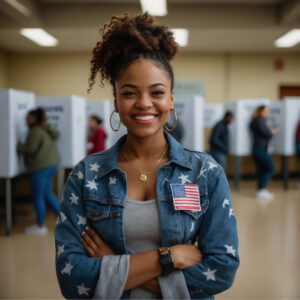
young smiling black women standing at a election poll site arms crossed with an american flag on her denim shirt

By Laura Erickson-Schroth 

Young people are doing their part to influence the political process and create the future they want to see in our country. They’re educating themselves on the issues, signing petitions, advocating for causes and candidates, volunteering their time, and voting in elections. 

At the same time, there is a certain pessimism that runs through young people’s thinking about politics and political engagement. Many believe, according to a 2022 poll from Harvard’s Institute of Politics (IOP), that “political involvement rarely has tangible results” (36%) and “politics today are no longer able to meet the challenges our country is facing” (56%). Over 40% say their vote “doesn’t make a difference.” A more recent IOP poll, released this year, shows steeply declining trust in American institutions among young people since 2015. Trust in Congress dropped by 34% and the Supreme Court by 55%, to cite just two examples. 

Beliefs like those can lead to feelings of fear, anger, or hopelessness, regardless of a person’s political leanings. Luckily, one of the antidotes is to encourage young people to deepen their civic engagement. Research shows that participating in civic-minded activities such as voting and volunteering can be beneficial for mental health. Civic engagement can also help young people feel more connected to democratic processes. A 2023 survey by the Institute for Citizens & Scholars found that young adults who are civically engaged are more likely to feel satisfied with U.S. democracy — and that satisfaction rises as they engage in more community-focused activities. 

Let’s encourage the young people in our lives — children, grandchildren, students, and others — to find ways to get involved in the communities, civic organizations, and political activities that speak to them and reflect their priorities and values. Let’s also recognize that those political views may not always align with our own, and still help them find ways to be involved as they continue to discover who they are and what they believe. 

Engaging in civic activities like volunteering offers young people the opportunity to be part of something larger than themselves and gain a sense of purpose and meaning. That is particularly significant in light of a 2023 poll from Harvard’s Graduate School of Education that found that 58% of young people say their lives lack exactly that — meaning and purpose. Civic engagement can also connect young people with intergenerational communities of like-minded people, whether online or in person, which can have social benefits that can counteract feelings of hopelessness or resignation. 

At the same time, civic participation can sometimes lead to stress and other negative effects. Pursuing elusive goals — or ones that can take years to achieve — can become disheartening and wear a person out. Advocating for one’s beliefs could invite negative feedback, bullying, or even expressions of hate, and it runs the risk of affecting friendships and other relationships if those people disagree with your stances in ways that are disrespectful or harmful. And the uncertainty of an election and its aftermath can cause significant stress.

Even as we encourage the young people in our lives to get involved, we also need to be on the lookout to make sure they are taking care of themselves and not experiencing negative impacts. If we see them exhibiting signs of stress from their involvement, we can encourage them to step away, take a break, and unplug from it. It can be beneficial to connect with friends or family, or to engage in a hobby or another relaxing, fun activity. Their cause or campaign will still be there if and when they feel ready to return to it. 

As beneficial as civic engagement is for young people, we, as a society, reap the rewards too. Young people bring their unique energy, perspectives, and commitment to the causes, candidates, and communities to which they are dedicated. The future is theirs — let’s help them claim it.

Laura Erickson-Schroth is the Chief Medical Officer at The Jed Foundation (JED), a nonprofit that protects emotional health and prevents suicide for teens and young adults.

Youth Advocates Join The Jed Foundation (JED) and Young Invincibles (YI) to Launch Inaugural Youth Advocacy Coalition (YAC)

Group of attendees sitting in a room listening to a speaker discuss Youth Advocacy Coalition with Youth Advocacy Coalition presentation on the screen.

The alliance will uplift, amplify, and center youth voices in mental health policy discussions and changes

[September 30, 2024, WASHINGTON, D.C.] — The Jed Foundation (JED), a leading nonprofit that protects emotional health and prevents suicide for teens and young adults nationwide, and Young Invincibles (YI) announce the launch of the inaugural Youth Advocacy Coalition (YAC). The coalition was introduced on Thursday, September 26, during a congressional briefing at the U.S. Capitol Visitor Center in Washington, D.C., bringing together policymakers, decision-makers, and advocacy group representatives to drive positive mental health policy change.

College students from across the country, hand-selected by coalition members, are also joining the YAC to amplify youth voices and drive change through education, advocacy, and storytelling. Each participating youth advocate will be appointed based on robust vetting criteria, including the impact they’ve forged in their communities as strong supporters of mental health and well-being. YAC student members will participate in a 10-week virtual training covering key advocacy strategies, policy issues, agenda, and coalition priorities. The youth advocates will have the opportunity to put learning to practice this October in Washington, D.C., by engaging with congressional offices, agency leads, and advocacy organizations during “Hill Day” and will be formally announced during JED’s second-annual Policy Summit, “Empowering Minds: Policy Driven Solutions for Youth Mental Health,” scheduled for October 1-2. 

“As we advance mental health policy, it is crucial to include the voices and perspectives of youth in discussions that directly impact their lives,” said Dr. Zainab Okolo, JED Senior Vice President of Policy, Advocacy, and Government Relations. “Their involvement is not only valuable but essential for crafting effective and inclusive policies. The Youth Advocacy Coalition is dedicated to amplifying youth voices and fostering collaboration among key organizations. Together, JED and Young Invincibles (YI) proudly support young mental health advocates and remain committed to ensuring they lead the vital conversations that shape legislation and influence their futures.”

Recent studies underscore the urgent need for such initiatives: 41% of college students screened positive for depression and 36% for anxiety. Among college students, 30% had been diagnosed with depression and 36% with anxiety.

“Young adults are suffering a mental health crisis that is fueled by so many facets of life, our economy, society, and technology – and these young leaders will be the ones to pave the way to a mental health care system where everyone has access to critical help,” said Kristin McGuire, Young Invincibles Executive Director. “We are so honored to be included in this Youth Advocacy Coalition with so many amazing groups fighting for mental health care access. Together, this coalition can find solutions for meaningful change.”

YAC student members will also spend a portion of their time in advance of the upcoming elections raising awareness of the importance of implementing effective mental health and suicide prevention policies and youth engagement in advocating for these policies. Research shows that civic activities like voting and volunteering boost mental health and foster a connection to democratic processes, while a separate 2023 survey found higher satisfaction with U.S. democracy among civically engaged young adults.  

As the Youth Advocacy Coalition embarks on this journey, it represents a pivotal moment in advancing youth mental health policy. By uniting the voices of young advocates with the expertise of the nation’s leading organizations, YAC is addressing today’s crucial mental health needs and also equipping the next generation to take the lead in shaping solutions. Together, this coalition is committed to driving meaningful policy reforms that prioritize the well-being of youth nationwide, fostering a future where mental health support is accessible, inclusive, and transformative.

To view photos of the Youth Advocacy Coalition press conference, click here

For more information on JED’s policy, advocacy, and government relations work, please visit our website.


About The Jed Foundation
JED is a nonprofit that protects emotional health and prevents suicide for our nation’s teens and young adults. We’re partnering with high schools and colleges to strengthen their mental health, substance misuse, and suicide prevention programs and systems. We’re equipping teens and young adults with the skills and knowledge to help themselves and each other. We’re encouraging community awareness, understanding, and action for young adult mental health.

Connect with JED: Email | X | Facebook | Instagram | YouTube | LinkedIn | Snapchat | Pinterest

About Young Invincibles 

Young Invincibles (YI) is a national advocacy and policy nonprofit organization focused on amplifying the voice of young people in the political process at the local, state, and federal levels. YI focuses on issues impacting young adults ages 18 to 34 in higher education, health care, economic security, and civic engagement. Our offices include Washington, D.C., California, Colorado, Illinois, New York, and Texas. 

Media Contacts
Justin Barbo
Director, Public Relations
The Jed Foundation
Justin@jedfoundation.org
(914) 844-4611

FINN Partners 
jedteam@finnpartners.com


Embracing Mental Health Support Together: A Mother-Daughter Journey

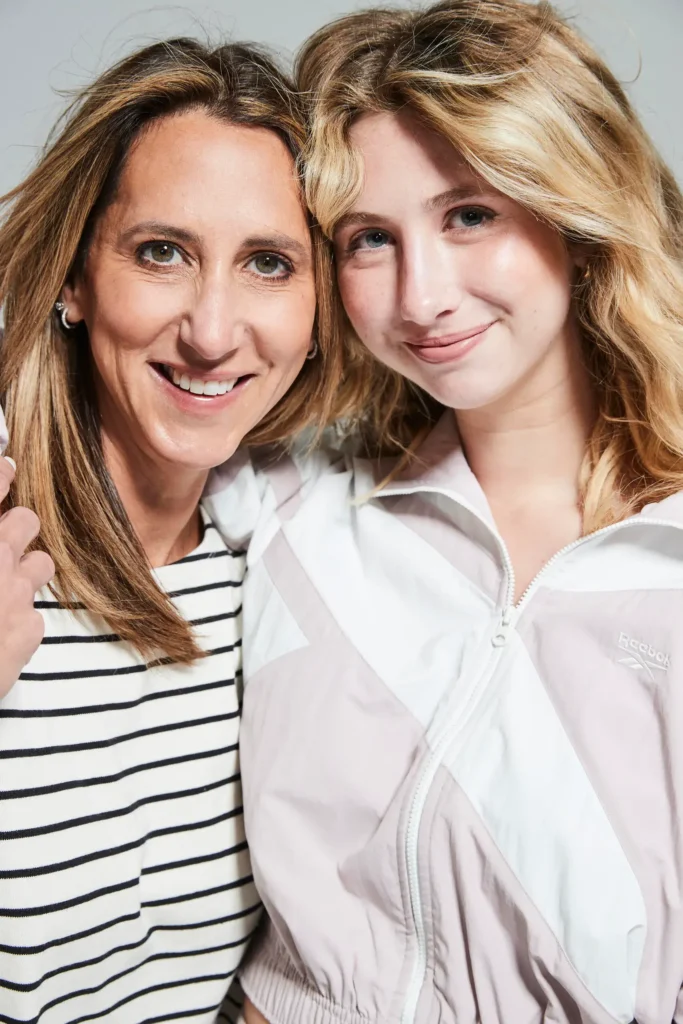
Adison and Lori Schwartz, a Chicago-area teen and her mother, who have been on a mental health journey together.

For the 2024 back-to-school season, Macy’s partnered with The Jed Foundation (JED) and the National Alliance on Mental Illness (NAMI) for the third straight year to raise awareness and funds in support of teen and young adult mental health. The campaign raised more than $1.3 million for JED and NAMI this year, bringing the three-year total donated by Macy’s to JED for this campaign to more than $2 million

This year’s campaign also featured JED ambassadors Adison and Lori Schwartz, a Chicago-area teen and her mother, who shared their family’s mental health journey.

Research by JED has shown that teenagers are most likely to turn to their parents first for help with mental health challenges – even before friends or other trusted adults. At the same time, the research found, concerns about how adults will react are among the top barriers to teens seeking help from the adults in their lives. A 2022 NAMI poll found that 48% of teens talk regularly with their parents about their mental health, and 74% of teens who have sought information about mental health trust their parents “a lot” as sources for that information.

With this research in mind, we asked Adison and Lori to reflect on their experiences. This is the conversation they shared with us:

Adison: In March 2020, as the pandemic swept across the globe, I encountered a profound loneliness and isolation unlike anything I had ever experienced. Overnight, my interactions with friends, teachers, and extended family vanished — a stark departure from the vibrant social connections I embraced and cherished.
Amidst this isolation, I was also diagnosed with Postural Orthostatic Tachycardia Syndrome (POTS), compounding both my physical and mental distress. Each day brought new struggles: debilitating migraines, overwhelming fatigue, and the inability to participate in normal teenage activities I had previously taken for granted. 

Lori: The isolation from Covid, combined with Adison’s side effects from POTS, changed her before my eyes. Gone were her carefree ways. Her smiles were fleeting. Her high energy levels were suddenly depleted. A veil of uncertainty seemed too heavy for her young shoulders.

As I watched Adison experiencing this mental anguish, I became consumed with her struggles.  I never experienced similar challenges, so despite my desire to relate, I found it difficult. In response, I started experiencing my own deep sadness. I felt helpless, more than I ever had before as a parent. I desperately wanted to erase her pain, to absorb it into my own being, to make it all better as I’d always been able to do in the past. But for the first time, I couldn’t fix her pain and make her anguish go away. 

Adison: My mom had always been my pillar of strength. She would wipe away my tears, or whisper reassurances. But suddenly this was no longer enough.  

Lori: I fought to find the right words and support to guide her through her challenges. I’m a problem solver and expected to be able to suggest solutions she could act on. However, I had never personally struggled with these emotions, so the truth was I couldn’t relate as much as I wanted to. Why couldn’t she just shake it off and revert back to who she was? While I worked on improving my empathy skills, I remained committed to being fully present for her. While I was far from perfect, I tried navigating these conversations with sensitivity and thoughtfulness.

Adison: My mom’s unwavering support, attentive listening, and unconditional love became my rock. Through our heartfelt conversations, I discovered a silver lining amidst my personal struggles. The profound loss of my connection with others and my open and honest conversation with my parents about my struggles sparked a desire within me to turn adversity into positive change. I became determined to make a positive difference for others – and I knew my mom and dad were going to be there to support me every step of the way.

Lori: What initially eluded us at the time was how my conversations were not only shaping Adison’s journey and helping her heal, but also profoundly transforming my own perspective on mental health. I learned that understanding how she felt was more difficult than I expected. My instinct to recommend activities for her to do just wasn’t impactful. We needed to dive deeper. Together, we embarked on a journey marked by open dialogue and shared vulnerabilities.

Adison: A couple of years earlier, my dad revealed the painful truth that my Grandma Sandy had not died from cancer, as I had always thought, but rather, after a decade-long fight with depression, had died by suicide. My dad believed that had there been less stigma and more openness in society around mental illness, she would have received more empathy, understanding, and support from her community around her. This revelation, coupled with witnessing the struggles of my peers and my own battle with anxiety during the isolating pandemic, gave me a profound sense of purpose. I would dedicate myself to being a mental health advocate and work to prevent others from enduring similar pain.

I became aware that many of my peers felt uncomfortable talking about their mental health or didn’t think they had someone who would listen and relate to them if they did. This inspired me to found You Are Enough (YAE), a nonprofit dedicated to establishing wellness centers in high schools. YAE centers provide safe havens where students during the day can process and reset their emotions without fear of stigma. Collaborating closely with school administrators, counselors, and local organizations, we empower students to openly and confidently embrace their mental health journeys.

Lori: Adison and I realized that our journey together was not solely about her recovery; it was a reciprocal learning experience. Her advocacy and healing through YAE helped me heal, too. I feel as if I’ve become more sensitive, aware and empathetic. Through her advocacy with YAE, she taught me how to help others. I thrived in seeing her genuine joy in helping others. Our journey underscored the mutual support inherent in mental health care, where caregivers learn from our children as much as children learn from them.

Adison and Lori: Our story emphasizes the critical importance of dismantling the silence surrounding mental health, fostering environments where teenagers feel safe seeking help without stigmatization, and equipping caregivers with the knowledge and resources to provide meaningful support. As a society, we must cultivate spaces where conversations about mental health are normalized and supported, devoid of judgment or stigma.

Let’s commit to becoming more supportive of sharing our vulnerabilities without fear or shame – and listening fully, without judgment or jumping straight to problem solving, when someone does so. By nurturing open, empathetic conversations about mental health, we can help more adolescents navigate their challenges and cultivate emotional resilience. Together, we can forge a world where every young person feels acknowledged, listened to, and supported.

Check out some of JED’s resources to support conversations about mental health between caregivers and their young people: 
District Spotlight: Fargo Public Schools in North Dakota

Staff members of Fargo Public Schools sit in front of their laptops and engage in lively conversation.


In March 2024, The Jed Foundation (JED) and AASA, The School Superintendents Association, announced the selection of 15 school districts to participate in the District Comprehensive Approach (DCA) pilot, a transformational program that guides districts in improving systems of support for pre-K–12 students’ emotional well-being. The program, now called the JED and AASA District Mental Health Initiative, is enrolling new districts into future cohorts.

In an ongoing series of blog posts, we feature each of the 15 pilot districts and their work learning and leading powerful mental health and suicide prevention practices that will benefit students around the country. 

Fargo Public Schools

District: Fargo Public Schools in North Dakota

Number of schools: 26

Number of students: 11,000+

About the district: Fargo Public Schools (FPS) serves the majority of the city of Fargo. The district’s mission is to educate and empower all students to succeed, whether they plan to attend college, join the military, or enter the workforce.

JED and AASA asked Dr. Rupak Gandhi, superintendent of FPS, about what the district hopes to accomplish during its time in the DCA program. (Responses have been edited lightly for length and clarity.)

What is your primary reason for participating in the DCA inaugural cohort?

We want to develop a holistic, evidence-based approach to well-being that enhances the educational experience for all students. Participating in the cohort will facilitate positive transformations in policies, practices, and partnerships and create a more supportive and nurturing school environment.

What does participating in the DCA program mean for the culture of your district?

Participating in a program that prioritizes emotional health sends a powerful message about our district’s values. FPS promotes a culture of empathy, compassion, and belonging. Through our involvement in the DCA program, we aim to benefit students and their families by raising awareness, encouraging early intervention, increasing access to support services, and fostering greater community engagement.

How are you engaging your community in your DCA work?

We are sharing information about and encouraging engagement in the program through employee and community newsletters, school-level PTA and PTO meetings, and family-engagement activities.

As part of the DCA program, we administer surveys with stakeholders in our schools, including the faculty and staff survey at the beginning of the school year. We gathered feedback from nearly 100% of faculty and staff by embedding it in our annual back-to-school suicide awareness and prevention professional development. That ensured the voices of all staff — certified and hourly — were captured.

What impact do you hope to have on student mental health?  

By collaborating with community organizations, mental health professionals, and local and state agencies, we’ll create a strong, competent support network that emphasizes suicide prevention and early intervention programming — and meets the needs of FPS’s students and families. 

We also know that FPS has the potential to create a positive impact on public education nationwide by participating in the DCA program and serving as a model school district that prioritizes holistic student well-being and shared best practices with other districts and education agencies.

Read about the other school districts in the pilot program:

Maybelline New York Launches a New 5-Step Routine – and It Doesn’t Include Makeup.

Brave Talk, a new online, five-step training program, empowers young people to navigate mental health conversations with their friends.  

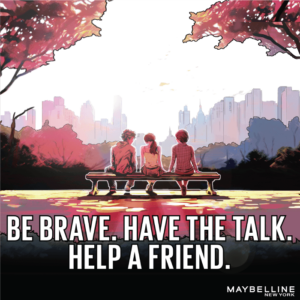
cartoon looking graphic of three young people sitting on park table talking

[September 24, 2024, NEW YORK] – Maybelline New York announced today the expansion of its free global mental health training program, Brave Talk. Initially launched on college campuses in 2022 and developed in partnership with The Jed Foundation (JED), Brave Talk is now available in an online, interactive format for college-aged users and older, anytime, anywhere. The updated training will further amplify Maybelline’s Brave Together mental health program, with a mission to make one-to-one support for anxiety and depression accessible to all. 

Through the five easy-to-remember B.R.A.V.E. steps of Brave Talk, users will learn how to start a conversation with a friend, support them, and lead them to care in less than ten minutes. This animated format provides visually stimulating storytelling, making complex subject matter like mental health accessible, enjoyable, and engaging, especially to Gen Z users. 

“At Maybelline New York, we are making support easily accessible to all. Through the digitized version of Brave Talk, we are able to do just that – providing the tools needed to spark a conversation and help those struggling get the support they need, all at no cost,” said Trisha Ayyagari, Global Brand President, Maybelline New York. “Since launching the Brave Together program, we have helped over 1.65 million people access free, one-to-one professional support in over 34 countries and we are looking forward to helping even more through this new online Brave Talk format.” 

Maybelline launched Brave Talk in partnership with JED, a leading national nonprofit that protects emotional health and prevents suicide in teens and young adults. To help address the nearly 60% of college students who say they received support for their mental health from a friend*, the free 90-minute, expert-developed training was designed to be delivered in person by college staff to students so that they have the skills to support peers who may be struggling and help connect them to  care. 

“Expanding the Brave Talk training into digital spaces where schools and young people can access it freely, 24/7 is a crucial step toward addressing and protecting the mental health of teens and young adults. Together, we can make a significant difference in how well-being is understood and prioritized,” said John MacPhee, CEO, The Jed Foundation. 

Throughout the Brave Talk training, users follow three Gen-Z characters as they navigate how to help a struggling friend. Along the way, users will gain helpful information and tools from the training and decide how they would approach each situation. The aim is to gather the five B.R.A.V.E. letters representing the steps for supporting a struggling friend, thereby completing Brave Talk: 

  • Be Present 
  • Right Setting
  • Ask Questions 
  • Validate Feelings 
  • Encourage Action 

Through the Brave Together program, Maybelline New York has a goal of helping 10 million people access one-to-one mental health support and donating $20 million to this cause by 2030 so no one has to struggle alone.  

To access the new Brave Talk digital training or to learn more about Maybelline New York’s Brave Together program you can visit www.maybelline.com/bravetogether for more information. 

* Source: Healthy Minds Study Fall 2020 Data Report


About Maybelline New York 

Maybelline New York is the number one cosmetic brand in the world, available in over 120 countries. By combining technologically advanced formulas with on-trend expertise and New York City edge, Maybelline New York’s mission is to offer innovative, accessible, and effortless cosmetics for all. In2020, Maybelline introduced Brave Together, a long-term program to support anxiety and depression and help everyone, everywhere to bravely take on their world. Brave Together provides critical one-on-one support, an online education hub, a variety of programming to help destigmatize the conversation around mental health and has committed to donate $10 million over the next five years to global and local organizations. For more information log on to www.maybelline.com or  www.maybelline.com/bravetogether

About The Jed Foundation (JED)

JED is a leading nonprofit that protects emotional health and prevents suicide for our nation’s teens and young adults. We’re partnering with high schools and colleges to strengthen their mental health, substance misuse, and suicide prevention programs and systems. We’re equipping teens and young adults with the skills and knowledge to help themselves and each other. We’re encouraging community awareness, understanding, and action for young adult mental health. 

Connect with JED:

Email | X | Facebook | Instagram | YouTube | LinkedIn | Snapchat | Pinterest | TikTok

Media Contact
Justin Barbo
Director of Public Relations, The Jed Foundation
justin@jedfoundation.org
918-844-4611

National & Local Media Coverage of $1.1M Grant Awarded to JED from Fidelis Care and the Centene Foundation.

Find news coverage of the partnership and funding to expand emotional well-being resources, educational workshops, and training for New York community-based organizations.

  • PR Newswire: Fidelis Care and the Centene Foundation Award $1.1 Million to The Jed Foundation to Protect the Mental Health of New York’s Youth
  • Queens Latino: Fidelis Care por la salud física y mental
  • Yahoo! Finance: Fidelis Care and the Centene Foundation Award $1.1 Million to The Jed Foundation to Protect the Mental Health of New York’s Youth
  • MorningStar: Fidelis Care and the Centene Foundation Award $1.1 Million to The Jed Foundation to Protect the Mental Health of New York’s Youth
  • KTLA: Fidelis Care and the Centene Foundation Award $1.1 Million to The Jed Foundation to Protect the Mental Health of New York’s Youth
  • WPIX: Fidelis Care and the Centene Foundation Award $1.1 Million to The Jed Foundation to Protect the Mental Health of New York’s Youth
  • Pharmaceutical Executive: Fidelis Care and Centene Foundation Provide $1 Million Grant to Jed Foundation

Fidelis Care and the Centene Foundation Award $1.1 Million to The Jed Foundation to Protect the Mental Health of New York’s Youth

Funding will help expand emotional well-being resources, educational workshops, and training programs for community-based organizations that foster communities of care statewide

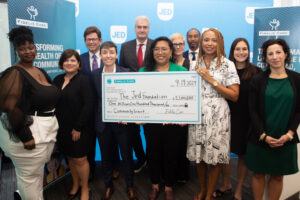
Jed foundation staff, Fidelis Cantene staff standing together with three smiling people holding a big check for 1.1 million dollars made out to the Jed Foundation

[September 20, 2024, NEW YORK CITY] —  Fidelis Care, a leading health insurer providing quality, affordable coverage to New Yorkers, and the Centene Foundation, the philanthropic arm of Centene Corporation, announced today a $1.1 million grant to The Jed Foundation (JED), a national nonprofit that protects emotional health and prevents suicide for teens and young adults. 

With this grant, JED will expand its current services, providing at least five youth-serving community-based organizations (CBOs) with consultation or strategic planning services, including expert guidance, educational workshops, and training programs, equipping young people with life skills and connecting them to mental health care when they are in distress. 

“We are thrilled to support the vital work of The Jed Foundation with this grant,” said Vincent Marchello, Chief Medical Officer at Fidelis Care. “At Fidelis Care, we recognize the importance of mental health services in creating healthier communities. This investment underscores our commitment to ensuring youth and adolescents have access to the critical support they need to thrive.”

According to the Substance Abuse and Mental Health Services Administration (SAMHSA), it is currently estimated that nearly one in five 12- to 17-year-olds in the United States experience a major depressive episode every year, and almost half of teens 13 to 17 say they would seek out professional help only as a last resort. In New York State, the need for enhanced mental health support for school-aged youth is critical: in 2021, 57% of New York 12- to 17-year-olds with depression had not received any care in the last year.

“JED is grateful to Fidelis Care and the Centene Foundation for their commitment to supporting the emotional well-being of New York youth and for providing the resources to help them thrive,” said John MacPhee, JED Chief Executive Officer. “This partnership will allow us to bring JED’s lifesaving work to community-based organizations across the state and help them build on their mental health safety nets and approaches, while positively impacting the lives of thousands of young people.”The inaugural group of CBOs includes Bottom Line, an organization that partners with degree-aspiring students from first-generation and low-income backgrounds as they get into and through college and launch mobilizing first careers; Hetrick-Martin Institute, which provides free, year-round programs and services for LGBTQIA+ youth and allies aged 13 to 24 in New York City; and Prep for Prep, which provides first-rate educational, leadership development and professional advancement opportunities for young people of color in New York City. 

“Through decades of experience at Bottom Line, we have seen that the condition of a student’s mental health plays a significant role in their overall journey to becoming a college graduate and professional,” said Sheneita R. Graham, Director of Culturally Responsive Programming at Bottom Line. “Our role at Bottom Line is to build strong relationships that assist us in determining need and connecting students to resources that will help them thrive personally to persist academically. Partnering with The Jed Foundation grants us the opportunity to expertly assess our mental health policies, processes, and resources to ensure we provide our students with thoughtful, high-quality support.”

“Hetrick-Martin Institute is pleased to be working with The Jed Foundation to improve our ability to recognize young people in distress and conduct suicide risk assessments,” said Bridget Hughes, Chief Program Officer at Hetrick-Martin Institute.

“We are so grateful to The Jed Foundation for hosting two workshops for our incoming college freshmen as part of our annual College Transition Retreat,” said Corey Rhoades, Director of Undergraduate Affairs at Prep for Prep. “The presenters shared their expertise and tailored the sessions in a way that was uniquely relevant and engaging for our students.” 

To learn more about ways to provide community-based organizations with consulting, evidence-based best practices, and data-driven guidance to protect youth mental health and prevent suicide, visit JED’s website.


About The Jed Foundation (JED) 

JED is a leading nonprofit that protects emotional health and prevents suicide for our nation’s teens and young adults. We’re partnering with high schools and colleges to strengthen their mental health, substance misuse, and suicide prevention programs and systems. We’re equipping teens and young adults with the skills and knowledge to help themselves and each other. We’re encouraging community awareness, understanding, and action for young adult mental health. 

Connect with JED: 

Email | X | Facebook | Instagram | YouTube | LinkedIn | Snapchat | Pinterest | TikTok

About Fidelis Care
Fidelis Care is a mission-driven health plan offering quality, affordable coverage for children and adults of all ages and at all stages of life. With more than 2.4 million members statewide, Fidelis Care believes that all New Yorkers should have access to affordable, quality health insurance. Follow us on LinkedIn at linkedin.com/company/fidelis-care, Instagram at @fideliscare,
and on Facebook at facebook.com/fideliscare. For more information, call Fidelis Care at
1-888-FIDELIS (1-888-343-3547) or visit fideliscare.org.

About The Centene Foundation
The Centene Foundation (the “Foundation”), a private nonprofit focused on investing in economically challenged communities, is the philanthropic arm of Centene Corporation (“Centene”). The Foundation supports projects and initiatives strategically aligned with Centene’s purpose-driven culture and enhances the work Centene is doing to remove the barriers to wellness underserved and low-income populations face. The Foundation is committed to addressing social determinants of health and improving health equity in three distinct areas of focus: healthcare access, social services and education. To learn more, visit the Centene Foundation’s website

Media Contacts
Justin Barbo
Director of Public Relations, The Jed Foundation
justin@jedfoundation.org
918-844-4611
 

Allie Abbate 
Fidelis Care
MediaInquiries@fideliscare.org

Get Help Now

If you or someone you know needs to talk to someone right now, text, call, or chat 988 for a free confidential conversation with a trained counselor 24/7. 

You can also contact the Crisis Text Line by texting HOME to 741-741.

If this is a medical emergency or if there is immediate danger of harm, call 911 and explain that you need support for a mental health crisis.